
Ideas offered at community talk on homelessness
‘Compassionate path forward’ is wanted
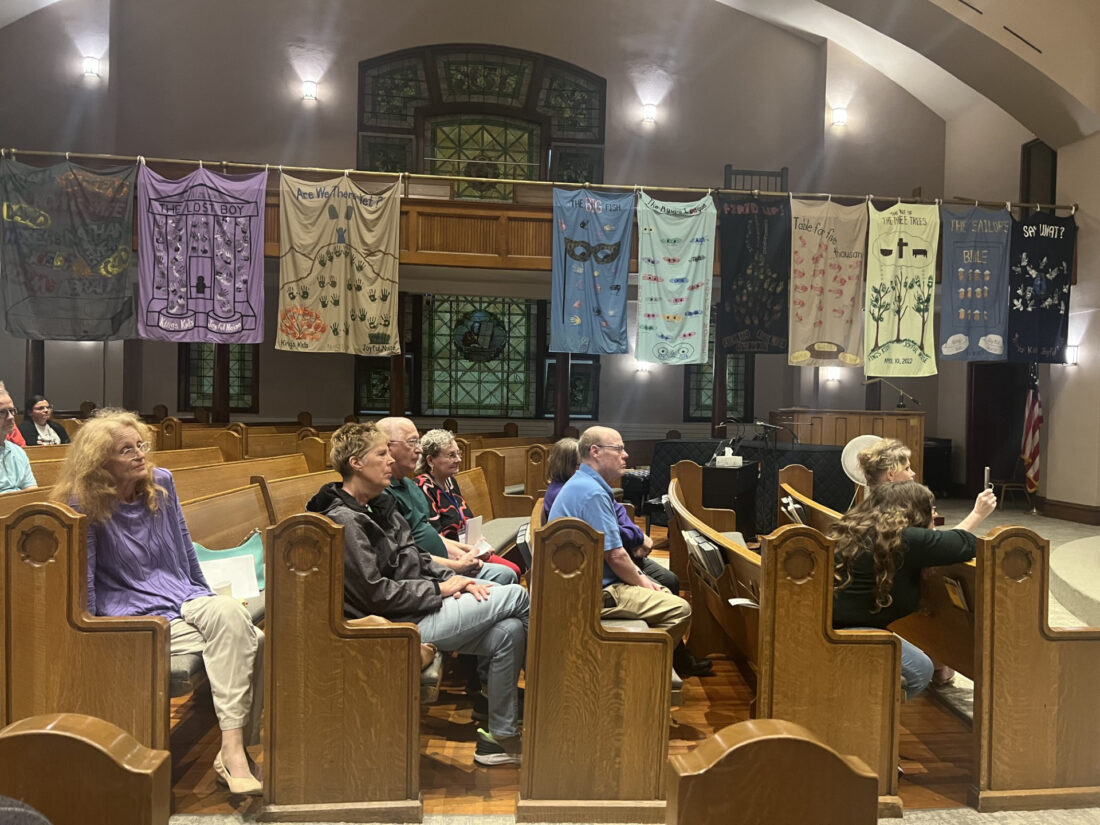
-Messenger photo by David Drissel <br> Members of the community attended a meeting Thursday evening at First United Methodist Church to discuss ideas on dealing with homelessness.
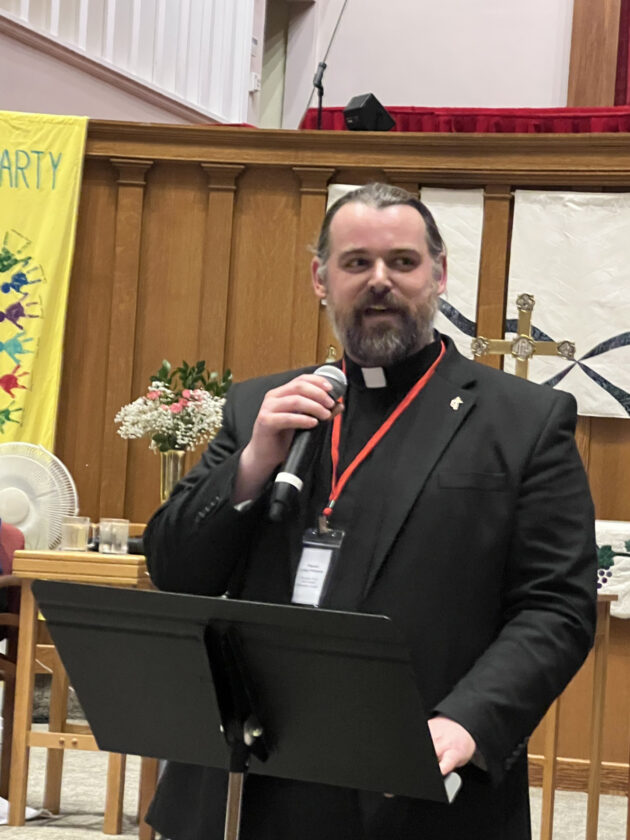
-Messenger photo by David Drissel <br>The Rev. Luke Fillmore of First United Methodist Church speaks during the community conversation on homelessness Thursday.
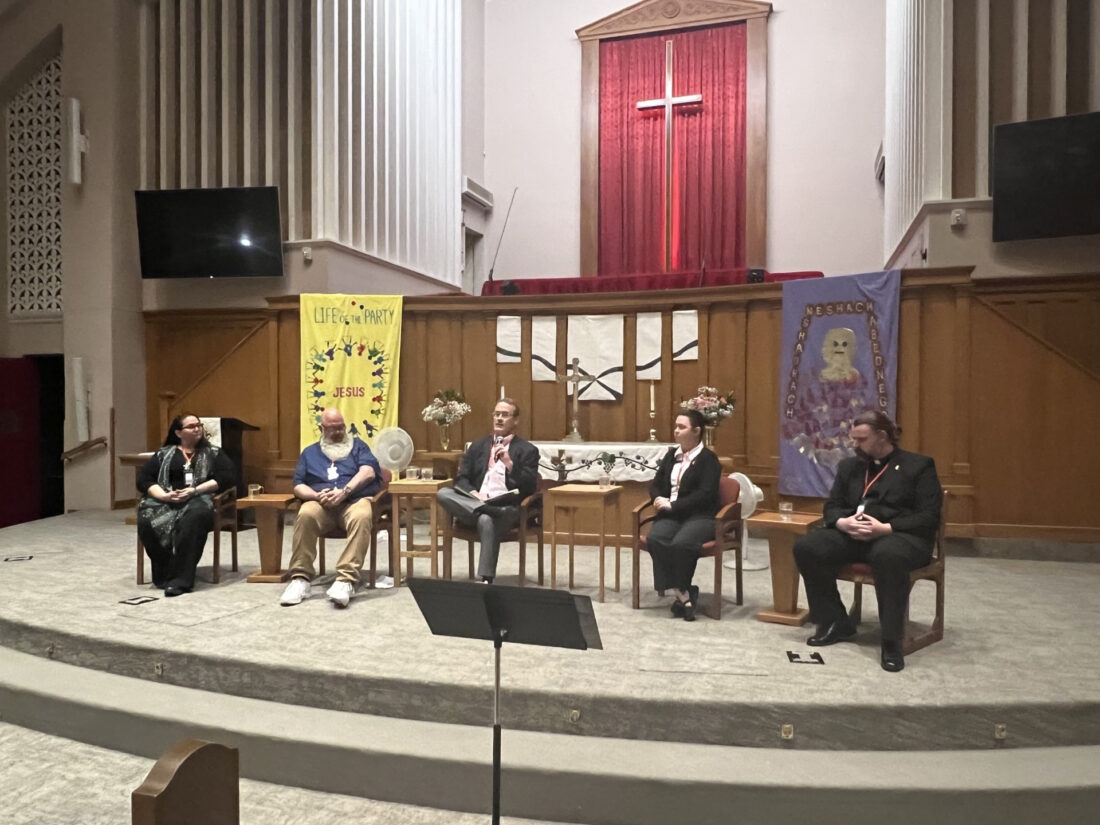
-Messenger photo by David Drissel <br> Pictured from left, the panel discussing homelessness in Fort Dodge included the Rev. Dani Rogers of First Baptist Church and SALT Center, Executive Director Brian Bidelman of the Beacon of Hope, Fort Dodge Mayor David Flattery, Salvation Army Capt. Alicia Welsh, and the Rev. Luke Fillmore of First United Methodist Church.
-Messenger photo by David Drissel <br> Members of the community attended a meeting Thursday evening at First United Methodist Church to discuss ideas on dealing with homelessness.
-Messenger photo by David Drissel <br>The Rev. Luke Fillmore of First United Methodist Church speaks during the community conversation on homelessness Thursday.
-Messenger photo by David Drissel <br> Pictured from left, the panel discussing homelessness in Fort Dodge included the Rev. Dani Rogers of First Baptist Church and SALT Center, Executive Director Brian Bidelman of the Beacon of Hope, Fort Dodge Mayor David Flattery, Salvation Army Capt. Alicia Welsh, and the Rev. Luke Fillmore of First United Methodist Church.
Trending
Homelessness is a controversial and complex social problem that is often difficult to alleviate or resolve. However, there are a growing number of services and approaches designed to improve the problem of homelessness in Fort Dodge.
This was the main message of a "community conversation on homelessness" Thursday evening at the First United Methodist Church in downtown Fort Dodge. A panel of local professionals, who are actively engaged in alleviating homelessness, shared their insights and answered questions from an audience of around 60 people.
The expert panel included the Rev. Luke Fillmore of First United Methodist Church, Executive Director Brian Bidleman of the Beacon of Hope, Fort Dodge Mayor David Flattery, the Rev. Dani Rogers of First Baptist Church and SALT Center, and Salvation Army Capt. Alicia Welsh.
Sponsored by the First United Methodist Church, the event was touted as facilitating a community conversation about homelessness, intent on finding "the most effective and compassionate path forward." Audience members were encouraged to share their concerns, questions, and experiences involving homelessness in Fort Dodge.
"The purpose of this meeting is to continue the conversation with the community and our neighbors who are experiencing homelessness, so that we might find a compassionate answer to this complex issue," Fillmore said.
One of the main stated goals of the event was to build a "relational capacity" among various service-based institutions in the community to better collaborate and cooperate with one another to solve the problem of homelessness in Fort Dodge.
"The need is to connect individuals who want to be a part of the efforts in addressing homelessness, so that through volunteers, referrals, and advocacy we can support one another in the work that needs to be done," Fillmore said.
Several panelists noted that homelessness in Fort Dodge is a critical issue involving hundreds of individuals and families, driven by relatively high rates of poverty, a low supply of affordable housing, and high rental costs that leave many households one paycheck away from eviction.
Other significant factors contributing to homelessness in the area include substance addiction, mental health issues, loss of support systems, and domestic problems, often compounded by the growing cost of living relative to local wages.
Although the panelists agreed overall on the importance of addressing the problem of homelessness, they expressed varying viewpoints regarding the visible presence of homeless people and related shelters in downtown Fort Dodge.
Flattery, for example, emphasized finding ways to discourage homeless people from loitering downtown. He expressed concern about the negative effect of homelessness on safety and security, particularly in relation to commerce and business in the downtown area.
"I come from an economic development standpoint, and I believe that we cannot just sit back and manage the problem of homelessness," he said. "We want to rebrand our downtown, and attract new businesses to our community, so we have to deal with the issue of homelessness."
He stressed the prospect of utilizing law enforcement to "clean-up downtown," and opposes any construction of new shelters downtown. However, he has been meeting with other panelists at the event for the past eight months to find various ways to reduce homelessness, he said.
Coming from a somewhat different vantage point, Rogers indicated that homelessness is more of a human relations, social services, and affordability problem. She sees First Avenue North downtown as a "healing area" for homeless people, with several related institutions located on that street.
Fillmore agreed, noting the importance of networking and establishing bonds of trust with homeless individuals.
"When we get to know homeless people and their stories, we are able to make downtown safer for everyone," Fillmore said.
He observes that there has been a notable recent shift in attitudes regarding the homeless in Fort Dodge. Rather than reacting with anger towards homeless people, more people are wanting "to find a way to alleviate homelessness," he said.
"We have found through the conversations we've had with other partners and entities in our community that have expressed a desire that Fort Dodge continue becoming a safer, more compassionate, and supportive place to live," he said. "We've also heard from folks that there is a desire that all people in our town can thrive and flourish. We share these hopes, and our aim is to continue helping our community take steps towards these goals."
Fillmore claims that his church congregation feels "called" to sponsor this community event, while continuing to care for the most vulnerable among us.
"We're simply trying to practice what we preach, trusting that a better world is possible through the servant-hearted love of God that we have come to know," he said. "If we can do that by facilitating these types of conversations and serving our community in such a way, we are honored to do so."
Even though studies show that a majority of people become homeless due to financial or domestic reasons, the most visible homeless people on the streets of downtown Fort Dodge often suffer from substance abuse or mental illness problems, which can lead to chronic homelessness.
In particular, substance abuse and mental illness can create barriers for homeless people seeking shelter, with some individuals choosing to stay on the street even during extreme weather. This is due in part to homeless shelters often having stringent requirements for admission.
The Beacon of Hope, for example, is considered to be a "high-barrier shelter," which refers to a residential facility that requires guests to meet specific, strict conditions for entry and continued stay. These conditions often include mandatory sobriety (drug- and alcohol-free), background checks, income requirements, and mandatory participation in programs, aimed at creating a highly structured, sober environment.
Describing itself as a "Christ-centered, faith-based ministry working cooperatively with the community to eliminate homelessness," the Beacon of Hope claims to provide "a safe and secure emergency shelter to homeless adult men: offering shelter, clothing and food, for temporary assistance to create opportunities and programs in working towards self-sufficiency."
Bidleman defends the "high barriers" approach of his shelter, noting that the main goal is to transform the lives of homeless men through a faith-based approach. He wants to protect his clients from mixing with intoxicated homeless people, which would be counterproductive to the Beacon of Hope's mission.
Rogers notes that the First Baptist Church has established a housing coalition to assist the homeless called the SALT Center.
"SALT stands for Shine a Light Together," she said. "It's a place for anyone in the community to come hang out as a way to escape the elements of the weather, especially in our most brutal months in Iowa."
In contrast to high-barrier shelters such Beacon of Hope, "low barrier shelters" such as SALT focus on immediate access, often with no immediate sobriety requirement or background checks. The idea behind low-barrier shelters is to meet people where they are in life to reduce harm.
"You can come in as long as you are not causing any problems," she said. "We may be serving folks who are banned in other shelters."
Even though the SALT Center does not impose any stringent requirements for admission, the services they provide are only temporary and during daylight hours. SALT provides public restroom facilities and hydration for homeless people, for example.
"The center is open to everyone and anyone who needs a place to go for a few hours," Rogers said.
Both Rogers and Bidleman agree that there is a need for an emergency-based, low-barrier nighttime shelter in Fort Dodge, since most existing local shelters often operate with high-barrier, recovery-focused rules. And when homeless people are turned away from high-barrier shelters, they often find themselves on the street in downtown Fort Dodge.