
Farmers plant while facing a harvest of worries
Unique concerns plague farmers in global economy
Trending
Farmers are used to a lot of uncertainty. Will the rains come at the right time, the right amount, or will they not come at all? Will the sun burn up the crops in July? Will thunderheads drop hail in August?
But farmers are used to worrying about the weather. There's a whole new world out there, and a new world of worries. Will the Strait of Hormuz open? Will there be more tariffs? Will they be able to afford diesel fuel, fertilizer, or health insurance?
The Iowa Farm Bureau Federation (IFBF) noted earlier this year that the Midwest had seen the greatest increase in the number of farm bankruptcies in the last year. Iowa was among the hardest hit -- more than doubling over the previous year. But if 18 filings doesn't sound like a great number, compared to the number of farms in Iowa, consider that most farms are not eligible for Chapter 12 bankruptcy protection. Most farms, when faced with debt that does not keep up with income, simply close.
"I wish these young guys the best," said long-time Hamilton County farmer Richard Mason. "I want and hope for them to succeed."
But Mason is worried, and he is not alone.
John Flickinger is a longtime farmer south of Lehigh in Webster County. He will be 80 in the fall, but like many farmers of his generation, never saw retirement as a goal. Now, it's looking better and better.
"One year at a time," Flickinger said.
That's the way he's taking farming right now. And his concerns are as great as ever.
"The price of inputs, the price of commodities," are enough to make just about any farmer want to quit, he noted.
Diesel is likely to be the first big concern as the result of continued uncertainty in the Strait of Hormuz. The majority of Iowa farmers book their fertilizer and other input needs well in advance of each growing season, so that pinch is still a year down the road. But diesel prices are a constant concern. Figures from the IFBF show a 46 percent increase in the price of farm diesel since the end of February, when the war on Iran began.
But these inputs are only part of the story. The price of land, cash rent, and machinery continue to offer their own challenges, especially for younger farmers.
"I feel sorry for them, not everyone has family that can help them start," Flickinger said.
Both Flickinger and Mason agreed that young farmers will find it very difficult without capitalization, friendly rental agreements, or other means to help move the next generation forward.
"We're not as deep in debt as we were when we were buying machinery," Flickinger said.
For a farmer needing to purchase machinery, whether it be new or replacement, the cost can be overwhelming.
Even used equipment has seen double digit percentage increases, far outpacing inflation since 2019. At the same time, farm income is dropping from low commodity prices. The Rural and Farm Finance Policy Analysis Center forecasted a 25 percent decrease in farm income for 2026 -- and that was before the cost crunch surged as a result of war.
Off farm income has become more important than ever in this economic climate. Flickinger is an engineer who worked for more than 20 years at the former Webster City Products (Electrolux). His wife, Karla, worked for 38 years at Dayton Community Schools.
But the Flickingers agree that it wasn't just the income from these off-farm jobs that mattered most, it was the health insurance provided as a benefit. Medicare now fills the gap for both Flickinger and Mason.
For his part, Mason looks back at the high premiums of health insurance and is frustrated by legislative priorities that have failed to address the costs for those who have to buy insurance on their own.
"We have lawmakers who would not vote for health care, food benefits, but we're spending billions of dollars a day on a war started by two individuals," Mason said.
Tax credits that expired for the Affordable Care Act could have helped many who may now face tough choices for their family budgets.
"I was spending $14,000 a year for health insurance," Mason said.
With farm income declining, and insurance premiums climbing, he has empathy for young families.
For young farm families, couple the cost of health insurance with such needs as children's daycare, and making a life on a small farm becomes more of a challenge.
"For someone starting out, you need a dad who has the capacity to capitalize you, because you won't be able to afford the equipment on your own," Mason said. "And you will need a second income that offers health insurance."
Mason and his wife, Karen, recently took a trip to Tanzania and saw how small farms there are succeeding. Perhaps, he said, "we have it backwards."
Of course, it's difficult to draw comparisons between production agriculture in the United States with any other country, but learning from America's own history of small, much more diversified, farms is worth study, according to Mason.
While the Masons are retired, the Flickingers continue to farm together, but it's more relaxed than when they were struggling to build the farm.
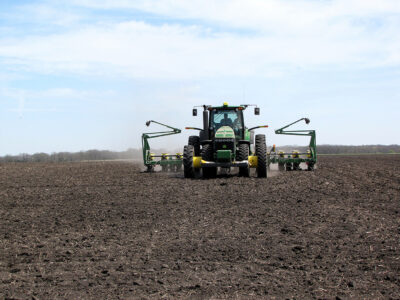
Karla Flickinger had taken lunch to the field, delivered a pickup truck full of seed, and was enjoying the view from the buddy seat as her husband planted the first field of corn on a recent sunny day. Despite the challenges in agriculture, they were pleased to be putting another crop in the ground.
Hope is planted with each field, and both Flickinger and Mason wish today's farms well in challenging times.