
FIGHT OF HIS LIFE
Fort Dodge Hall of Famer Mosley has rare kidney disease, needs transplant
-
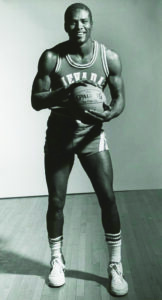
- Submitted photo: Sam Mosley, a former Fort Dodge all-state basketball player, is shown here during his University of Nevada playing days.
-
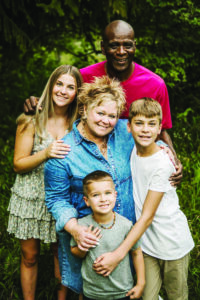
- Submitted photo: Sam Mosley and his wife, Debbie Chase-Mosley, with their three grandchildren.
-
- Submitted photo: the Messenger article from Sam Mosley’s Fort Dodge Senior High Hall of Fame induction in 1992.
-
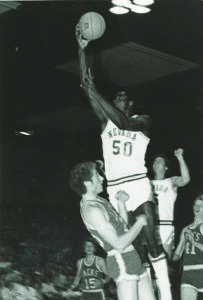
- Submitted photo: Sam Mosley, a former Fort Dodge all-state basketball player, scores for the University of Nevada at Reno.
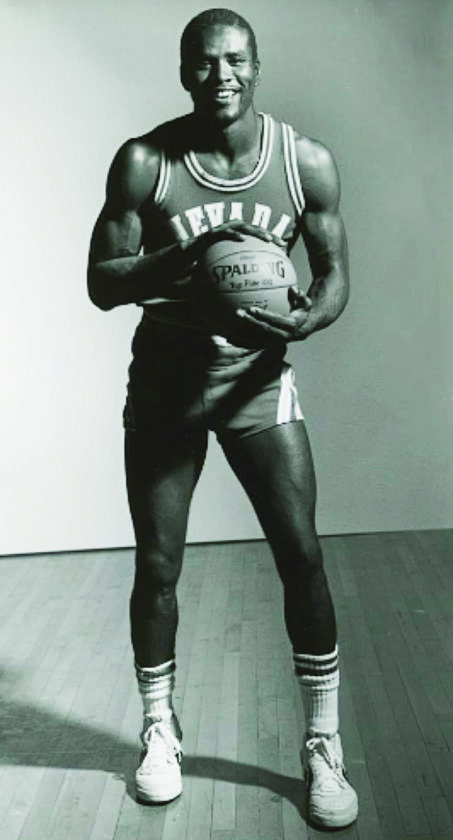
Submitted photo: Sam Mosley, a former Fort Dodge all-state basketball player, is shown here during his University of Nevada playing days.
Sam Mosley has never been one to ask for help, and the idea of going public with a health matter wasn’t even open for discussion until very recently.
That all changed for the 1978 Fort Dodge Senior High graduate when he realized his life likely depends on doing both.
Mosley, an FDSH Hall of Famer and one of the few athletes in sports history to be drafted by both professional football and basketball franchises, is sick. The 64-year-old Wisconsin resident has been privately fighting a rare kidney disease — focal segmental glomerulosclerosis — since 2016.
According to his wife, Debbie Chase-Mosley, Sam was originally told he would likely have go to on dialysis not long after his initial diagnosis. But the man who was larger than life as both a Dodger and University of Nevada athlete has beaten the odds through discipline and battled through the highs and lows of medication and physical and mental exhaustion to reach this point.
Time is of the essence now, though. The disease has advanced, damaging Mosley’s kidneys further and forcing him into a new routine of daily dialysis. A live donor transplant is Mosley’s best — and in many ways, only — option moving forward.

Submitted photo: Sam Mosley and his wife, Debbie Chase-Mosley, with their three grandchildren.
“A normal (glomerular filtration rate for a functioning kidney) is usually around 100. Sam’s is (currently) 7.5,” Chase-Mosley said. “He is approaching renal failure. There is no treatment that will improve his kidney function. His (sole) treatment option is daily dialysis, but this is only temporary. Getting home dialysis treatments, every night, will help his kidneys do their job and keep him alive for a period, but a live donor transplant would offer him more freedom and the ability to live a longer, healthier, more normal life.
“A transplant would also give him more time to do the things he enjoys, like spending time with our grandchildren, family, and friends — as well as a much-improved quality of life he deserves.”
Mosley was arguably — and quite likely — the greatest athlete in the history of the Fort Dodge community, past or present. At 6-feet, 7-inches tall and a wiry 195 pounds as just a teenager, Mosley was an unanimous first team all-state basketball player and all-Big Eight football standout in 1977-78 for the Dodgers.
To this day, Mosley’s 19.8-point per game basketball average is the best in school history.
After competing at Ellsworth Junior College, Mosley transferred to the University of Nevada in Reno, Nev. During his junior year in 1981-82, Mosley led the nation in field goal percentage. He was an all-Big Sky Conference selection as a senior for the league champion Wolfpack, averaging 15.4 points and 11.2 rebounds.
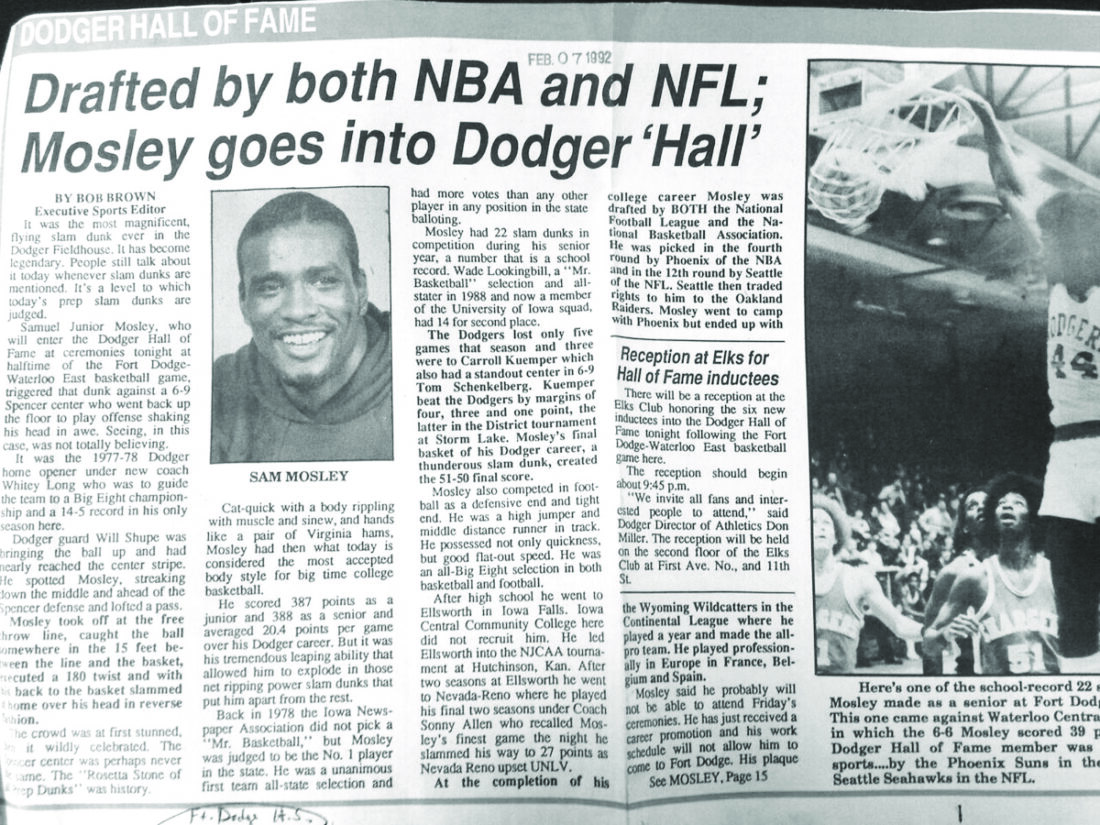
Submitted photo: the Messenger article from Sam Mosley's Fort Dodge Senior High Hall of Fame induction in 1992.
In 1983, Mosley was drafted by the NBA’s Phoenix Suns in the fourth round and the NFL’s Seattle Seahawks in the 12th round. He played one all-pro season for Wyoming in the Continental Basketball Association before successful hoop stops in France, Belgium and Spain.
Mosley left the life of a star athlete behind in 1988, moving to Nevada and becoming a long-time professional in the corrections and treatment field. He worked as an admissions manager, facility supervisor and lead coach for nearly 20 years in both Las Vegas and Minden, Nev., before becoming a group supervisor at Summit View State of Nevada Youth Boys Corrections Facility.
In 2009, Mosley accepted a position as a mental health coordinator at Spring Mountain Mental Health Treatment Hospital in Las Vegas. He worked there until his retirement in 2021.
Sam and Debbie first met in 2003. They’ve been married for five years. Sam was diagnosed with the disease during what Debbie describes as a “routine check-up” seven years ago.
“He had high blood pressure, so he goes in for appointments and annual check-ups. That’s when they caught it,” Chase-Mosley said. “He’d always been the picture of health otherwise; he doesn’t drink or anything. And from day one with the doctors, he’s done everything they’ve asked him to.”
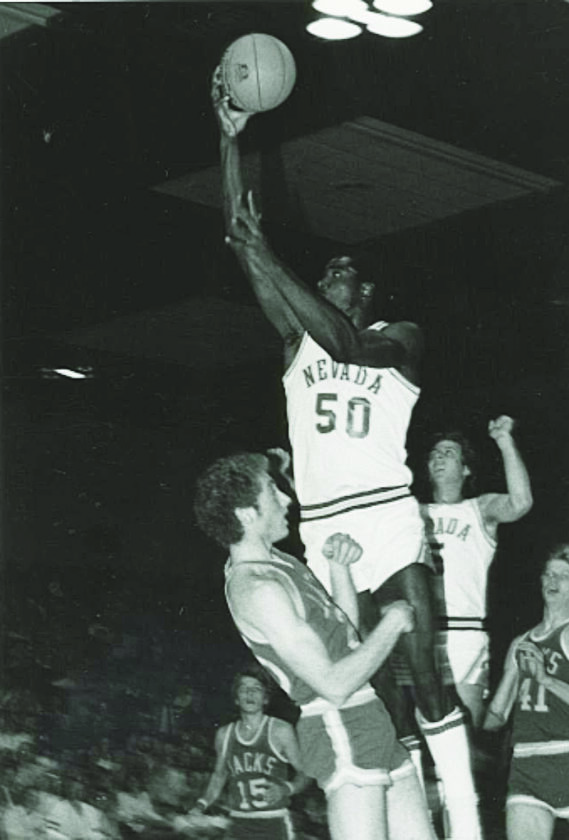
Submitted photo: Sam Mosley, a former Fort Dodge all-state basketball player, scores for the University of Nevada at Reno.
The initial anticipation was for Sam to have to start dialysis in late 2018. “Due to him watching his diet, management of his high blood pressure and listening to his treatment team to extend the use of his kidney function,” Debbie said, he made it to this year without it.
The move to Wisconsin — Debbie’s home state — in 2021 was in large part to help get Sam better care at the Froedtert Transplant Center in Milwaukee. Mosley was placed on the kidney transplant list a year and a half ago.
“Since being diagnosed and going through the testing to be placed on the donor list, he has strictly followed all health-care requirements to remain (in line for a potential transplant),” Chase-Mosley said. “But finding a kidney for a transplant is not easy. There are more than 100,000 people on the waiting list for a deceased donor kidney. Time is not on our side. Some wait for years; many die while waiting.”
Chase-Mosley added that the average wait time is five years or more for a kidney from a deceased donor. She said, “(being on the list means) it could be next week or years. And we can’t wait that long (given his current condition).”
Chase-Mosley is now hoping for someone to come forward as a living donor and help save Sam’s life. In addition to his circle from Nevada and Wisconsin, Sam still has plenty of friends and family in Iowa. His three adult sons — Quincy Mosley, Leighton Wells and Aaron Mosley — all live in Nevada.
“He’s such a private person and didn’t want people to know what he was going through,” Chase-Mosley said. “But he’s loved by so many people … I’ve known him for 20 years, and he’s never been anything other than generous, kind and humble. He’s always putting others first.
“Given (the recent developments in Mosley’s timeline), he finally agreed that we should tell his story publicly. He said to me, ‘I don’t want people feeling sorry for me and I don’t want the attention.’ I told him this isn’t charity. It’s an opportunity for family, friends and others to support you back, and for us to do what it takes to help find a living donor.”
Chase-Mosley admitted, “asking anyone to consider donating a kidney is difficult.”
“You might not know a lot about living donation…I know I didn’t before kidney disease affected my husband’s life,” Chase-Mosley said. “Understandably, some people are afraid about the surgery and what living with one kidney will mean for them. Kidneys are the number one transplanted organ. There are several factors that go into whether or not a person would be a match for Sam.”
Chase-Mosley identified many facts, clarifications or common misconceptions to put a potential donor’s mind at ease.
“You only need one kidney to live a healthy, long life,” Chase-Mosley said. “Most donor surgery is done laparoscopically, meaning through tiny incisions. The recuperation period is usually fairly quick — generally two weeks.
“The cost of evaluation and surgery will be covered by our insurance. And a person would have a separate team of health-care professionals to evaluate you as a living donor. Their job is to help you understand the risks and benefits and look out for your best interests.”
Sam and Debbie are both comfortable with “telling someone more about Sam’s journey and exploring the process of determining if you are a match for Sam.” She listed both her email address — debraachase@aol.com — and the transplant center number at (414) 805-0310 for contact information or a pre-screeing while providing Sam’s name.
“He’s really struggling to navigate all of this now,” Chase-Mosley said, her voice trembling through tears. “He’s lost weight and he’s tired. The doctors have said they don’t want him to wait much longer (for a transplant), because it would be detrimental to other organs.
“My daughter and son-in-law live next door to us, and he’s such a good grandpa to his three grandkids (age 16, 13 and 5). He’s a miracle (living this long with the disease), but we can’t sit back and play the waiting game any longer.”
For more information about being a living donor, visit the National Kidney Foundation (NKF) website at www.kidney.org/livingdonation. The NFK has a free, confidential helpline at 855.NKF.CARES (855-653-2273) and nkfcares@kidney.org.
The NKF also offers connection and communication with previous living donors.
Local Sports
Garrigan’s Buscher places in Top-5 at state golf
BOONE — Gabriella Buscher secured a Top-5 finish here to lead the Bishop Garrigan girls golf team at the Class 1A ...
Gaels move to 5-0 with win at Humboldt
Dodger baseball team splits at No. 2 Waukee
WAUKEE — The Fort Dodge baseball team secured a split against a Class 4A state tournament contender here on ...

HELLO, WORLDS!
Area golfers reach state clubhouse
North Union’s Drew Henderson capped off his high school golf career with a bronze medal Wednesday at the Class 1A ...
Dodgers pull away from Boone late
The Fort Dodge softball team never panicked against Boone here on Thursday, eventually rallying from a late deficit ...