
Iowa land values follow grain prices
Experts see many local factors impacting prices
-
-
-Messenger file photo
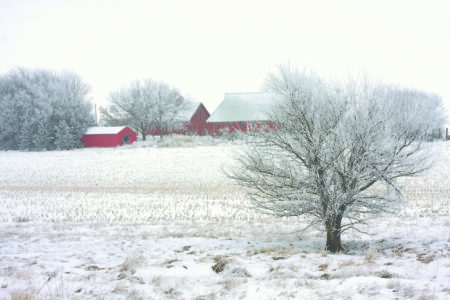
Iowa farmland is seen here blanketed in snow. Experts say a variety of factors, including grain prices, are impacting farmland values.
-Messenger file photo
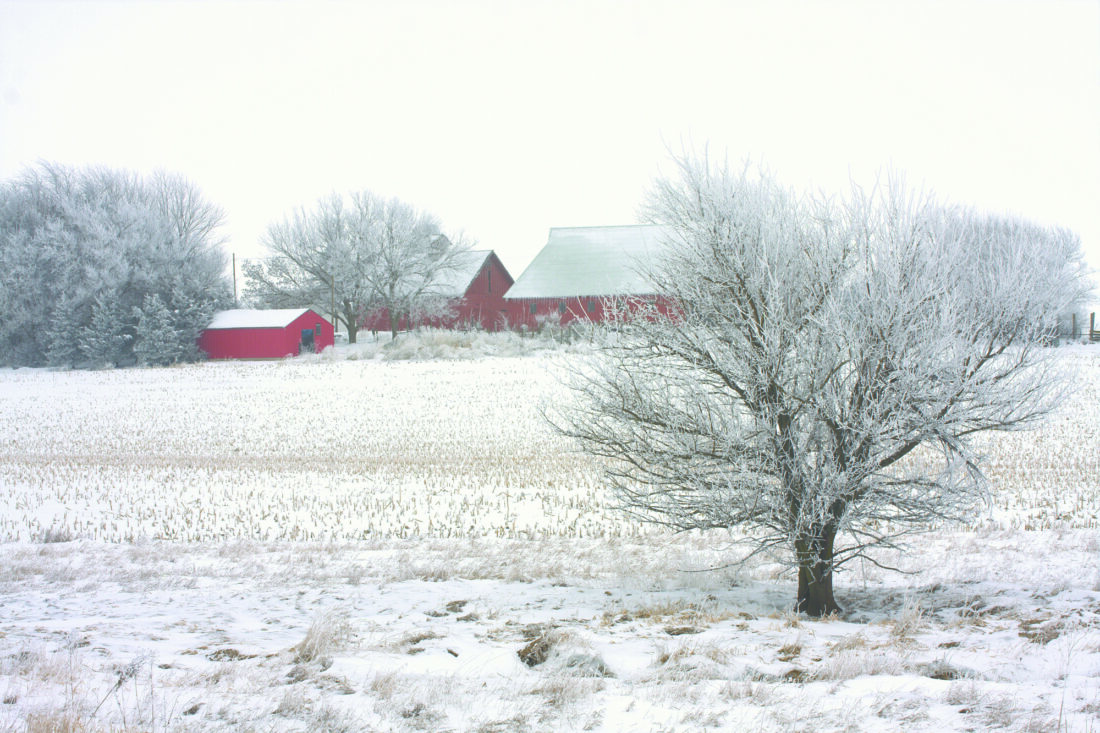
Iowa farmland is seen here blanketed in snow. Experts say a variety of factors, including grain prices, are impacting farmland values.
When thinking about the price or value of Iowa farmland, it is often helpful to consider the price of the grain that is grown on that ground.
Generally, if the price of corn and soybeans goes up, the value of the land rises as well.
And if the price of those crops goes down, the value of the land will typically drop.
“Land prices follow grain prices,” said Brent Larson, vice president of Sunderman Farm Management Co. in Fort Dodge.
He said in the last two years, grain prices have been trending down and there has also been “some softening” in farmland values.
On its website, Iowa Land Co., which has offices in Fort Dodge and four other communities, lists the average farmland value in Webster County at $13,086 per acre.
That average farmland value dropped 5.1 percent in 2024, according to the company.
Farmers National Co. recently issued a report indicating that land values are now in a complex situation driven by local and regional factors rather than national trends.
“After years of steady growth, we’re seeing the farmland market stabilize,” Colton Lacina, senior vice president of real estate operations at Farmers National Co., said in a written statement.
“This isn’t a sign of collapse but a recalibration that reflects current commodity prices, input costs and regional production conditions,” he added. “Farmland values are increasingly determined locally, sometimes down to the township.”
Larson said that with grain prices trending downward “some liquidity is being eliminated from farmland owners.”
Input costs also impact farmland values, he added.
“Around here, I would say the land market is softening because it takes so much money to plant a crop,” he said.
Loan interest rates that have doubled into the 6 to 8 percent range further complicate the financial picture for farmers, according to Larson.
And if farmland values go down, farmers can’t borrow as much against the value of that land, he added.
Local News
FD Middle School performs ‘The Wizard of Oz’
Iowa Central Community College seeks Hall of Fame nominees
Iowa Central Community College announced that the annual Triton Hall of Fame induction ceremony and banquet will ...
Feenstra says Farm Bill includes parts he wrote
Go and Do: March 6, 2026
Around the area OTHO — The Otho United Methodist Church will hold its annual pancake breakfast from 7:30 a.m. ...

Three vehicles involved in crash
FDSH faculty members honored for work to prevent violence
Two faculty members at Fort Dodge Senior High School have been honored for their efforts at preventing ...