PRESERVING HISTORY
County Recorder’s Office scans 400k historic documents
-
-
-Messenger photo by Kelby Wingert
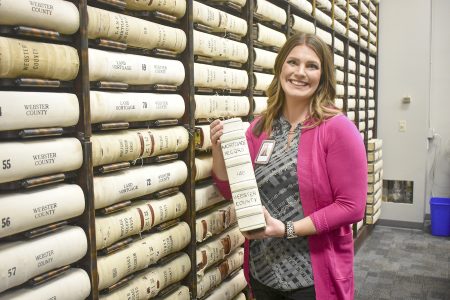
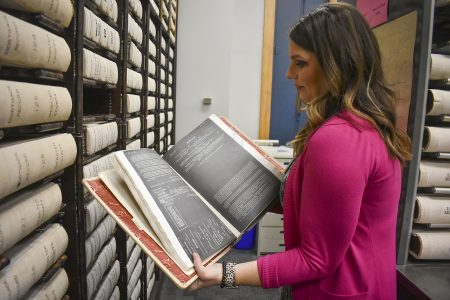
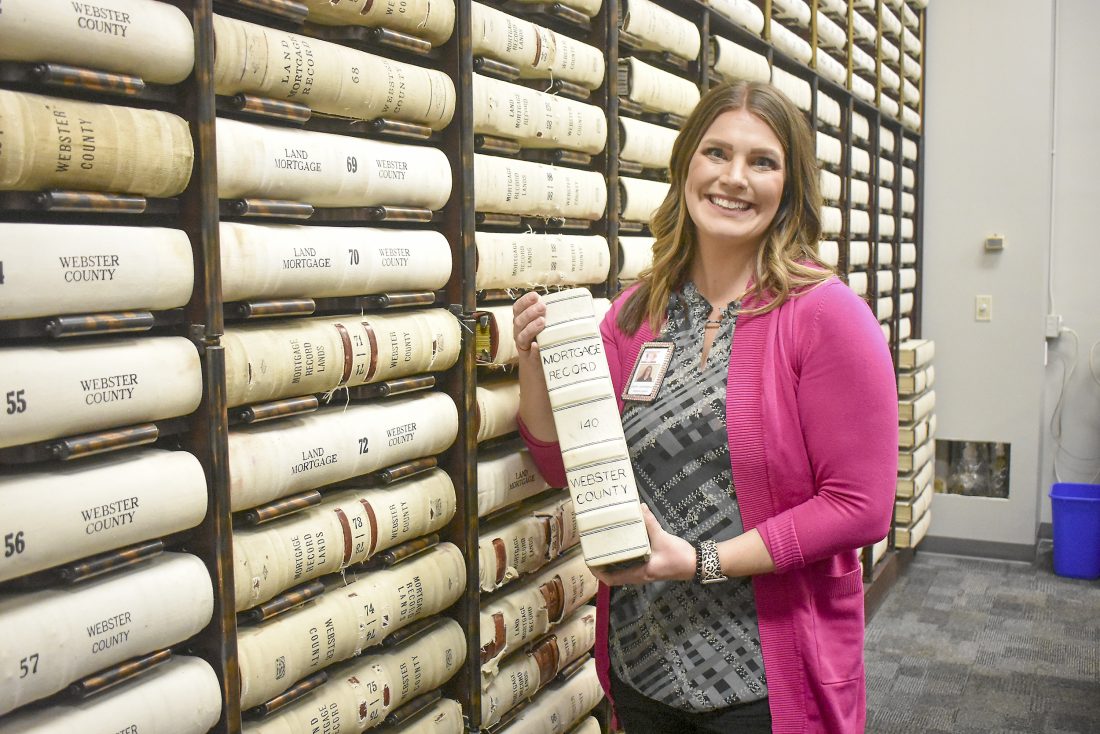
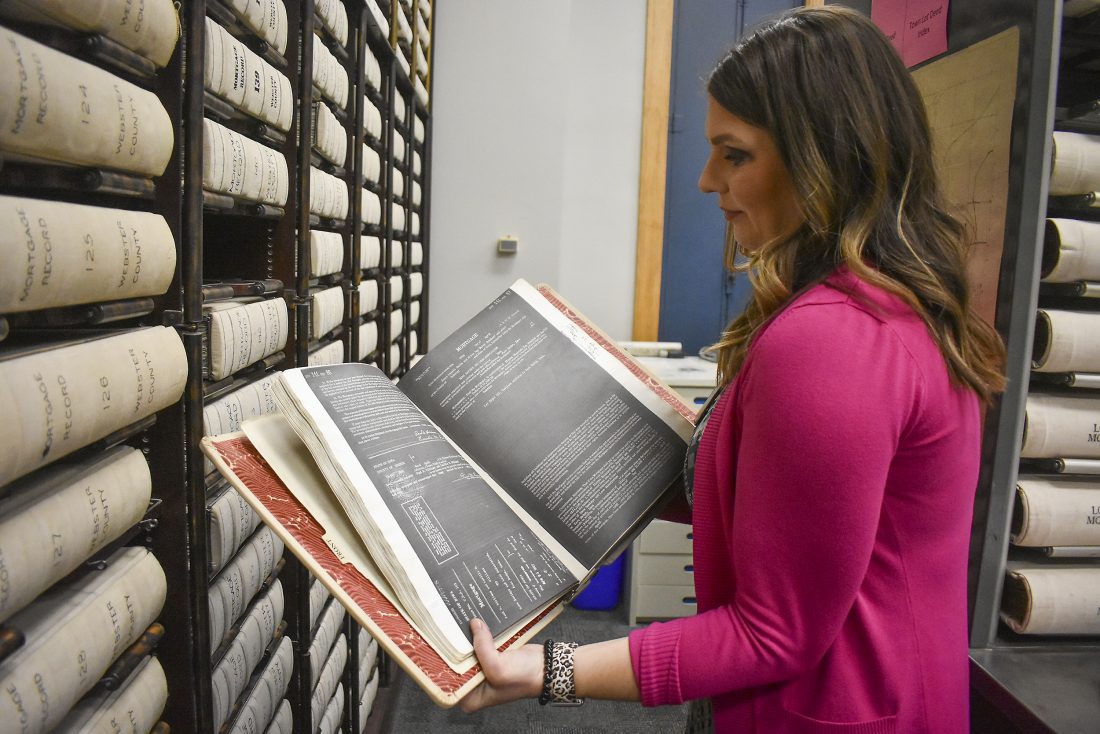
Webster County Recorder Lindsay Laufersweiler holds one of the dozens of bound books of land mortgage records that fills the vault in the recorder’s office at the Webster County Courthouse. County land records dating back to at least the 1870s are kept in the vault.
-
-
-Messenger photo by Kelby Wingert
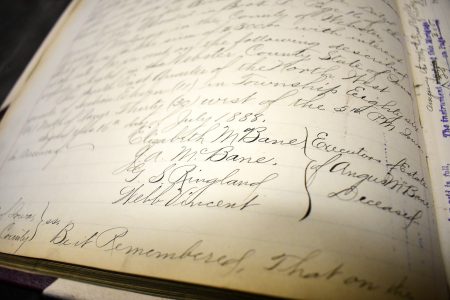
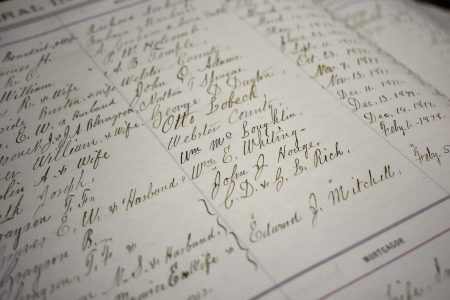
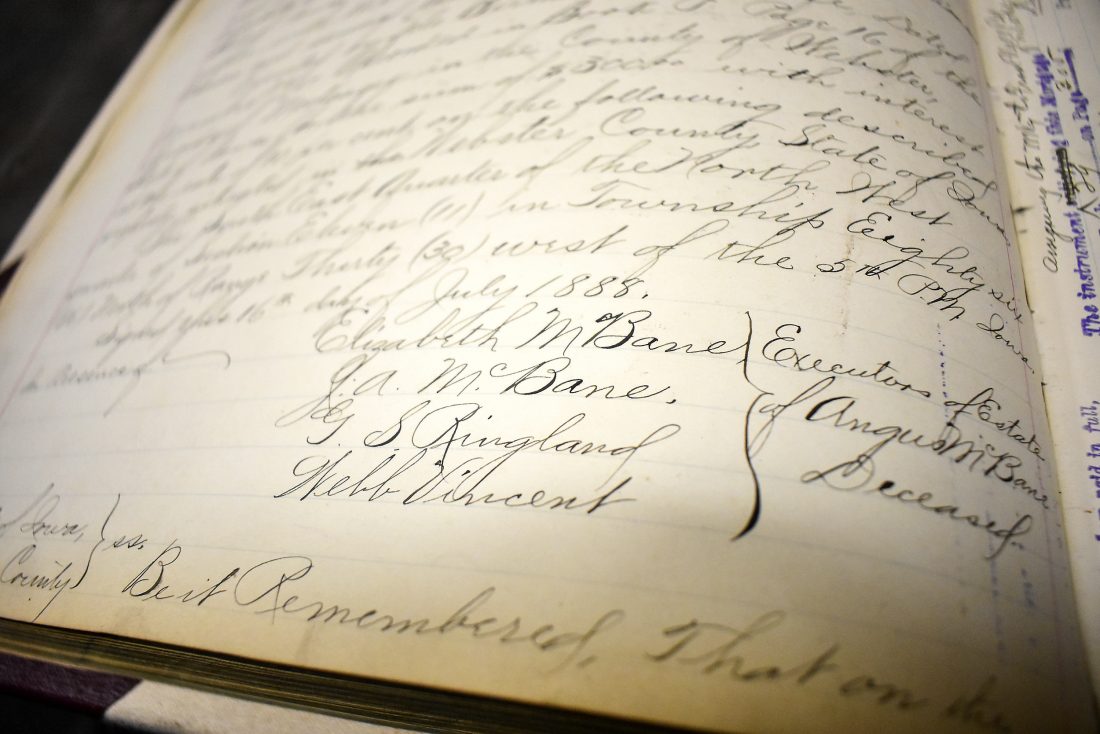
On a page from the county land records in July 1888, Webb Vincent and G.S. Ringland were listed as executors of the estate of Angus McBane.
-
-
-Messenger photo by Kelby Wingert
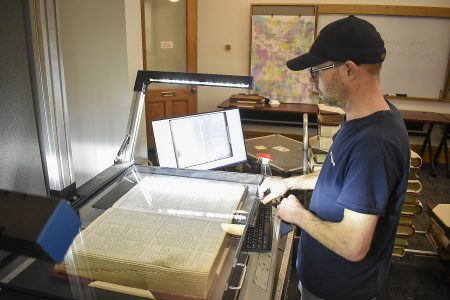
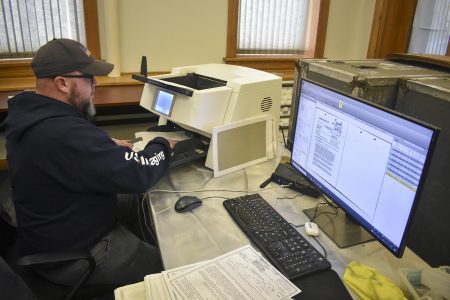
Chris Elrich, of Saginaw, Michigan, works for U.S. Imaging and scans images of historic records, like the land records of Webster County dating back to the 1800s.
-
-
-Messenger photo by Kelby Wingert
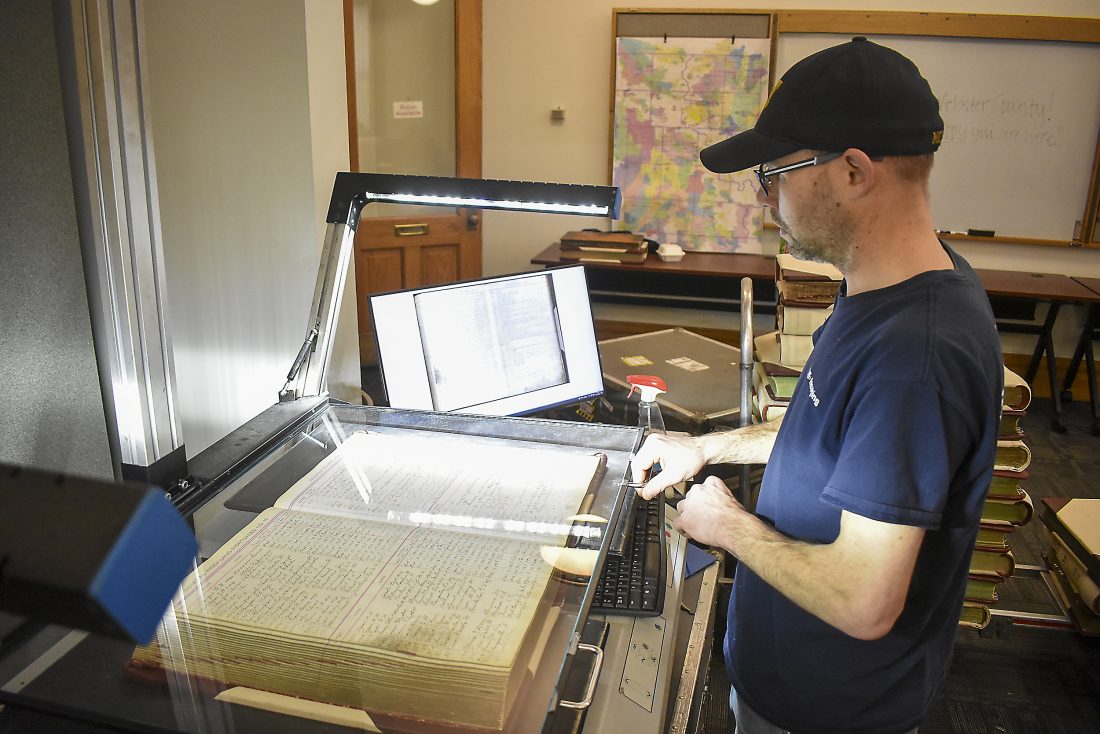
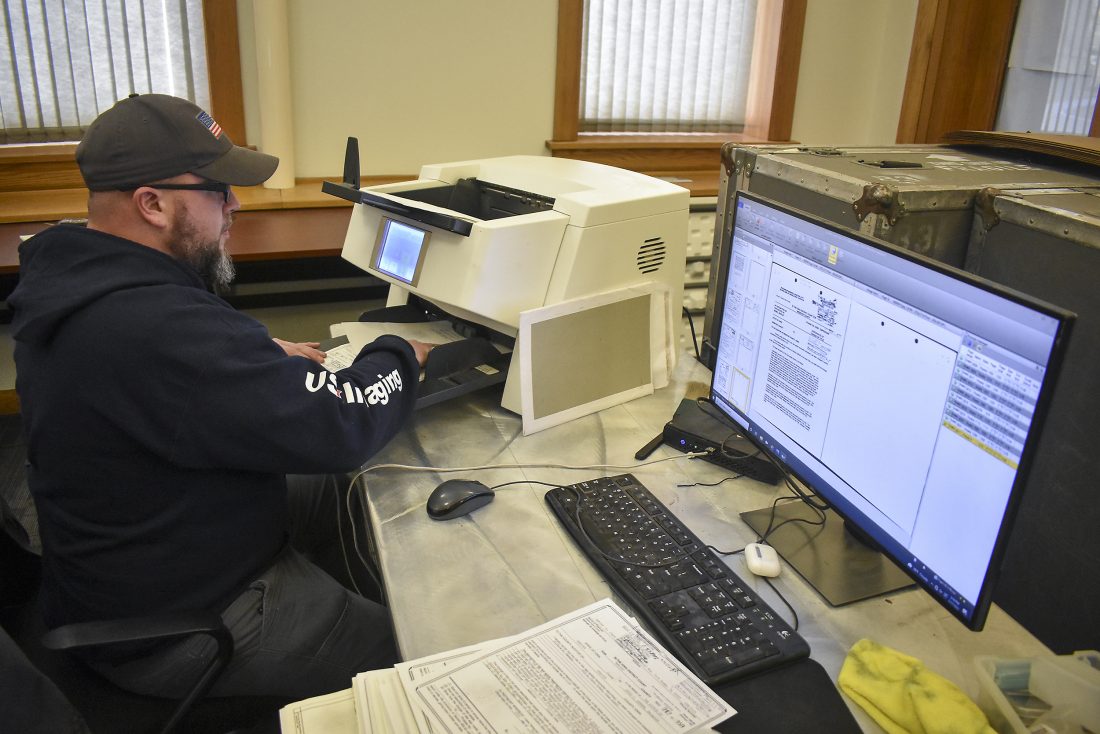
Kevin Yaw, of U.S. Imaging of Saginaw, Michigan, scans digital images of Webster County’s land records to help preserve the documents. Yaw and his team worked around the clock, 24 hours a day, for almost two weeks to scan nearly 430,000 documents from the Webster County Recorder’s Office.
-
-
-Messenger photo by Kelby Wingert
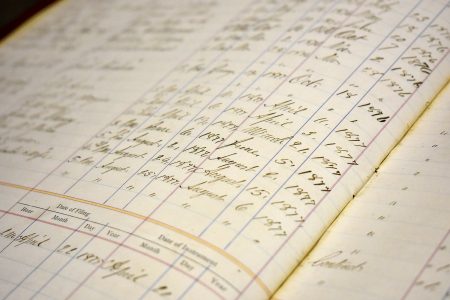
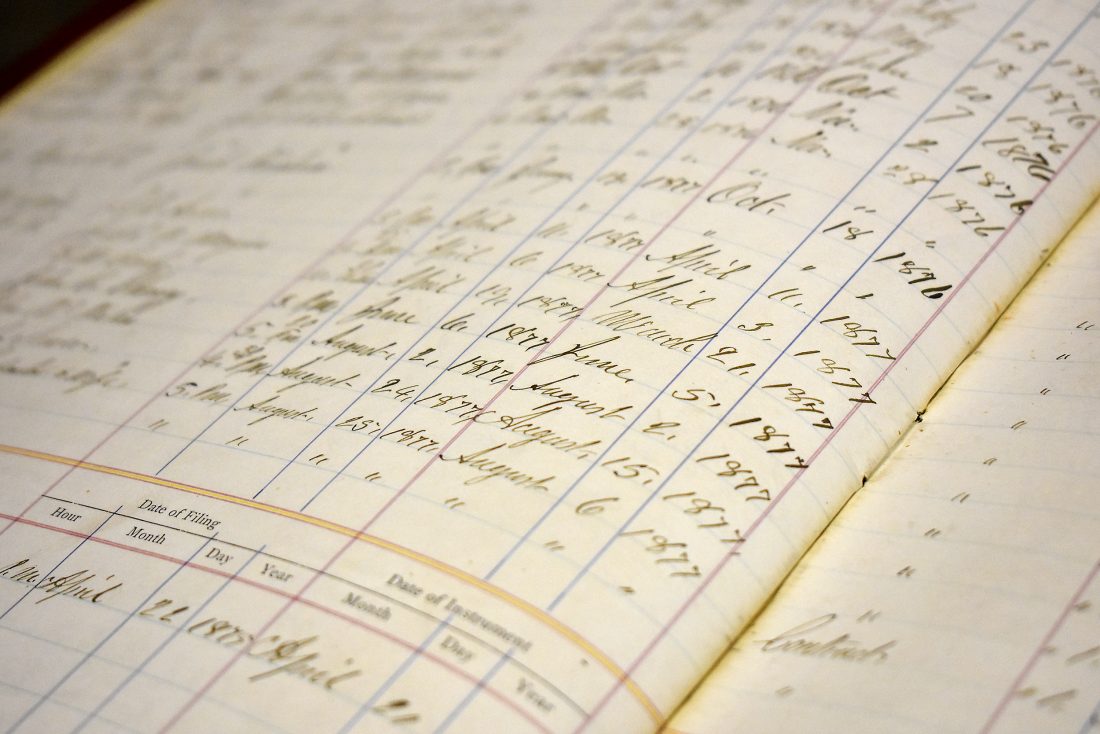
Notes in an index book of Webster County land records from 1877.
-
-
-Messenger photo by Kelby Wingert
Webster County Recorder Lindsay Laufersweiler looks through one of the dozens of bound books of land mortgage records that fills the vault in the recorder’s office at the Webster County Courthouse. County land records dating back to at least the 1870s are kept in the vault.
-
-
-Messenger photo by Kelby Wingert
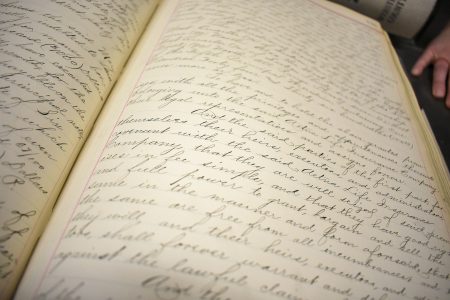
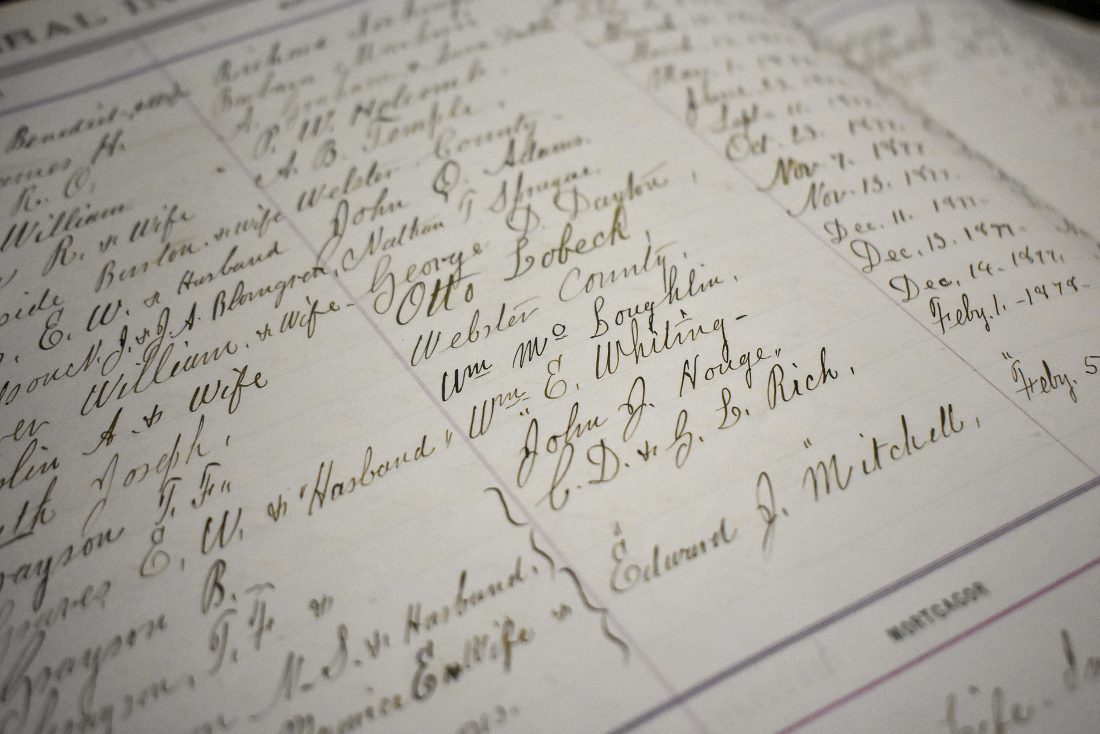
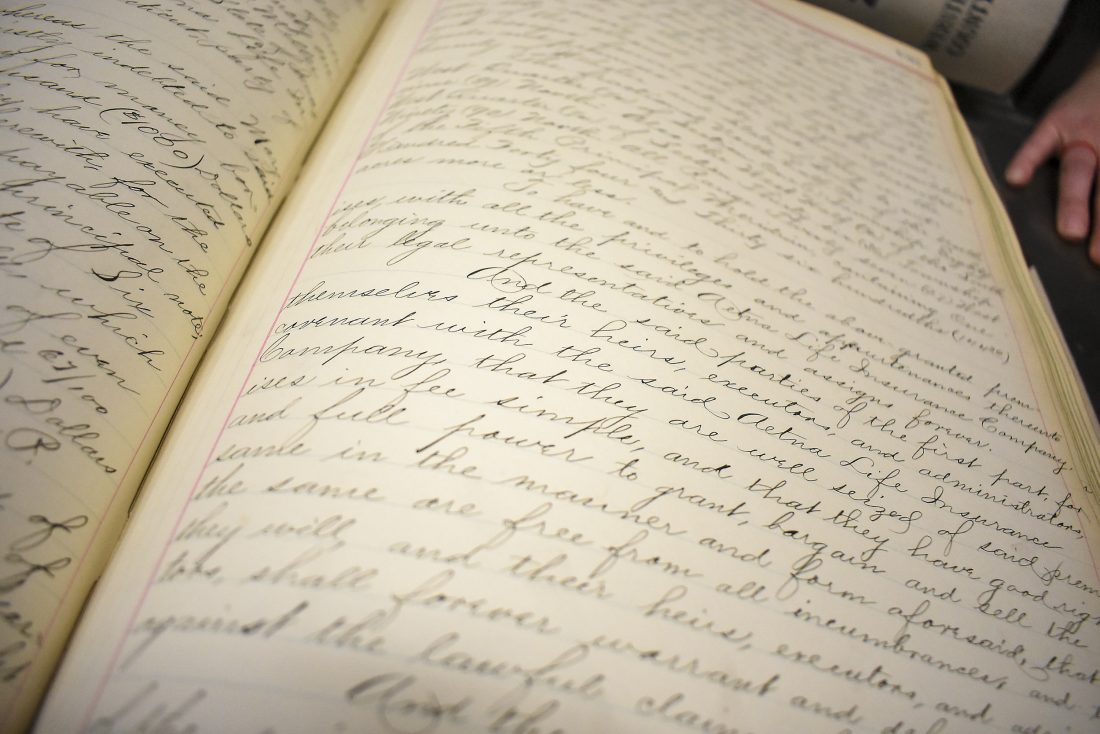
In the years before digital word processing, staff at the Webster County Recorder’s Office had to pass a handwriting test because all of the documents were hand-written.
-
-
-Messenger photo by Kelby Wingert
In the years before digital word processing, staff at the Webster County Recorder’s Office had to pass a handwriting test because all of the documents were hand-written.
-Messenger photo by Kelby Wingert
Webster County Recorder Lindsay Laufersweiler holds one of the dozens of bound books of land mortgage records that fills the vault in the recorder's office at the Webster County Courthouse. County land records dating back to at least the 1870s are kept in the vault.
Flipping through the heavy, hard-bound books of mortgage records from the early years of Webster County, one might find on the yellowing pages some familiar names scrawled in perfect calligraphy penmanship. Names like Webb Vincent, G.S. Ringland and Otto Lobeck, a Nebraska congressman who lived in Dayton in the 1870s.
Those pages recently saw daylight for the first time in many years as the Webster County Recorder’s Office completed a massive-scale project to digitize all of the county’s land records, going back 150 years.
In all, about 442,000 pages of documents of Webster County history were scanned.
“It’s an almost $300,000 project that we’re spending no county tax dollars on,” said Webster County Recorder Lindsay Laufersweiler.
The cost of the project was paid for with grant funding provided by the American Rescue Plan Act, Laufersweiler said.
-Messenger photo by Kelby Wingert
On a page from the county land records in July 1888, Webb Vincent and G.S. Ringland were listed as executors of the estate of Angus McBane.
“The funds were allocated to the counties, and then the county had a process where staff could advocate for their team,” Laufersweiler said.
This is something Laufersweiler has been wanting to do since she took office in 2015. She said she’s concerned about something happening to the building and the one-of-a-kind handwritten records being destroyed.
“These documents are handwritten and we have to preserve these records and the integrity of these records,” she said.
In the years before digital forms and computer typing, all county records were taken down by hand. For many years — up until the 1980s and 1990s — staff in county recorder offices had to pass a handwriting test to work in the office. They had to ensure all documents were easily readable.
Last week, the county brought in U.S. Imaging, a company based in Saginaw, Michigan, that specializes in scanning and digitizing historic documents, to run the project. The team got started on Feb. 7.
-Messenger photo by Kelby Wingert
Chris Elrich, of Saginaw, Michigan, works for U.S. Imaging and scans images of historic records, like the land records of Webster County dating back to the 1800s.
It was a round-the-clock operation, with two teams of six running 12-hour shifts for the last two weeks.
Kevin Yaw and his team from U.S. Imaging travel across the country to take on projects like this.
“I’ve scanned a lot of cool stuff,” he said. “I’ve done a whole museum of Christopher Columbus’ records in Pennsylvania. It was all written in Latin. I did one president’s birth certificate. We do pretty much everything. We scan whatever recorders and auditors want us to scan.”
For loose-leaf documents, the crew sends them through a machine that looks similar to an office copier — but instead it has sophisticated cameras and mirrors to capture a clear picture of the documents. Given the age and quality of the documents, Yaw has to keep on top of cleaning the equipment regularly.
“It gets pretty dirty,” he said. “They’re usually filthy.”
-Messenger photo by Kelby Wingert
Kevin Yaw, of U.S. Imaging of Saginaw, Michigan, scans digital images of Webster County's land records to help preserve the documents. Yaw and his team worked around the clock, 24 hours a day, for almost two weeks to scan nearly 430,000 documents from the Webster County Recorder's Office.
Much of the land records were in the form of large hard-bound books. For these, the team places it on a special machine that slides a glass panel over top to flatten the page, and a camera points straight down onto the book and takes a photo.
In order to get the scans done in a timely and efficient manner, the crews usually don’t take the time to read any of the documents, and the records start to blend together.
“When we come here, we just get the raw scans and then we send them to our office and they do what they call enhancements on them — they clean them up,” Yaw said.
Yaw and his team also scanned some maps and changes of titles for the Webster County Auditor’s Office, as well as some records, plats and maps for the Webster County Engineer.
The images will go through a double-inspection to ensure they are scanned right and the images are readable. When the county Auditor’s Office receives the images back, Laufersweiler will input them into the internal computer system for staff to use for search inquiries. The images will also be shared with the Iowa Land Records System, which will make the images available to the public online.
-Messenger photo by Kelby Wingert
Notes in an index book of Webster County land records from 1877.
“I just think it’s so awesome to see the vision and the hard work,” Laufersweiler said.
She said people have asked her now that everything has been digitally scanned, what will happen to the bound books and other records.
“This is our history, this is where we came from, so these books will still be here, they just won’t have to be touched as much,” she said.
The cost of upkeep on the records has not been cheap over the years — it can cost thousands of dollars for one of the bound books of records to be repaired, Laufersweiler said.
“So two years ago, I went to the board and I said we have to figure out something to get these documents preserved,” she said. “In case of a natural disaster, or a fire, or even a leaky pipe.”
-Messenger photo by Kelby Wingert
Webster County Recorder Lindsay Laufersweiler looks through one of the dozens of bound books of land mortgage records that fills the vault in the recorder's office at the Webster County Courthouse. County land records dating back to at least the 1870s are kept in the vault.
Laufersweiler said the Recorder’s Office was allocated $10,000 a year for the upkeep of the records, but now that the digital scanning process is complete, she’s been able to go to the county Board of Supervisors and not ask for that allocation anymore.
“Because of this project, that’s less county tax dollars being spent,” she said.
-Messenger photo by Kelby Wingert
In the years before digital word processing, staff at the Webster County Recorder's Office had to pass a handwriting test because all of the documents were hand-written.
-Messenger photo by Kelby Wingert
In the years before digital word processing, staff at the Webster County Recorder's Office had to pass a handwriting test because all of the documents were hand-written.
Local News

Make It OK
Busy summer planned on FD roads
Seven Ranges survey changed the country
Eyes on Webster County
The lack of video evidence available in the April 2025 murder of Michele “Luna” Jackson in Farnhamville ...
Fort Dodge once had its own steamboat