
Off and running
Mental health care, taxes dominate state issues
-
-
-Messenger photo by Hans Madsen
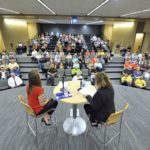
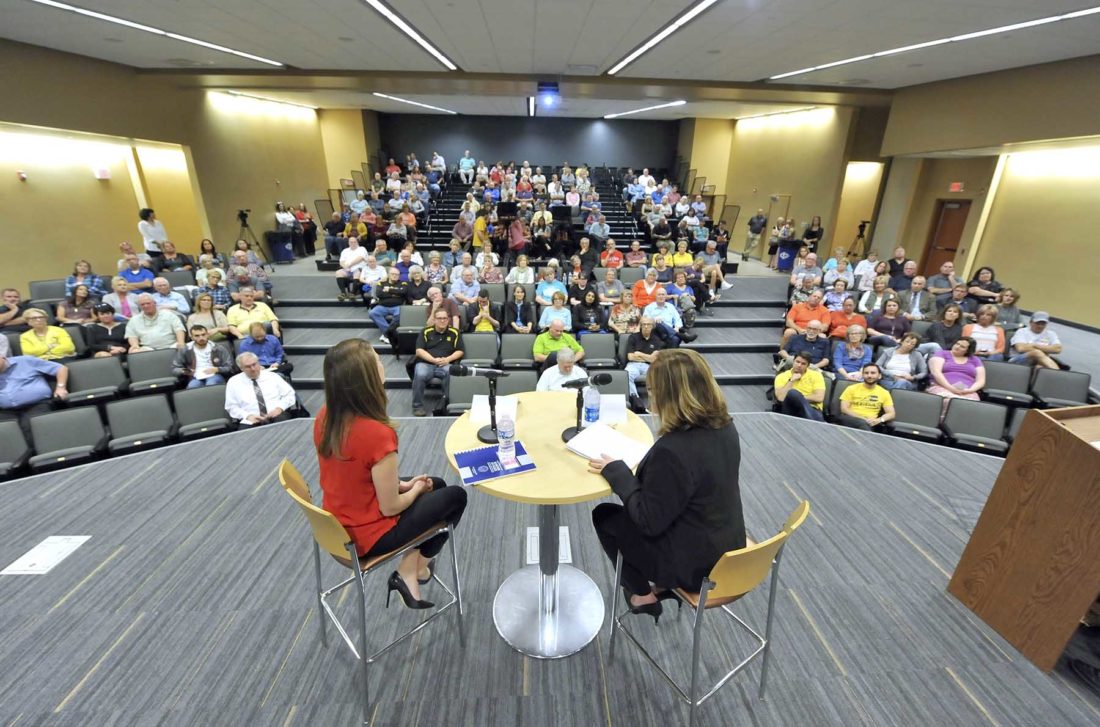
Candidates for the office of Webster County Treasurer, Kate Stucky, at left and her opponent, Brenda Angstrom, prepare to answer questions during a Greater Fort Dodge Growth Alliance-hosted forum at Iowa Central Community College.
-

-
-Messenger photo by Hans Madsen
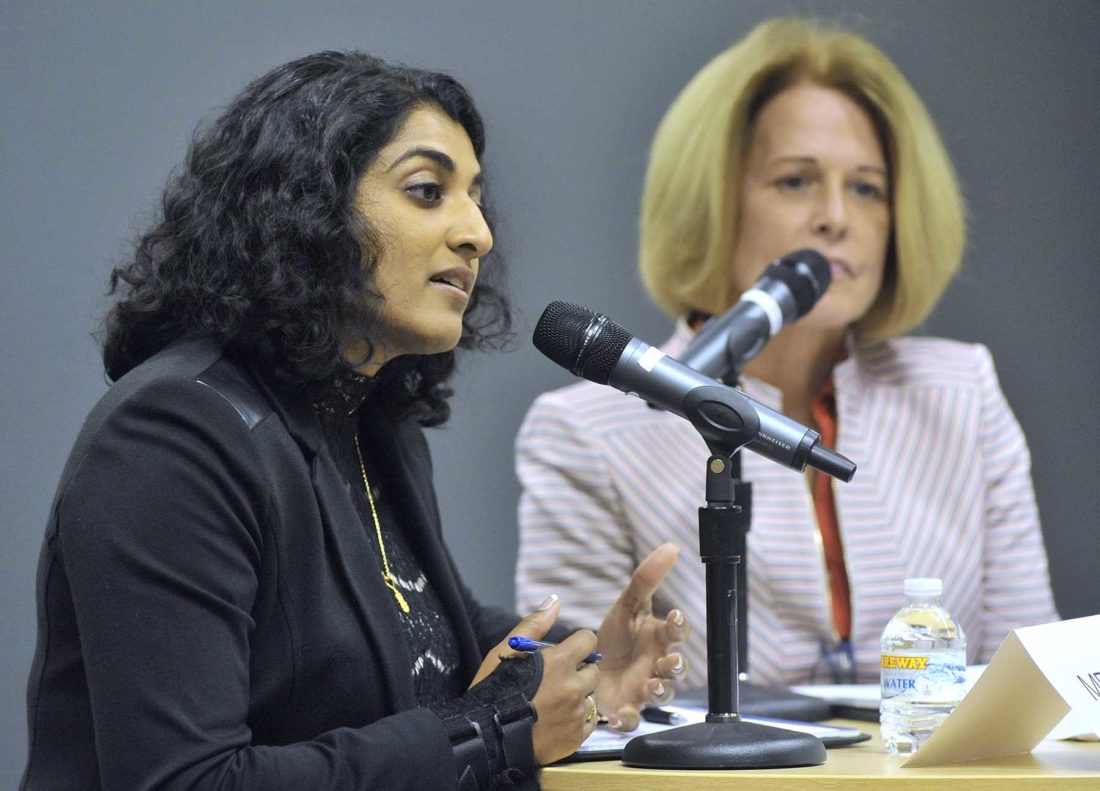
Iowa House candidates Dr. Megan Srinivas, at left, along with Ann Meyer answer questions Wednesday night during a Greater Fort Dodge Growth Alliance-hosted forum at Iowa Central Community College.
-

-
-Messenger photo by Hans Madsen
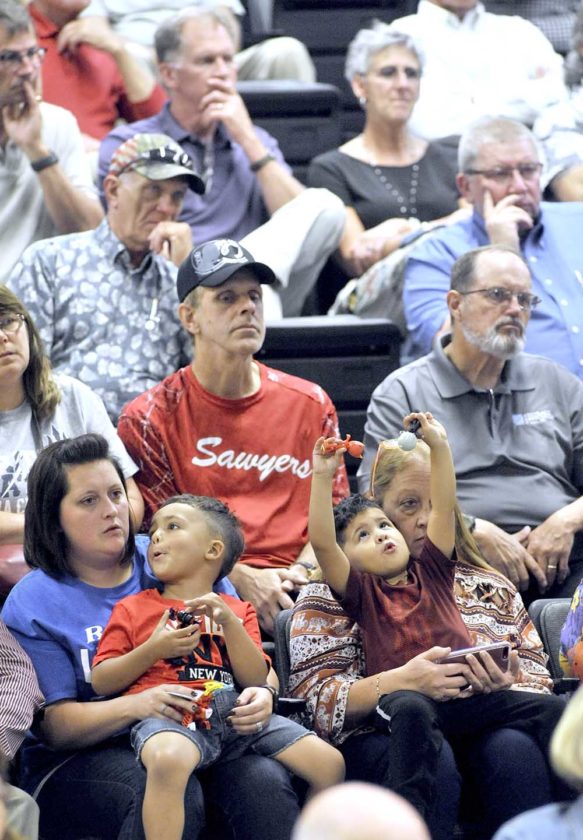
Jessica Moffitt, at left, holds onto KyMaree Wheat, 4, of Fort Dodge as Theresa Hilgendorf, of Twin Lakes holds onto Karter Wheat, 3, of Fort Dodge as they enjoy their toys Wednesday evening during a Greater Fort Dodge Growth Alliance-hosted forum at Iowa Central Community College.
-
-
-Messenger photo by Hans Madsen
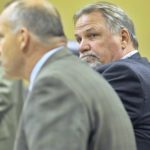
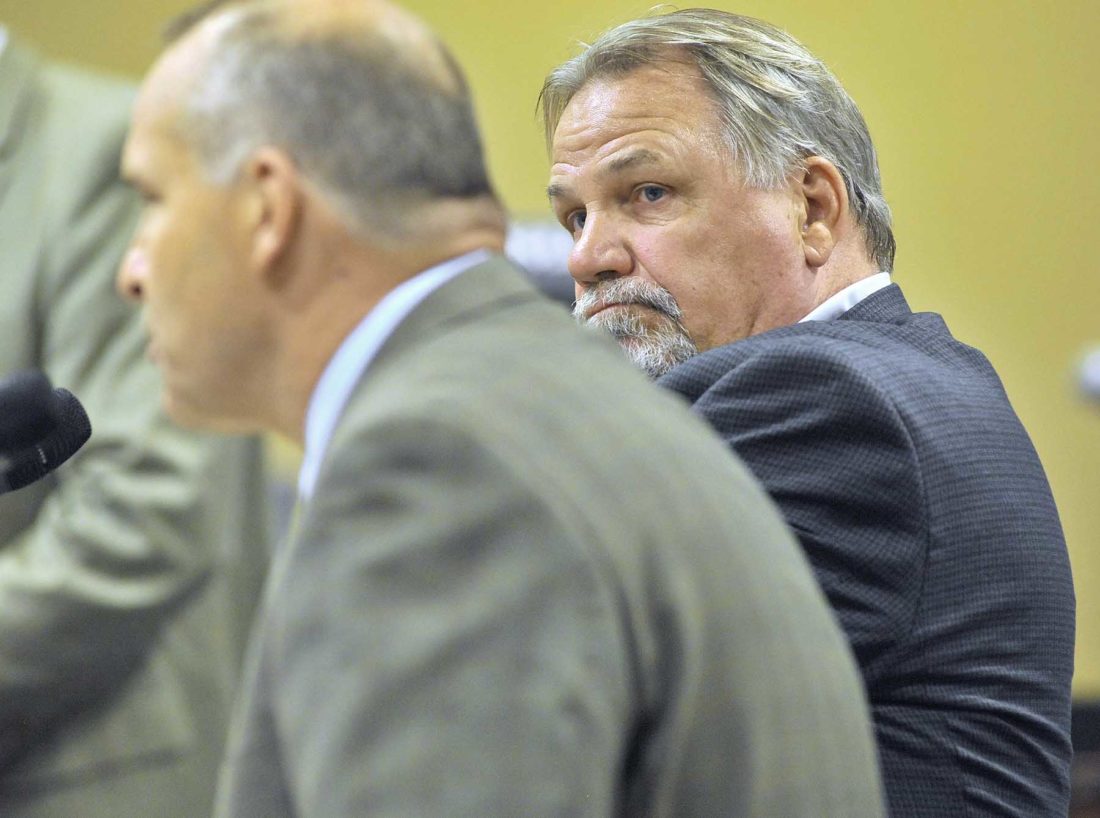
Iowa Senate Candidate John O’Brien, at right, listens as current Senator Tim Kraayenbrink, R-Fort Dodge, answers a question during a Greater Fort Dodge Growth Alliance-hosted forum at Iowa Central Community College.
-
-
-Messenger photo by Hans Madsen
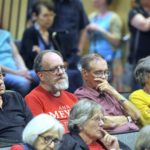
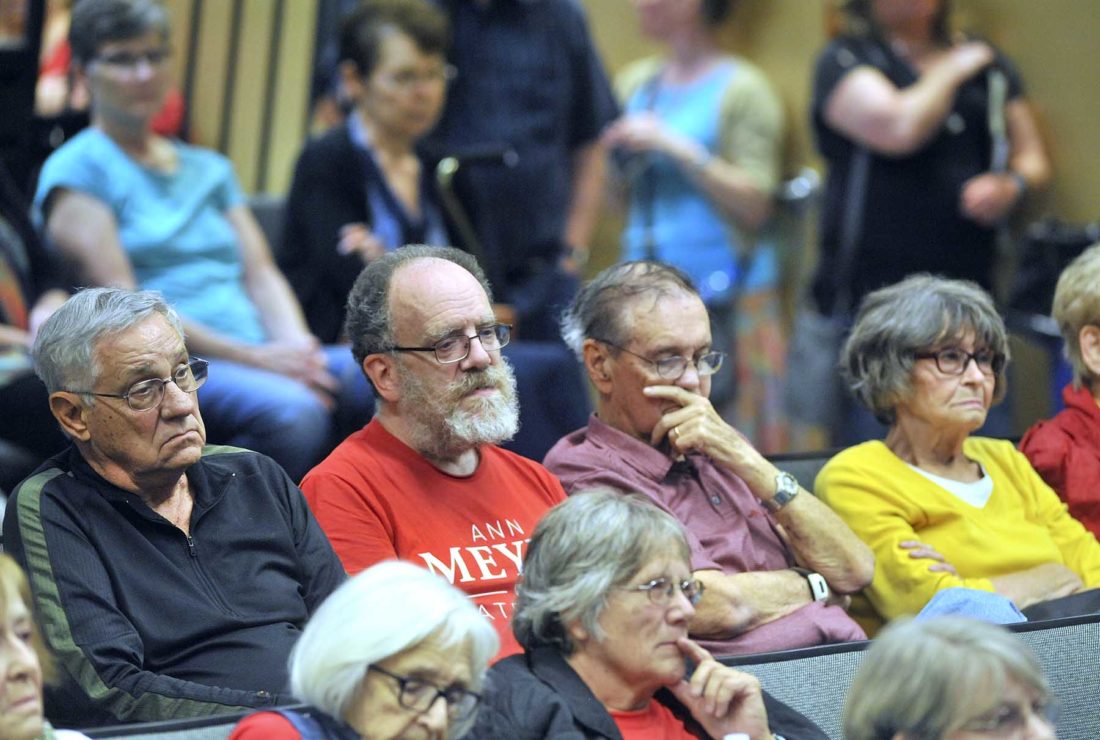
Members of the audience listen Wednesday evening during a candidates forum at Iowa Central Community College hosted by the Greater Fort Dodge Growth Alliance.
-Messenger photo by Hans Madsen
Candidates for the office of Webster County Treasurer, Kate Stucky, at left and her opponent, Brenda Angstrom, prepare to answer questions during a Greater Fort Dodge Growth Alliance-hosted forum at Iowa Central Community College.
Republican state Sen. Tim Kraayenbrink and his opponent, Democrat John O’Brien, clashed over taxes and collective bargaining rights for public employees during a forum in a crowded auditorium Wednesday night.
Earlier in the evening, Republican Ann Meyer and Democrat Megan Srinivas who are seeking a seat in the Iowa House of Representatives both listed health care and mental health care in particular as a top priority.
The four candidates fielded questions during a forum at Iowa central Community College attended by about 250 people.
Kraayenbrink v. O’Brien
Kraayenbrink, of Fort Dodge, said that during this year’s legislative session, he voted for what he called “the largest tax decrease in the state of Iowa history.”
-Messenger photo by Hans Madsen
Iowa House candidates Dr. Megan Srinivas, at left, along with Ann Meyer answer questions Wednesday night during a Greater Fort Dodge Growth Alliance-hosted forum at Iowa Central Community College.
He said the tax cut was prompted by the federal tax cut signed in late 2017 by President Donald Trump. Kraayenbrink said that because Iowans can deduct their federal taxes from their state income taxes, a lower federal tax burden would mean less to deduct. The result, he said, would be more taxes paid to the state. He estimated the windfall for the state at $111 million.
“We felt, as a Legislature, that it would only be fair to give that money back to hard-working Iowans,” he said.
O’Brien, who’s also from Fort Dodge, said cutting income taxes just moves the burden of paying for needed services to some other source of revenue.
“I’m not for raising taxes,” he said. “I said I hate taxes. But let’s be honest about it. Let’s say if we’re going to cut and give you income tax deduction, tell us where we’re going to get our taxes raised.”
O’Brien did say he is in favor of raising the state’s income tax by 1 percent. He said a constitutional amendment approved by the voters in 2010 calls for dedicating 3/8 of a cent of any future sales tax increase to funding conservation programs.
-Messenger photo by Hans Madsen
Jessica Moffitt, at left, holds onto KyMaree Wheat, 4, of Fort Dodge as Theresa Hilgendorf, of Twin Lakes holds onto Karter Wheat, 3, of Fort Dodge as they enjoy their toys Wednesday evening during a Greater Fort Dodge Growth Alliance-hosted forum at Iowa Central Community College.
“All it’s going to take is the guts of the Legislature to say, you know what, it’s time to impose this tax,” he said.
Kraayenbrink defended the track record of the Legislature, which is now controlled by Republicans, on education funding.
He said in the 2018 session, state basic aid to public schools was increased by $46 million. He added that a new law will help rural school districts afford their higher costs of transporting students.
According to Kraayenbrink, 51.3 percent of the state’s $7.3 billion budget is spent on education.
“I’m proud to say that,” he said. “I think we are making education a priority in Iowa.”
-Messenger photo by Hans Madsen
Iowa Senate Candidate John O’Brien, at right, listens as current Senator Tim Kraayenbrink, R-Fort Dodge, answers a question during a Greater Fort Dodge Growth Alliance-hosted forum at Iowa Central Community College.
“Education maybe, Tim, but not the employees,” O’Brien replied. “We can be honest about that. When collective bargaining was taken from not only the teachers and educators, but also from the people that work for the civil service, that was unfair.”
A state law enacted in 2017 restricted most public employee contract negotiations to just base wages. O’Brien described it as an “outside plan” conceived by people not in Iowa.
He said in Wisconsin, which curtailed public employee bargaining several years ago, the best teachers are leaving rural areas to go to urban areas where thay can get bigger paychecks.
Kraayenbrink said that’s already happening in Iowa.
“They’re already pulling these teachers away from the small schools,” he said. “It doesn’t have to be because of collective bargaining.”
-Messenger photo by Hans Madsen
Members of the audience listen Wednesday evening during a candidates forum at Iowa Central Community College hosted by the Greater Fort Dodge Growth Alliance.
Kraayenbrink said the change to collective bargaining rules received a “bad rap because it was changing something that had been in place for so long.”
“Honestly, what I had heard was a lot of positive things have come from the change,” he said.
Kraayenbrink and O’Brien are seeking to represent Senate District 5, which includes Calhoun, Humboldt and Pocahontas counties plus most of Webster County. Kraayenbrink is seeking his second term.
Meyer vs. Srinivas
Srinivas, a physician, and Meyer, a nurse, both put health care at the top of their priorities.
“Health care is not a party issue,” Meyer said.
She said expanding mental health care will be the No. 1 issue if she is elected.
“We have too many people going untreated,” she said. “We don’t have any inpatient psych beds in our area.”
According to Meyer, people suffering from mental health crises are often released from local hospitals after three days because no proper inpatient psychiatric care can be found for them.
“I will make it a priority to open psych beds,” she said.
“I saw my patients suffering from a broken health care system that fights against them,” Srinivas said.
She placed much of the blame on the state’s privatization of Medicaid, the state and federal health care program for the poor and disabled.
“It has led to the demise of rural health care,” she said.
She called for reverting back to a Medicaid system managed by the state.
Meyer and Srinivas both said they are in favor of increased use of medical cannabis in Iowa.
Meyer said she is opposed to legalizing recreational use of marijuana.
Srinivas said hemp should be considered as a potential agricultural commodity in Iowa. She did not state a position on recreational marijuana use.
The Democrat said she is in favor of “conservative, positive use” of tax increment financing and other tax credits.
“The progress we have seen in Fort Dodge and in Webster County would not happen without tax credits,” Meyer said. “We also have people living in buildings downtown that would not be possible without the workforce housing tax credits and others. All tax credits aren’t bad.”
Meyer and Srinivas are seeking to replace state Rep. Helen Miller, D-Fort Dodge, who is retiring when her term expires.
Miller represents House District 9, which includes Fort Dodge and northern Webster County.
Local News
America at 250: First Transcontinental Railroad had immediate impact on nation that continues to be felt today

Railroads were key to the growth of Fort Dodge

Fort Dodge Ford Toyota | Ja-Mar Cruise Night
SUMMER MISSION
For a variety of reasons, summer is often a difficult time to meet the nutritional needs of families in a ...
Frontier Days gets started
Frontier Days 2026 got its formal start Friday evening with patriotic music, a few recollections about the ...