
Wabi Sabi Farm: Organically grown in Iowa
Industry continues to grow across state; ‘Knowing that I’m growing food for people is a huge reward’
-
-
-Photo courtesy of the Iowa Organic Association
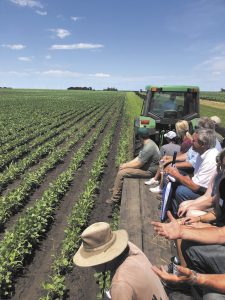
A field tour, like this one on the Paul Mugge farm near Sutherland, is a way for growers interested in switching over to organic to learn from those with experience.
-
-
-Photo courtesy of the Iowa Organic Association
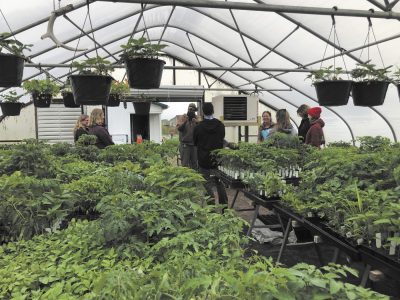
The Wabi Sabi Greenhouse is pictured above. The Wabi Sabi Farm was established in 2012 by Ben Saunders. The Granger farm consists of 10 tillable acres.
-Photo courtesy of the Iowa Organic Association
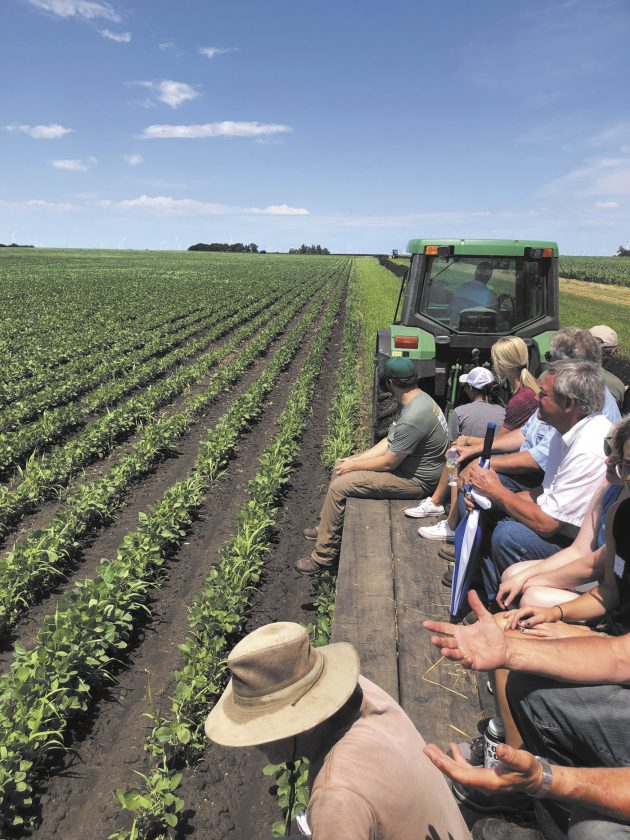
A field tour, like this one on the Paul Mugge farm near Sutherland, is a way for growers interested in switching over to organic to learn from those with experience.
The organic industry has grown by leaps and bounds, almost as fast as the weeds in your fence row.
In fact, data from the U.S. Department of Agriculture shows that the number of organic producers and processors in Iowa has grown 31 percent in the past five years. Iowa’s total sales for organic vegetables in 2011 was $1.2 million and $4.2 million in 2016, according to the Iowa Organic Association.
Organic farming isn’t a recent trend, however.
In 1975, organic farmer Francis Thicke of rural Jefferson County converted his conventional operation to organic.
Iowa ranks sixth in the United States for the number of organic producers and processors, with a total of 939 this year, up from 717 in 2012, according to the Iowa Organic Association. Most of that recent growth has been in organic grain, followed by organic dairy, eggs and poultry.
-Photo courtesy of the Iowa Organic Association
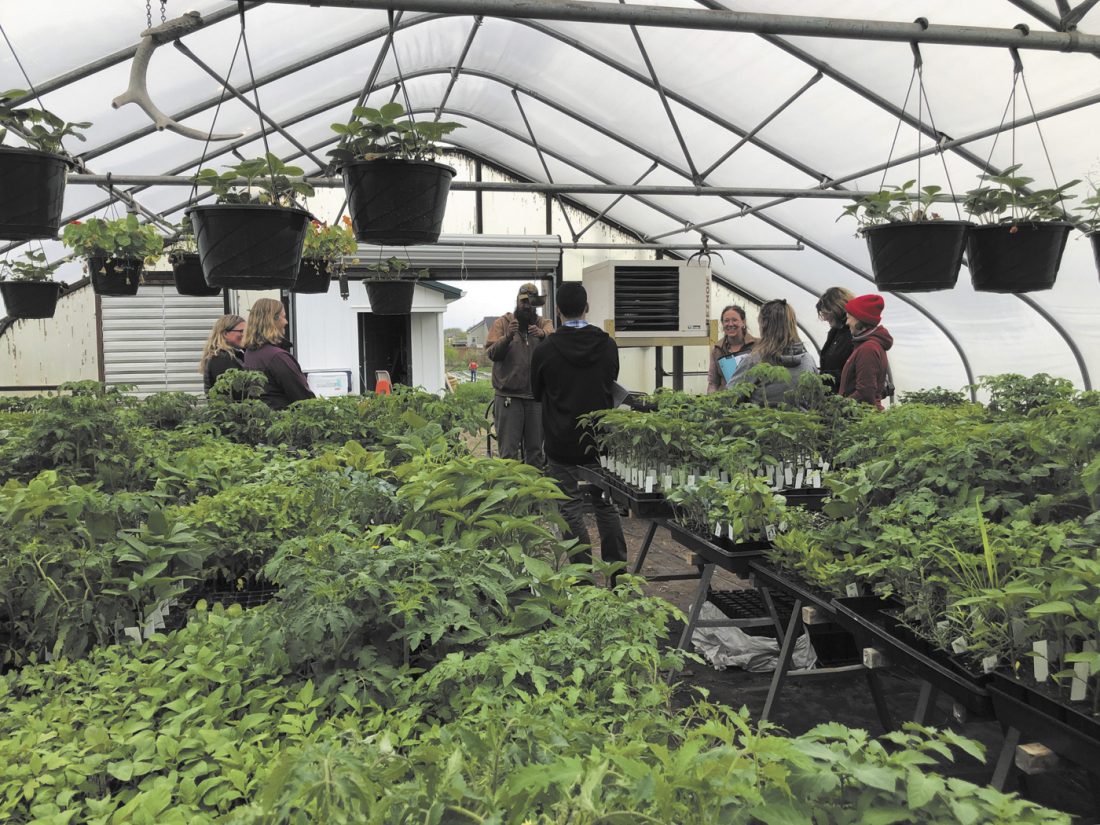
The Wabi Sabi Greenhouse is pictured above. The Wabi Sabi Farm was established in 2012 by Ben Saunders. The Granger farm consists of 10 tillable acres.
The USDA National Organic Program (NOP) publishes an online organic integrity database that lists every certified organic operation in the country. Monitoring the total number or types of certifications in the state is one way to measure growth on regular basis.
The USDA National Agriculture Statistic Service (NASS) surveys all certified or transitioning to certified organic farmers every five years. The survey provides valuable information about acres, operations, commodity, crop and sales.
While customers pay a premium price for organic food, oftentimes two to three times greater than conventionally produced food, they are perceived as healthier as they are not grown with as much, or any, of the traditional commercial herbicides, pesticides and fertilizer.
“Consumers are increasingly choosing local and organic because of concerns regarding health, the environment and animal welfare. I believe the data would suggest we have seen the growth of access to local and organic through direct sale, farmer’s markets, CSAs and mainstream availability in grocery chains,” said Rosalyn Lehman, executive director of the Iowa Organic Association. “In looking at the 2011 USDA NASS survey and the 2016 USDA NASS survey, you will see significant growth in Iowa organic egg production. Eggs are now Iowa’s largest organic commodity — 54 farms in 2011 and 74 farms in 2016; 13 million in sales in 2011 and 32 million in sales in 2016.”
Organic growers rely heavily on each other to stay up-to-date about demand, trends, best practices, tools and first-hand experiences, Lehman said.
“There isn’t a be-all and end-all to organic farming — there are as many variables as there are farmers. Having a strong network of mentors, experts and peers is a priceless resource. Additionally, there are many diverse resources available through educational institutions like Iowa State University Extension, or federal and state agencies such as the National Resource Conservation Service or the Iowa Department of Land and Ag Stewardship,” she said. “Resources, mentorship and support are also available by affiliation with local organizations like IOA, Practical Farmers of Iowa, Iowa Farmers Union or by connecting with online tools such as listserves, social media groups, eNewsletters, etc.”
It isn’t just organic produce, dairy and meat that Iowa growers embrace in their practices. Iowa is ranked fifth in the nation in organic production, producing more organic corn and soybeans than any other state, and is the second largest producer of organic pork in the United States. Iowa’s largest organic commodity is organic eggs, but it’s second in the nation for producing organic corn for feed.
“Iowa’s organic farmers are addressing climate change, improving soil health, protecting water quality, enhancing biodiversity and influencing the next generation of American farmers,” Lehman said. “Despite being a worldwide leader in agriculture and a national leader in organic production, less than 1 percent of Iowa’s agriculture production is organic. The United States imports nearly 70 percent of its organic grain each year, we are clearly missing an opportunity to meet this domestic demand. As this $50 billion organic market continues to grow, Iowa producers, landowners and businesses are looking for opportunities and leadership that encourages participation in this movement.”
Wabi Sabi Farm was established in 2012 by Ben Saunders. The Granger farm consists of 10 tillable acres, but Saunders raises cash crops on six to seven acres. The rest of the land is planted to cover crops and he uses a two- to three-year rotation plan alternating between the cash crops and cover crops. He raises 40 to 50 different types of fruits, vegetables, herbs and flowers with upwards of 200 different varieties.
“I also have a 26-by-48-square-foot heated greenhouse that I grow plants in for my own use, retail/wholesale veggie/herb plant sales and Microgreens production. I also have two 30-by-96-square-foot high tunnels that allow me to extend the growing season a month or two on either end,” Saunders said.
“I choose to grow organic because of my strong environmental ethic that was instilled in me first by my grandparents and my parents as a kid and further developed as I learned more as an adult. As a kid I fondly remember walking around the prairies, wetlands, forests and other ‘wild’ areas with friends, family and alone. I loved seeing all the animals, insects, plants, trees, etc., and knew from a young age I wanted to grow food for people with the smallest impact on the natural world as possible while still making a modest income. I choose to be certified organic because it is a third-party verification system to reassure folks I’m growing their food the way I say I am,” Saunders said.
Saunders uses pesticides and chemicals on his farm but only ones approved for organic production. He also uses physical barriers like deer netting, row covers and kaolin clay on the farm. The pesticides he uses are mainly derived from naturally occurring bacteria (like Spinosad), plants (like chrysanthemums) and trees (like Neem oil).
“I feel good farming the way I do and personally am opposed to conventional pesticides/chemicals but have many farmer friends that grow fruits and veggies using conventional pesticides,” he said. “Honestly, even though I’m a certified organic farmer, if I can’t find local/organic, I’d rather buy local and support them than organic from halfway across the country or world. I know they spray very sparingly because they care about the environment and pesticides are, conventional or organic, expensive, plus they’re also growing food not bred for shipping but flavor and nutritional qualities.”
Saunders primarily sells his produce through a customizable CSA (Community Supported Agriculture) program, at the Des Moines Farmers Market and wholesale to restaurants and local grocers in the Des Moines area and Ames.
“My plants are sold retail to home gardeners and wholesale to other farms all over Iowa and a couple local grocers. My farm has grown over the years from being solely a CSA farm to now offering produce at farmer’s markets, restaurants, grocers and to other CSAs,” Saunders said. “The plant production part of the farm has evolved from growing my own and selling a small amount of plants to home gardeners to selling certified organic plants, both retail and wholesale, all over Iowa.”
His customer base, both retail and wholesale, has steadily increased in past years because more people and food-related businesses are seeking locally grown, certified organic food.
To help with the workload, Saunders has three to four full-time employees on staff with two to three part-timers and a handful of seasonal employees. Together, they work to offer people locally grown, certified organic food, something Saunders said is “very rewarding.”
“Some of the biggest personal ‘rewards’ for me are walking around my farm hearing frogs chirping, finding the occasional salamander under a rock, seeing endangered/threatened species of snakes in abundance and especially seeing ground nesting bird babies all over the farm since I don’t even mow certain areas till their nesting season is over. Seeing those little killdeer babies running around the farm after leaving the nest — they look like big cotton balls with toothpick legs and are very clumsy — is one high point for me every year,” he said.
“Plus knowing that I’m growing food for people is a huge reward. I’ve got CSA members that are second generation Wabi Sabi Farm members. They grew up eating food I’ve grown and now want it for their families.”
The name of Saunders’ farm happens to be one that holds a special meaning for him, too.
“My farm name came from me learning about the Wabi Sabi philosophy from an old Mother Earth News magazine that did a story on it. The two key points I was drawn to, representing local food, was to recognize the ‘imperfect beauty of nature’ and to respect the ‘natural cycles of growth and decay.’ A real tasty heirloom tomato, for example, may not look perfect like a red and round grocery store tomato, but I feel is far superior in flavor. The idea of the ‘natural cycles of growth and decay’ seem to also ring true to me in the idea of eating locally and with the seasons,” he said.
Just as interesting as the farm’s name is its history. The land Saunders cultivates was originally called Turtle Farm and was owned and farmed by Angela Tedesco, whom many believe to be one of the first, if not the first certified organic produce farmer in Iowa and pioneer of one of the first CSAs in the state.
“I took a seasonal farm crew position working for her 14 years ago. I kept working for her, and then around 2008 she offered me the position of farm manager as she wanted to slowly transition out of active farming. I slowly took on more and more responsibilities of the day-to-day operations of the farm and in the winter of 2012, she graciously offered to rent me the farm to start my own farm (business),” Saunders said. “Then four or so years ago, Angela sold off a small part of the farm and donated the rest of the land to Practical Farmers of Iowa. They now own the land and are preserving this healthy farm ground from ever being developed.”
Progress 2020 Agriculture

FarmHer: Making waves across Iowa
Iowa Corn Growers Association announces 2020 legislative priorities
Taking into consideration their members’ concerns on top issues affecting corn growers, the Iowa Corn Growers ...

Ag Processing Inc.: An Iowa cooperative

Ag Property Solutions: Where design meets possibility

Kinze Manufacturing; Staying one step ahead
