A home for the mules
Cripes find new use for an old barn
-
-
Farm News photo by Lori Berglund
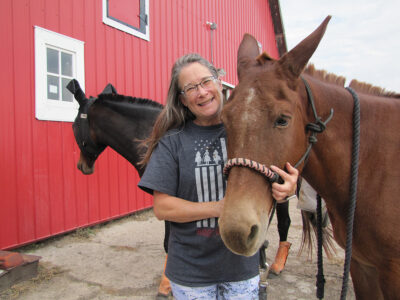
Richenda Cripe stands with one of her mule friends at the family’s Dayton area farm. She and her husband have converted the barn into a home for their three mules.
-
-
-Farm News photo by Lori Berglund
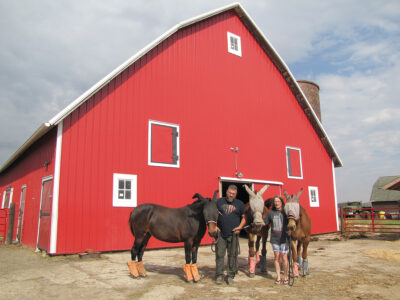
Corey and Richenda Cripe have converted their Webster County barn into a comfortable home for their three mules.
Farm News photo by Lori Berglund
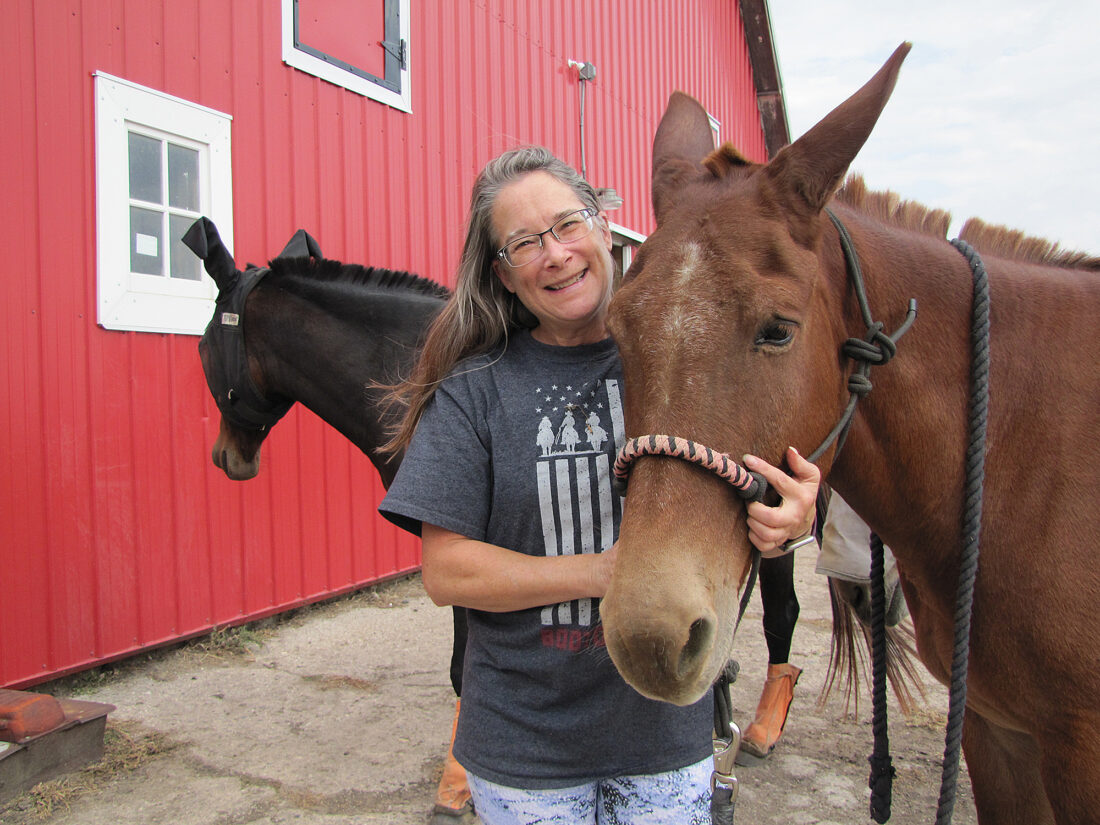
Richenda Cripe stands with one of her mule friends at the family's Dayton area farm. She and her husband have converted the barn into a home for their three mules.
Editor’s note: This feature first ran in a special publication called Barns, published Nov. 28, 2025.
DAYTON — It’s easy to see that these three pals love their spacious country home. Warm walls, a strong roof, and a comfortable pad atop the concrete floor give them shelter from the cold. But Hazel, Grute and Miss Pearl are particularly fond of the great outdoors, particularly the lush pasture on the other side of the white painted fence, gently nudging a visitor to, “Please open the gate, and let us roam the pasture.”
Mules are nothing if not persistent, and these three know the routine.
For Corey and Richenda Cripe, a place to have mules again was just one of many benefits that attracted them to this farmstead north of Dayton.
“We were looking for a place because my son and my grandson are on the family farm near Ogden — that’s the fifth generation on the same farm ground,” Richenda Cripe explained. “We decided that we would just go find some place to live, and he bought the farm. That’s how we were looking here, and it had the barn and a nice, big shop.”
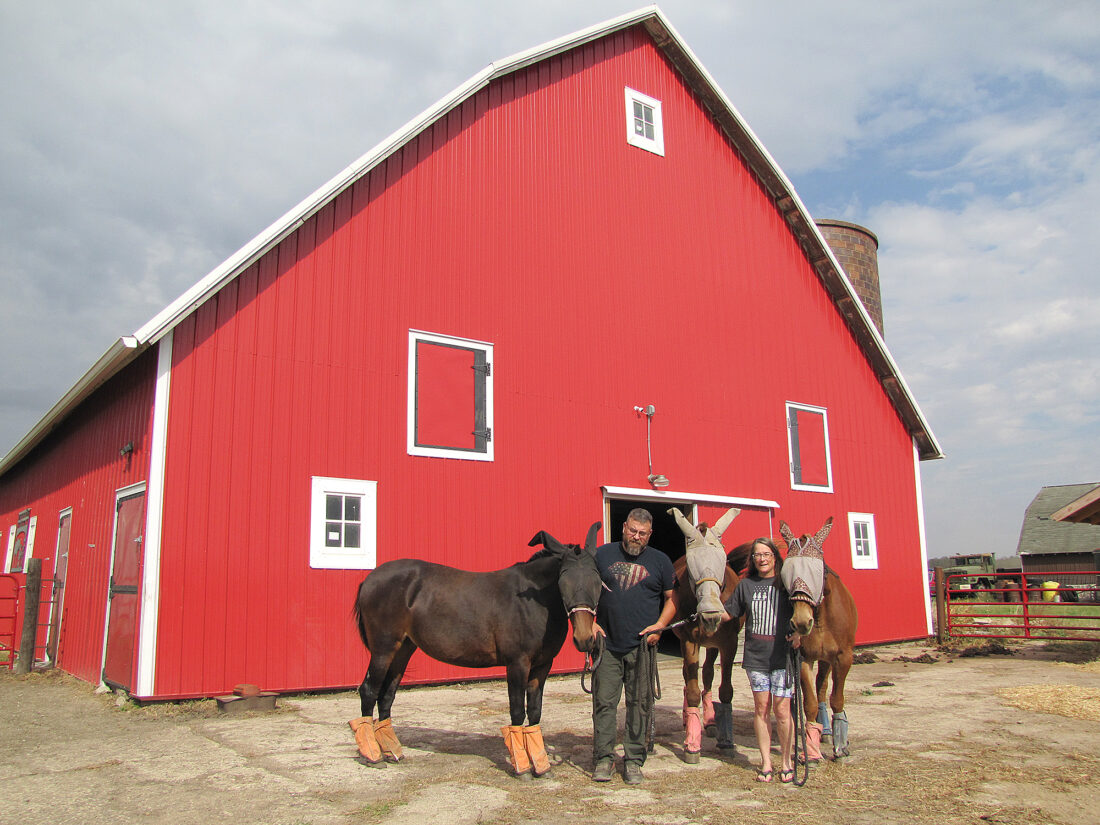
-Farm News photo by Lori Berglund
Corey and Richenda Cripe have converted their Webster County barn into a comfortable home for their three mules.
The home is a typical, two-story, farmhouse, but it was the whole picture of the outbuildings and pasture that drew the couple to the farmstead. The house was built in 1914, and it’s believed that the barn was built prior to that.
“The barn had a floor plan that we could do everything that we needed to do,” she said. “The roof was already done on the barn because the former owner had done all metal on the roofs on the outbuildings when they built the new shed. So that was a huge expense that was already done.”
The fact that the acreage is on a black-top road was also a big factor. Corey Cripe works for the Iowa DOT out of Boone County, making for a better commute, especially in the winter.
“I’m the GOA (garage operations assistant), the number two out of the shop, and we maintain all of Boone and Greene counties and part of Carroll County,” he said.
Like so many old barns, this one was full when the Cripes purchased the property.
“It was chest-deep on me,” Corey Cripe said. “There was just a path you could walk through.”
While the best “treasures” were long gone, the couple found an abundance of old documents and buttons galore. The barn features a large center alley, where the former owner stored his combine, and a haymow on either side.
“There were scrapbooks and old, old checks with holes punched through them from the 1930s, and jars and jars of buttons,” Richenda Cripe recalled. “We cleaned it all up when I got back into equine, and now we use it for mules, hay, and storage.”
The three mules make their home on the south side of the barn, where hogs once called home. What had been a nearby feed room was converted into a tack room, storing all the essentials to care for the health and well-being of the animals.
While horses may be more popular in the equine family, this couple has a soft spot in their hearts for mules.
“Mules are more sure-footed,” Richenda Cripe said. “They can see all four of their feet. So, if you’ve ever noticed, that’s why they take mules down to the bottom of the Grand Canyon, because they can see where they are putting their back feet, where a horse can’t.”
Placement of the eyes gives them that fuller range of vision. The so-called reputation for being stubborn can actually be a good thing for a rider, because a mule will not injure itself, but a horse will. That innate nature protects not only the mule, but also the rider. “They’re not necessarily stubborn, they’re just smart,” she added.
As part donkey and part horse, mules also have a little different hoof structure.
“Donkeys have harder hooves than horses, but it all depends on breeding, just like anything,” she explained.
The couple often take their mules for trail rides at nearby Brushy Creek State Recreation Area.
“We also like to go down to southern Missouri, and we went to South Dakota this year,” Richenda Cripe said. “We go all over Iowa.”
While basic improvements such as the roof were already in place, the couple has continued to enhance the barn in several ways. Corey Cripe built all new doors and windows, welding them together from heavy-duty materials. He also built a round bale feeder, complete with a roof to keep the rain and snow off the bales, as much as possible.
Richenda Cripe would like to add stalls and has more ideas for improvements as the years go by.
“I just love how big this barn is,” she said.
Clearly, Grute, Hazel and Miss Pearl are as pleased to be here as the Cripes. After all, what’s a farm home without a good barn?
Local News
FD council to continue budget work
The Fort Dodge City Council will resume work on the proposed budget for 2026-2027 when it meets tonight. The ...
Soup supper will support mission work
First Presbyterian Church in Fort Dodge will hold a soup supper on Saturday to support its mission work. The ...
A home for the mules
Fire Department prevents fire from spreading
A taste of Italy
The Blanden Memorial Art Museum presents “Cityscapes,” a watercolor exhibition by Fort Dodge native Richard ...