
A turning point
Through Drug Treatment Court, Graves hopes to change
-
-
-Messenger photo by Chad Thompson
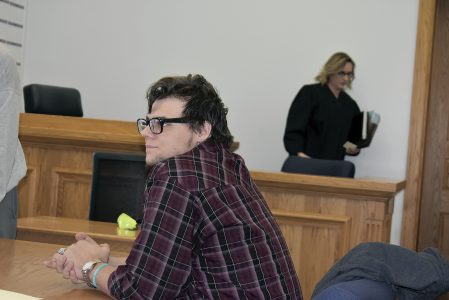
Timothy Graves, of Fort Dodge, awaits a meeting with District Court Judge Adria Kester, following Webster County Drug Court Friday morning. Graves was 30 days sober as of Friday.
-
-
-Messenger photo by Chad Thompson
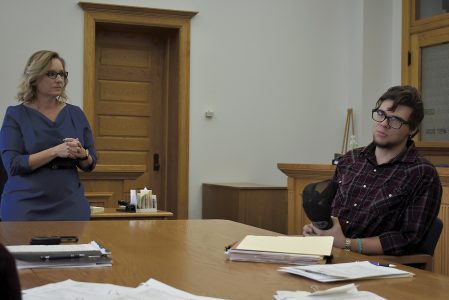
Timothy Graves, of Fort Dodge, answers some questions about his treatment following Webster County Drug Treatment Court Friday morning. District Court Judge Adria Kester, who oversees Drug Court, looks on at left.
-Messenger photo by Chad Thompson
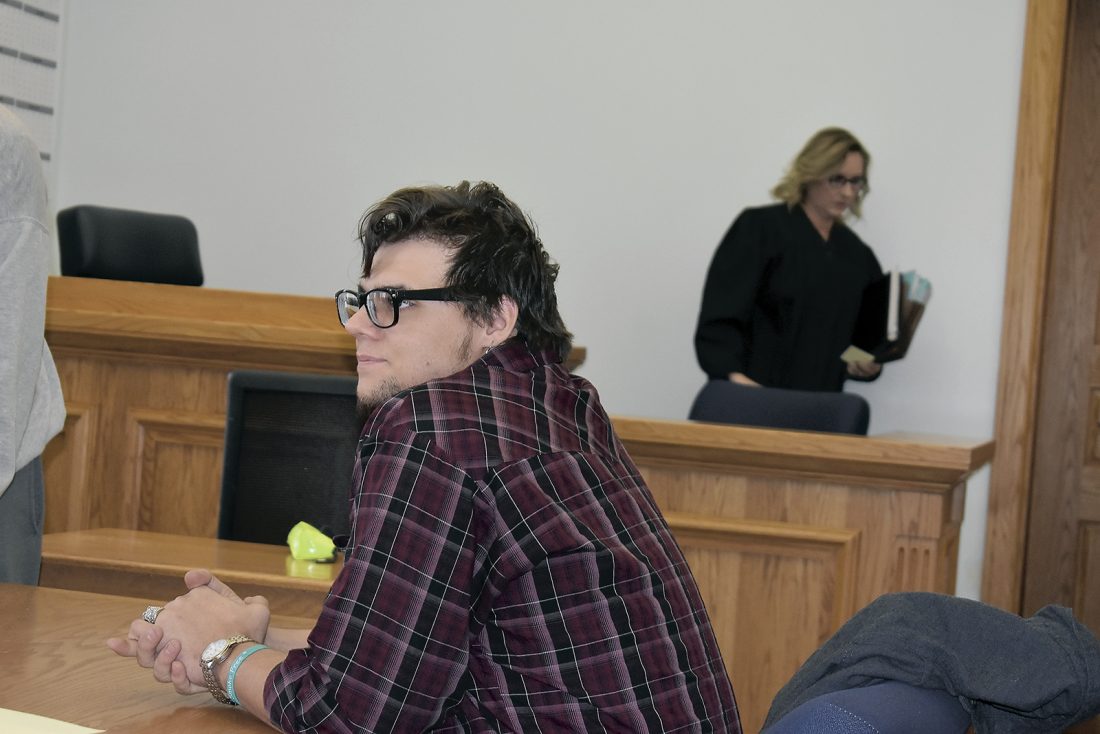
Timothy Graves, of Fort Dodge, awaits a meeting with District Court Judge Adria Kester, following Webster County Drug Court Friday morning. Graves was 30 days sober as of Friday.
In high school, Timothy Graves was arrested for smoking marijuana on a school bus.
A few years later, Graves, of Fort Dodge, found himself abusing drugs like methamphatemines.
“I moved out of the house when I was 18,” said Graves, who was adopted by his grandparents at age 8. “I got in with the wrong crowd.”
Graves, now 22, admits he’s at a turning point in his life.
He’s enrolled in the intensive Webster County Drug Treatment Court.
-Messenger photo by Chad Thompson
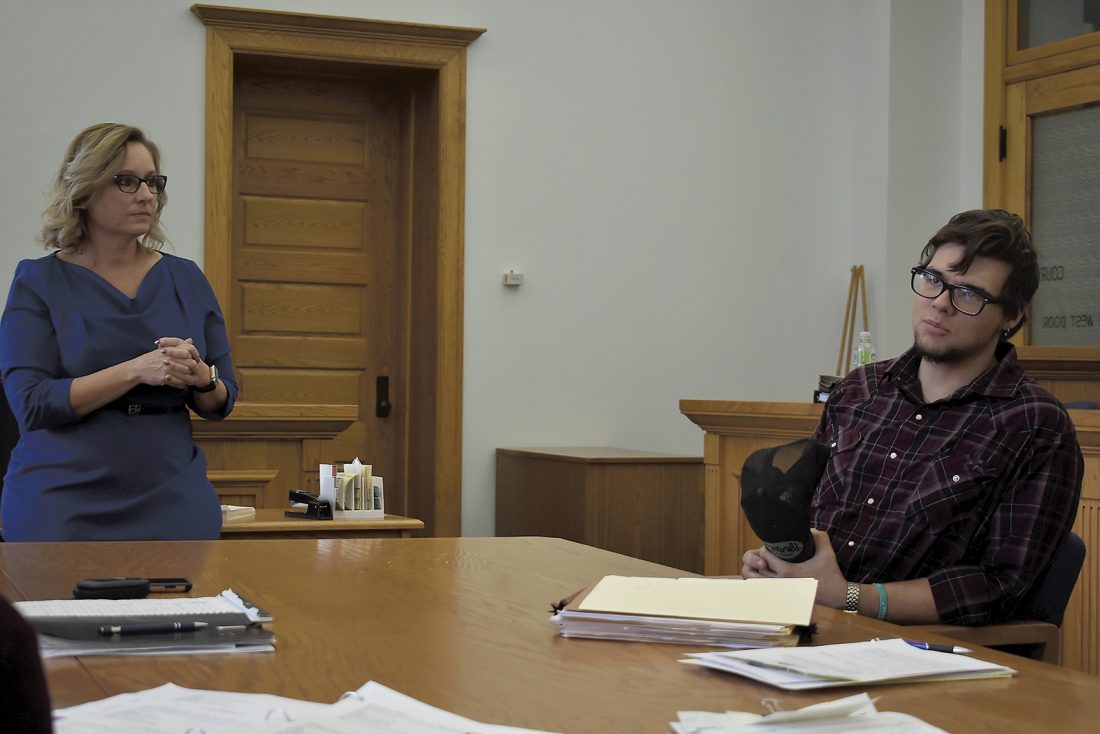
Timothy Graves, of Fort Dodge, answers some questions about his treatment following Webster County Drug Treatment Court Friday morning. District Court Judge Adria Kester, who oversees Drug Court, looks on at left.
On Friday, Graves was able to tell District Court Judge Adria Kester, who oversees the Drug Court program, that he’d been sober for 30 days.
He received a round of applause from those in attendance.
But Graves admits he has work to do to get where he wants to be.
And that’s sober, free and self-sufficient.
“We are one step from freedom or prison,” Graves said. “We get to decide on what we want.”
Kester asked Graves about the seven days he spent in jail.
“Not fun at all,” Graves said. “It was a nice wake up call.”
Graves has since been in residential treatment at Community and Family Resources.
“I’ve been in residential treatment,” Graves said. “The first week was, ‘I don’t want to be here.’ But now I am like, ‘alright, I am here. Let’s get through it. Do what I have to do.'”
Graves said the treatment center is supportive.
“It’s to build our coping skills and give us a plan when we get out,” Graves said.
Kester told Graves his next assignment would be to identify something within his group at the treatment center that he would like to change. He’s then supposed to try to put it into action.
“It might not be easy,” Kester said.
Graves’ grandparents were in attendance for the session.
“It’s important to have support for our clients,” Kester said.
Talking to a judge has also proven beneficial, according to Kristen Halbur, probation officer.
“Research has shown that this relationship between clients and the judge are vital to having a successful Drug Court,” Halbur said.
According to Halbur, people who successfully complete Drug Courts are at a much lower risk to reoffend.
Graves said the program to this point has helped him.
“I am very grateful for this program,” Graves said. “It has kept me accountable for my actions. It is up to us how we take responsibility for what we have done.”
Graves said his goal is to change his lifestyle.
“I want to be a productive citizen and help the youth find a better direction than the path I took,” he said.
Graves will return to Drug Court next week to check in.
Local News

Snyder: ‘Go out and try things in life’

Class urged to make their ‘dash’ meaningful

Honors heaped high

‘Our journey is just beginning’

Double trouble and Marley
FD council to consider architect for library project
The Fort Dodge City Council will consider hiring an architect to handle some upgrades at the Fort Dodge Public ...