
Prairie blaze
Burning vegetation benefits habitat growth
-
-
-Messenger photo by Hans Madsen
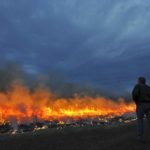
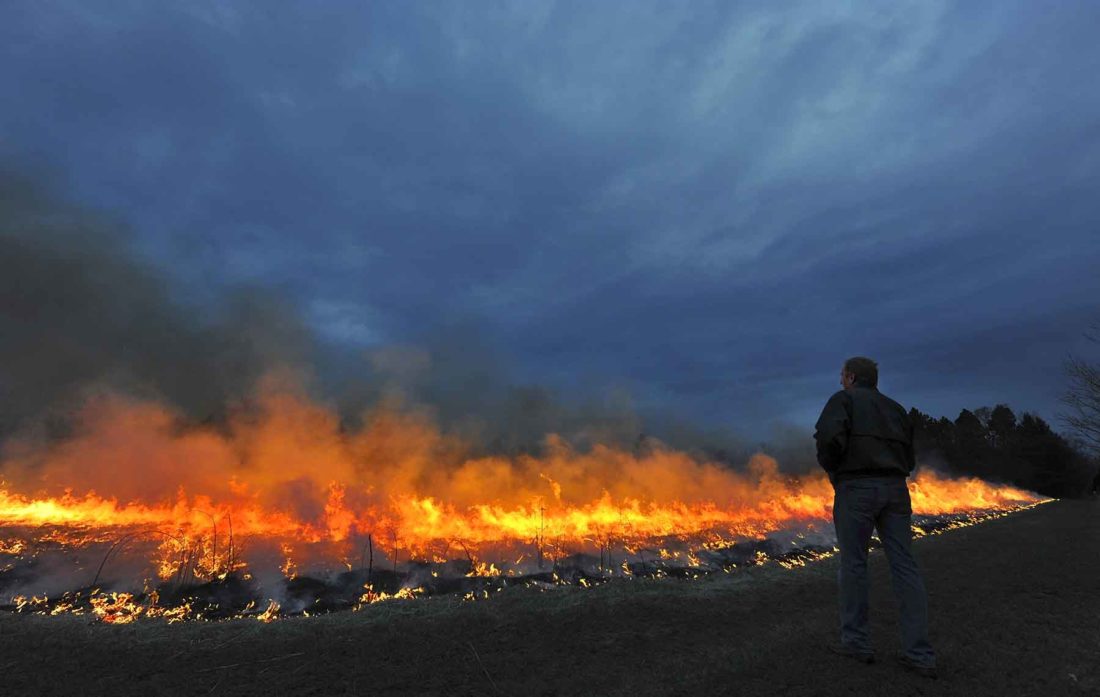
Mike Frischmeyer, of Fort Dodge, watches as Webster County Conservation staff burn off a section of the prairie on the north side of John F. Kennedy Memorial Park Tuesday evening. Periodically burning the prairie habitat is part of managing it.
-
-
-Messenger photo by Hans Madsen
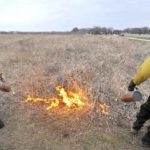
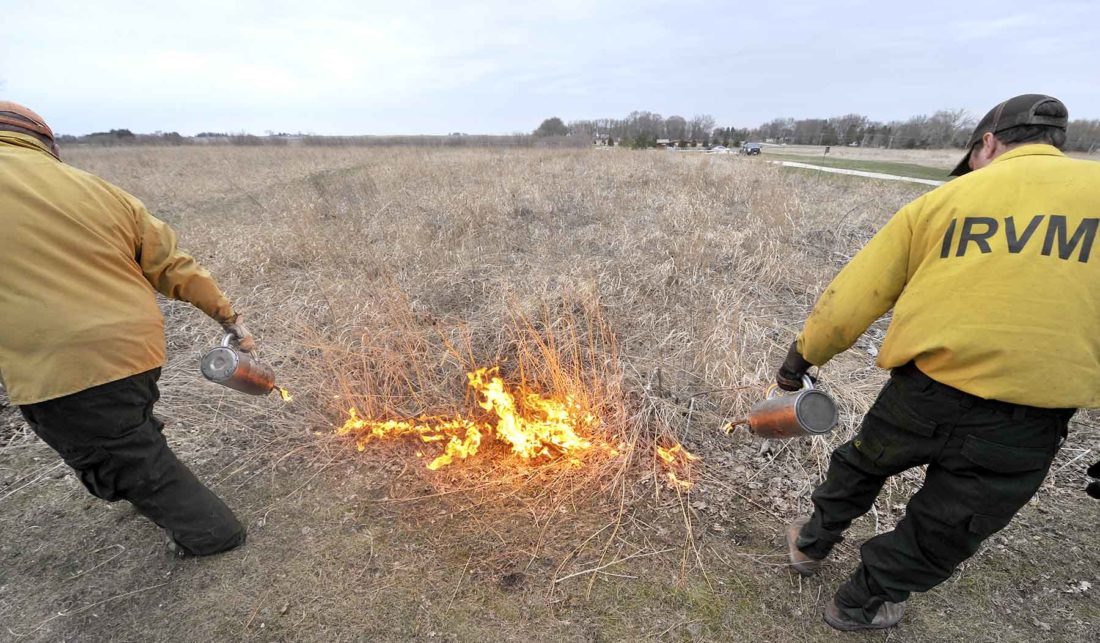
Webster County Conservation Vegetation Specialist Andy Stanberg, at left, along with Natural Resource Technician Adam Moeding, start the process of burning off a section a prairie habitat at John F. Kennedy Memorial Park Tuesday evening. The public was invited to watch and learn.
-
-
-Messenger photo by Hans Madsen
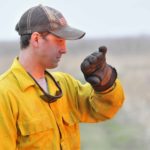
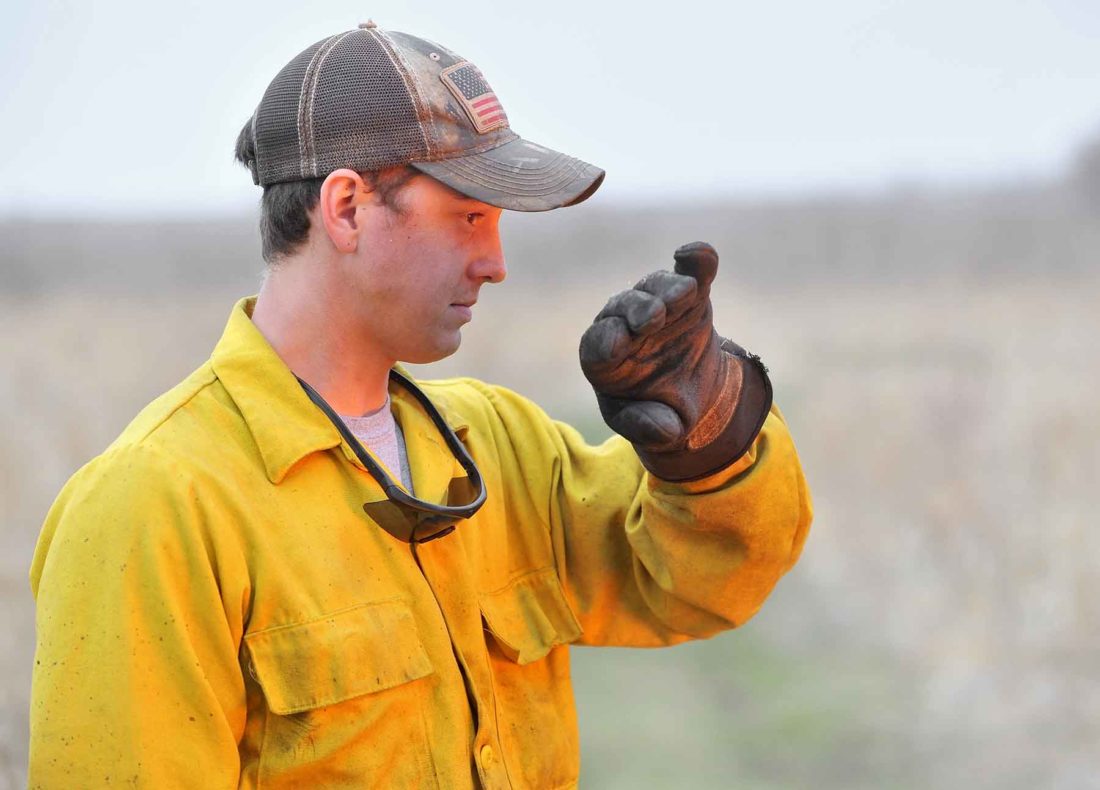
Webster County Conservation Natural Resource Technician Adam Moeding shields himself from radiant heat with his glove during a controlled prairie burn at John F. Kennedy Memorial Park Tuesday evening. Prairie fire flames can flare up quite high but the source of the fire, the prairie vegetation, is quickly consumed.
-
-
-Messenger photo by Hans Madsen
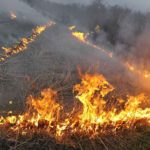
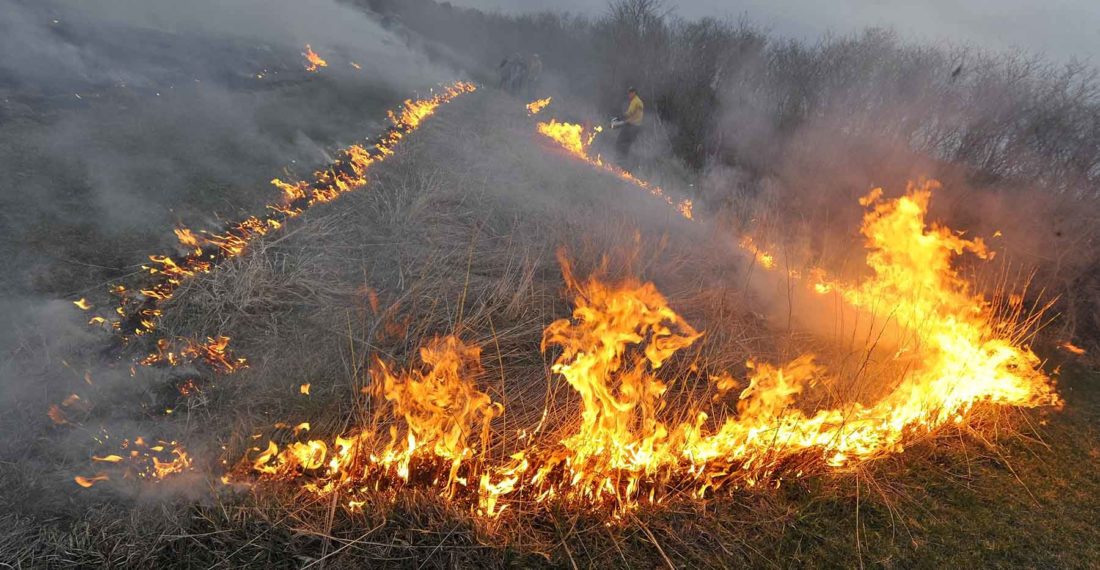
Webster County Conservation staff ignite a small triangle of prairie Tuesday evening during a controlled burn. Several members of the public came out to watch the burn.
-
-
-Messenger photo by Hans Madsen
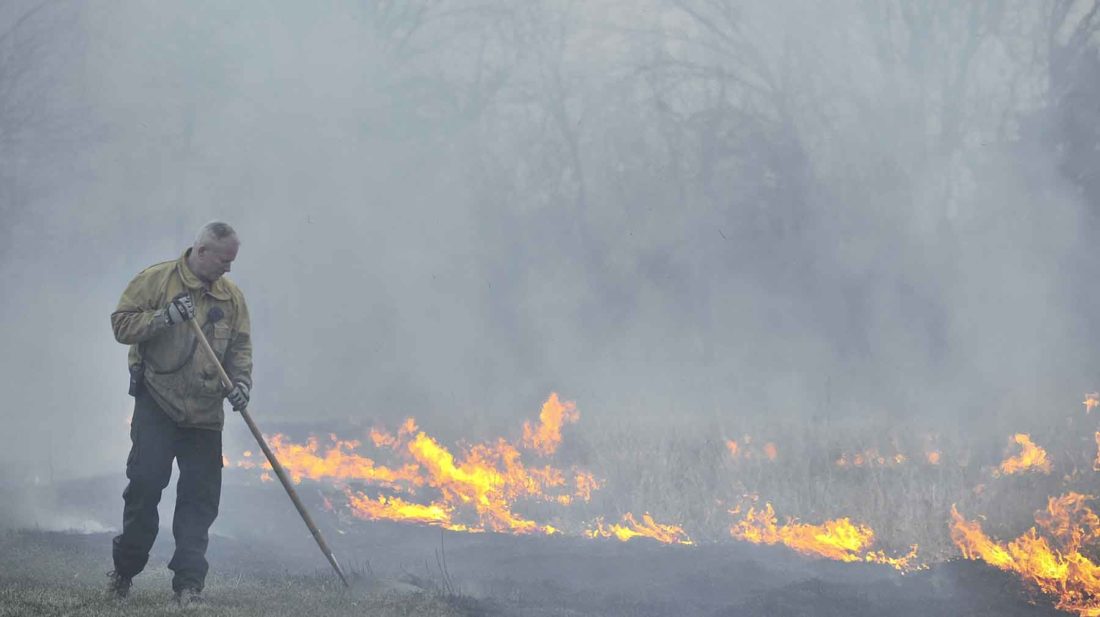
Webster County Conservation Director Matt Cosgrove uses a “flapper” to smother flames along the edge of a section of prairie being burned off Tuesday night in John F. Kennedy Memorial Park.
-
-
-Messenger photo by Hans Madsen
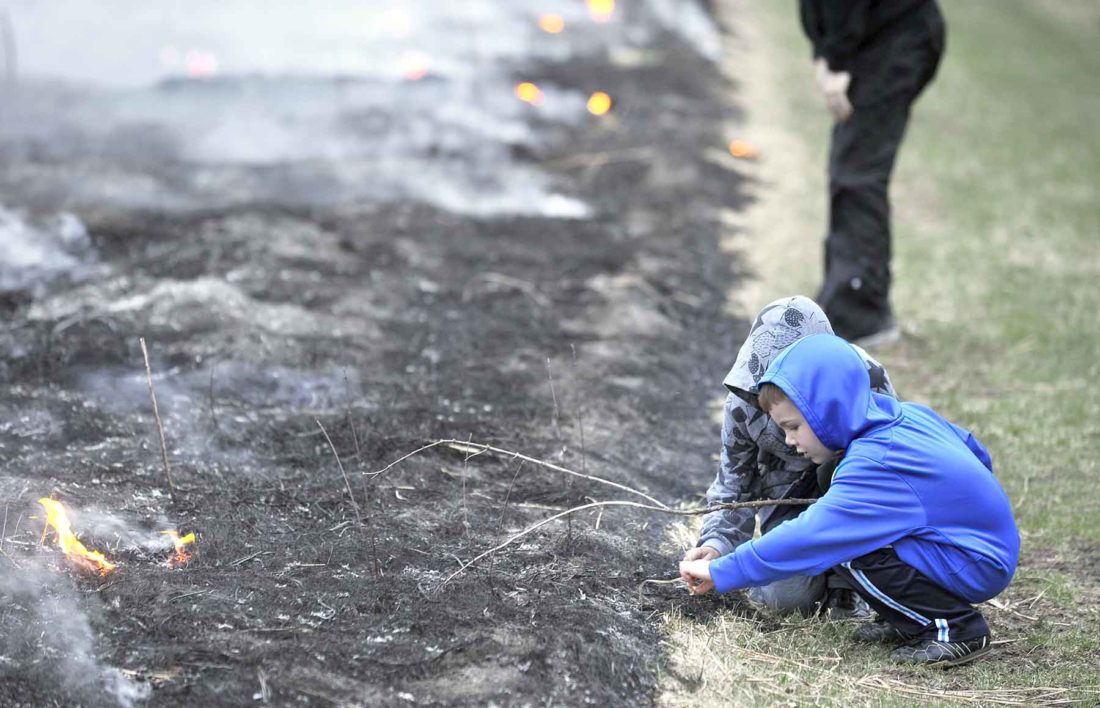
Blake Hansel, 5, at right, along with his brother, Bryson Hansel, 7, of Fort Dodge, look through the remains of the controlled burn Tuesday evening at John F. Kennedy Memorial Park.
-Messenger photo by Hans Madsen
Mike Frischmeyer, of Fort Dodge, watches as Webster County Conservation staff burn off a section of the prairie on the north side of John F. Kennedy Memorial Park Tuesday evening. Periodically burning the prairie habitat is part of managing it.
For a short bit of time Tuesday night, there was an orange glow in the west.
It wasn’t the sunset. The evening cloud cover prevented that.
It was, instead, the bright orange roaring flames of several acres of prairie vegetation going up in smoke at John F. Kennedy Memorial Park during a night prairie burn.
Webster County Conservation Director Matt Cosgrove was on hand to help. A crew of conservation staff had actually spent the day burning prairie habitat at other sites as well. The Kennedy burn was their last stop.
There’s a good reason for it, he said, it helps keep the prairie — prairie.
-Messenger photo by Hans Madsen
Webster County Conservation Vegetation Specialist Andy Stanberg, at left, along with Natural Resource Technician Adam Moeding, start the process of burning off a section a prairie habitat at John F. Kennedy Memorial Park Tuesday evening. The public was invited to watch and learn.
“We’re encouraging the warm weather grasses and discouraging the cool season grass like we mow in our yards,” he said.
Burning prairie habitat is actually a critical management tool, Cosgrove said. The heat is needed to open the seed pods of some plants, it returns nutrients to the soil and it destroys plants not wanted on the prairie such as small volunteer pines and other trees.
Cosgrove said the section of prairie burned Tuesday night has been there for about 15 years. It’s located in the northeast corner of the site.
They don’t burn every section every year.
“We try to do an area in three- to five-year cycles,” Cosgrove said.
-Messenger photo by Hans Madsen
Webster County Conservation Natural Resource Technician Adam Moeding shields himself from radiant heat with his glove during a controlled prairie burn at John F. Kennedy Memorial Park Tuesday evening. Prairie fire flames can flare up quite high but the source of the fire, the prairie vegetation, is quickly consumed.
Park Ranger Brad Janssen oversaw Tuesday’s burning.
He said the process is much more than just lighting up the prairie and watching it burn. It’s done in a careful, controlled way and each section of prairie managed by Webster County Conservation actually has a written fire plan that includes when it was burned last and when it’s due again.
Crews also have to consider what’s around the fire site, where the smoke will end up and the humidity level. Too dry and the fire can flare up. Too wet, and it won’t burn properly. A final consideration is making sure that habitat is left for those animals displaced. There is nearby prairie habitat that wasn’t burned during Tuesday night’s burn that’s still available for those animals that make it home. They also make sure not to burn during nesting seasons.
There’s also a right way to do it.
Crews start by lighting a fire that has to burn into the wind. This creates a strip of burned prairie with no fire fuel available. As that fire front works its way across the section, crews will also burn along the edges with the same result. A strip with no fuel available to burn.
-Messenger photo by Hans Madsen
Webster County Conservation staff ignite a small triangle of prairie Tuesday evening during a controlled burn. Several members of the public came out to watch the burn.
Finally, crews light the final fire, the head fire, which travels with the wind towards the already burned area.
That is when the flames get spectacular. Janssen said it’s common to get 20 foot flames and even vortexes called flame tornadoes.
The prairie also carries a surprisingly small fuel load. Only about 20 minutes after the burned section was a roaring inferno, the area was cooled down and nothing was left smoldering.
Several people accepted the invitation to come watch the burn.
Mike Frieschmeyer, of Fort Dodge, was among them.
-Messenger photo by Hans Madsen
Webster County Conservation Director Matt Cosgrove uses a “flapper” to smother flames along the edge of a section of prairie being burned off Tuesday night in John F. Kennedy Memorial Park.
“It was much more dramatic than I expected,” he said. “Definitely hotter, too.”
-Messenger photo by Hans Madsen
Blake Hansel, 5, at right, along with his brother, Bryson Hansel, 7, of Fort Dodge, look through the remains of the controlled burn Tuesday evening at John F. Kennedy Memorial Park.
Local News
Go and Do: May 22, 2026
Around the area OTHO — A Memorial Day ceremony will be held at 10 a.m. MONDAY at the Otho Cemetery, on Osceola ...
All Cultures Equal (ACE) announces closure
After more than two decades of serving the Webster City community, All Cultures Equal has announced that the ...
Calhoun, Webster County tornadoes confirmed by NWS
MOORLAND — At least 25 tornadoes struck Iowa in the past week, including confirmed tornadoes near Moorland and ...

Denver flights return
Fort Dodge to Denver flights resume
Flights between Fort Dodge and Denver, Colorado, resumed today. The first United Express flight from Denver ...
Feenstra bill aims to support rural maternity care
U.S. Rep. Randy Feenstra is working on legislation he says will enable small rural hospitals to provide childbirth ...