
Trending
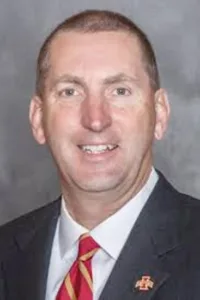
Former Iowa State athletic director Jamie Pollard delivered a scorching appraisal of the world he recently left, predicting college sports could be triggering something akin to the country’s “next savings-and-loan crisis” and equating the system that generates NIL payments to players as a money-laundering operation.
“Somehow we’re taking money that was supposed to come to our institution and find a way for it to be not given to our institution so we can launder it and create a manufactured NIL deal,” Pollard said Wednesday at a seminar held by the college watchdog Knight Commission.
He was referring to the practice many schools use when they work with third parties to broker NIL deals for players. Those deals are allowable constructs that let schools blow past the $21.5 million revenue-sharing cap set by the landmark House settlement that allows college athletes to be paid.
Since the onset of NIL, some sports-focused donations that, in the past, would have gone to an athletic department have been diverted to businesses closely affiliated to the schools. They, in turn, have negotiated the so-called third-party NIL contracts.
Pollard, who spent 21 years as the Cyclones AD before stepping down this fall, decried this process as creating a lack of transparency that “is fueling emotional and irrational decisions” made by schools and conferences.
While schools must report player contracts to the newly created College Sports Commission and the commission gives a broad-brush overview of how much money is spent, there’s still very little verified information about how much each school spends on rosters or how much individual athletes make.
Without that transparency, a handful of schools are reportedly spending $50 million on football rosters to stay competitive.
“Those decisions are multiplying like rabbits,” Pollard said. “We’ve created distrust within our industry, (among) our colleagues.”
Pollard connects spending for sports to bigger problems ahead for schools
Pollard, whose Big 12 program was a steady presence at both men’s and women’s March Madness in basketball but rarely broke through in football, cited other research that showed about 16% of public universities lost money in at least five fiscal years between 2014-23. He cited spiraling expenses in sports as part of the reason.
A report this year from the U.S. Government Accountability Office found that 94% of NCAA Division I athletic programs spent more money than they generated in athletics revenue in 2023-24.
“If we’re not careful, we’re sitting on the next savings and loans crisis in higher education,” Pollard said.
A combination of high interest rates and poor management led to the closure of more than 1,000 savings-and-loan institutions around the country in the late 1980s and early ’90s.