Sioux Honey Association: Expansion on the horizon
Sioux Honey to build multimillion dollar facility; Chooses Iowa location after multi-state search
-

-
-Image courtesy of Sioux Honey Association
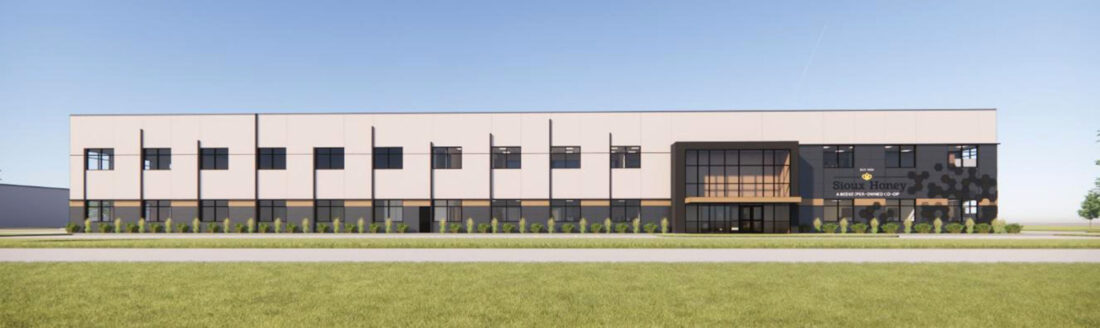
The design for the Sioux Honey Association’s multimillion dollar expansion is shown above. After a multi-state search, the company decided to locate its newest facility in Sioux City, where they have already existed for more than 100 years.
-

-
-Photo courtesy of Sioux Honey Association
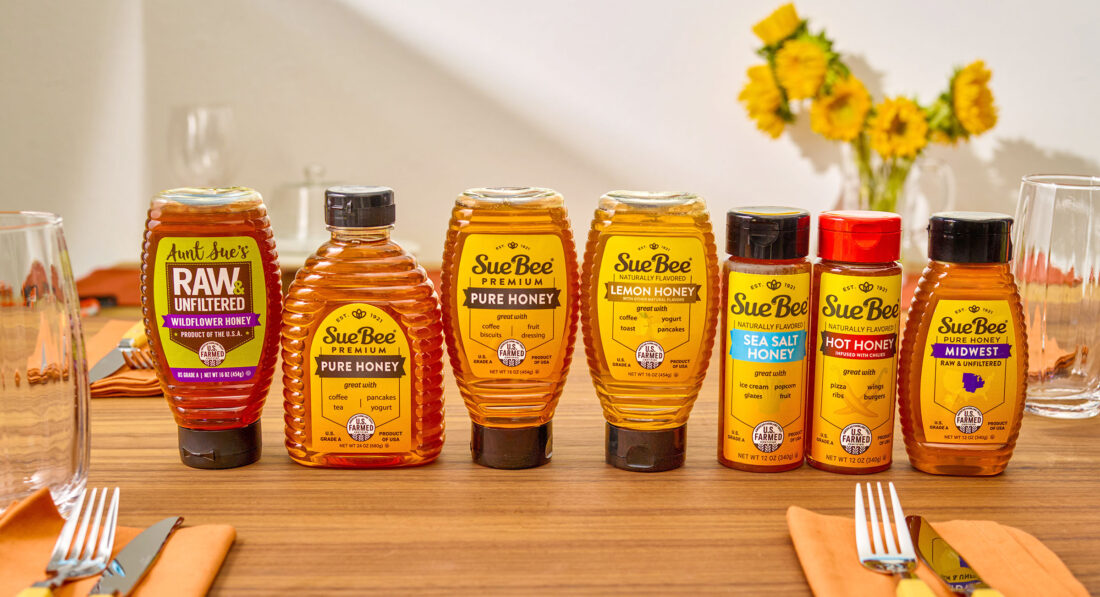
Sioux Honey brands contain exclusively all U.S.A. honey from only the company’s own beekeepers. Other private labels for whom they pack may have honey shipped in from other countries. Sioux Honey Association ships their honey brands to all 50 states, including Sue Bee Bear and Clover Filtered Honey.
-Image courtesy of Sioux Honey Association
The design for the Sioux Honey Association's multimillion dollar expansion is shown above. After a multi-state search, the company decided to locate its newest facility in Sioux City, where they have already existed for more than 100 years.
SIOUX CITY — February of 2026 brought the news of significant expansion plans for Sioux Honey Association in Sioux City, following a multiple-state location evaluation search that took almost one year.
The multimillion-dollar facility will be located at 2501 Expedition Court (near the airport), currently home to an existing warehouse with office space and land for future expansion — something the association doesn’t have in their current location.
“We’re excited about this expansion,” said Aimee Sandman, director of growth and community impact for Sioux Honey Association. “We expect (the total expansion) to take most of five years.”
Sandman said the association decided in April 2025 to shut down their Anaheim, California, processing facility and move those processing operations to their Sioux City plant. That Anaheim facility is now being used as a warehouse.
“We looked at multiple states for this expansion because our co-op members are from across the whole United States,” said Sandman. “We came across an opportunity to stay in Sioux City where we’ve been from for over 100 years, and we’re really proud of that. The city and state have been amazing to work with.”
-Photo courtesy of Sioux Honey Association
Sioux Honey brands contain exclusively all U.S.A. honey from only the company's own beekeepers. Other private labels for whom they pack may have honey shipped in from other countries. Sioux Honey Association ships their honey brands to all 50 states, including Sue Bee Bear and Clover Filtered Honey.
Three phases
Sioux Honey Association’s expansion project will happen in three phases over the course of several years.
Phase one (scheduled to begin January of 2027) will be the recreation of the association’s corporate headquarters, including a finished goods warehouse, new racking and office space renovations to align with their mission vision and values. That new site will boast 200,000 square feet of finished goods warehouse space and 26,000 square feet of modern corporate office space. The association will also be able to expand the corporate office space as needed over time.
Sandman said most corporate employees will relocate to Sioux City and six new jobs will be added.
She estimated their new warehouse and corporate office will be completed by fall of 2027, so she said they will move over there sometime next year.
“This location has land adjacent to it that we plan on purchasing to create a processing facility, so we can have our whole campus there in one area eventually,” said Sandman, adding that the association in its current location is land-locked, disqualifying it as a place to expand.
Phase two will include a new processing plant and laboratory, which will be a new building adjacent to the corporate office and warehouse. She said they’re taking their time with the blueprints for that phase, saying they want to do it right in terms of employee safety, semi traffic flow and other details.
“We’re excited about this because we can add state-of-the-art equipment and have more space for our product lines,” said Sandman. “Our product lines became drastically more complicated with local honey and (all of the) flavors, spun honey, honey packets and smaller portions, so the new plant will help us be able to have space for all of that and alleviate co-packing (sending honey out to have it packaged in small packets and/or small cups for use in motels, etc.) and help us be more efficient.”
Sandman said the processing lines will move faster, and will give them the space they need to rack/store their honeys that need to be separated for distribution to different parts of the country.
“The more complex our catalog is getting, the longer it takes to produce those things, so this extra space is going to help with efficiencies,” said Sandman.
Phase three will include construction of a new raw honey warehouse to support continued membership growth, which comes on the heels of a 15 percent membership increase in 2025. That represents an additional 7 million pounds of honey.
Sandman said once all three phases are complete, Sioux Honey Association expects to add roughly 39 new jobs.
Nationwide
involvement
Sandman said their co-op, which is beekeeper-owned, has members and directors from all over the country. She said directors (especially) need to fly in from everywhere to meetings, and that the co-op’s leadership believed staying in Sioux City would benefit them most, rather than relocating to a different Midwestern location.
“Sioux City and the State of Iowa have been great to us, so we really encouraged the board to remain here in the Sioux City area,” said Sandman. “We’ve been here for over 100 years, and we really didn’t want to leave.”
She said once the processing facility is completed in phase two, the association will divest the property at their current location.
“We love our location where we are, but unfortunately we’re land-locked here,” said Sandman. “That would have been our first choice of a place to expand.”
Sandman said Sioux City’s city officials showed their commitment to Sioux Honey Association in the late 1980s by moving Fourth Street for them when they needed the room, accounting for the current street curvature. She said now there is “no more room,” necessitating the move.
Sandman said the economic impact of this expansion will become evident, as they will add jobs for local workers as well as bringing people to Sioux City to help with company operations, and they will try to use local vendors in the building process as much as they can. She said as the association continues to grow their honey categories, there will be more corporate jobs and more need for production workers.
Early years/products
Sioux Honey Association started out in 1921 with just five beekeepers in the Sioux City area. They banded together to help each other with their honey harvesting equipment, and from there it slowly grew and attracted beekeepers from further away.
Today Sioux Honey is the only honey co-op in the U.S., with more than 200 beekeepers across the country.
They added an additional 20 beekeepers from around the country in 2025 alone, which Sandman said is valuable with the expansion of regional honey. She said they will always need regional honeys, especially from highly-populated areas such as California, the Southeast and Northwest, so they will more often open their co-op to beekeepers from those areas.
Today 87 percent of Sioux Honey Association’s product is processed in Sioux City. The association also has a plant in North Carolina that solely processes their ingredient honey.
Sioux Honey Association carries more than 25 branded products, but also packs for other companies and private labels, for retailers under their brands, and ships for other brands also if they don’t have a processing facility.
Sioux Honey brands contain exclusively all U.S.A. honey from only their own beekeepers. Other private labels for whom they pack may have honey shipped in from other countries.
Sioux Honey Association ships their honey brands to all 50 states, including Sue Bee Bear and Clover Filtered Honey. She said as honey production has expanded and more people are consuming honey, they’ve had to broaden their product lines to adjust for what consumers want.
“People want local honey — honey that’s from their region, so we carry a Sue Bee Midwest, where all the honey comes from our beekeepers in the Midwest and we process it. We carry a (Southeast brand), with all of the honey coming from beekeepers in that area (etc.),” said Sandman.
Sioux Honey Association also carries Sue Bee Honey — their largest and oldest core brand that is more than 70 years old. Their Aunt Sue’s is a raw and unfiltered honey brand selling primarily in the Northeast and Southeast parts of the country.
She added that the association has added a sea salt honey to its line, along with various hot honeys, which she said have “taken the world by storm.” She said it has come to life in the last five years and is heating up pizzas and wings and anything else consumers prefer to eat “hot.”
“It broadens honey usage — you can put it on things it typically wouldn’t go on,” said Sandman of the way consumers and honey producers are seeking out more ways to use honey.
Sioux Honey Association sees their expansion as something that will set them up for a long and productive future in Sioux City.
“This expansion will open up long-term roots that will stay here and employ people for the next 100 years,” said Sandman. “This will double our size here in Sioux City, and there will be room to grow. We love our roots and our heritage in Sioux City, and we love that we get to stay here for another 100 years as well.”