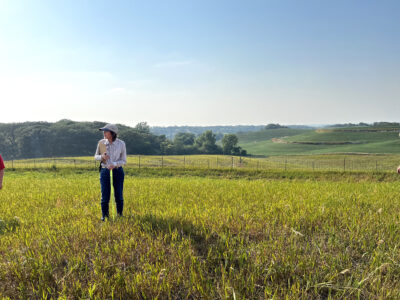
Knob Hill: RETURNING TO THEIR ROOTS
Organic operation in Hamilton County grows in popularity
-
-
-Submitted photo
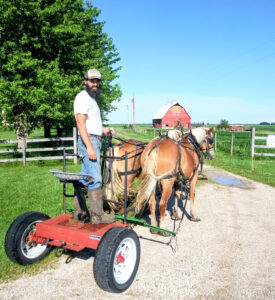
Mike Robertson holds the reins for a team of horses at the scenic Knob HIll Farm near Webster City.
-
-
-Submitted photo
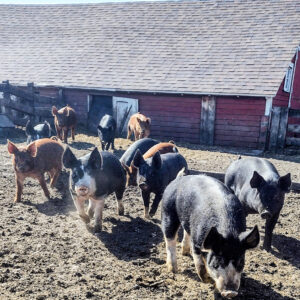
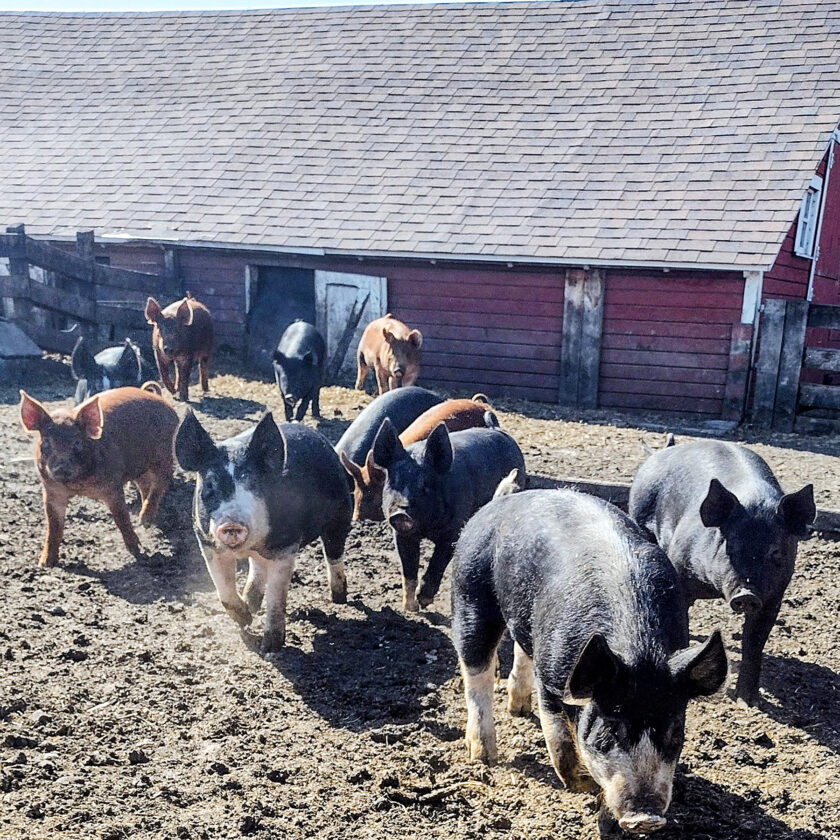
Hogs roam free with the option of spending time outside in the summer and returning to warm barns in the winter at Knob HIll Farm west of Webster City.
-Submitted photo
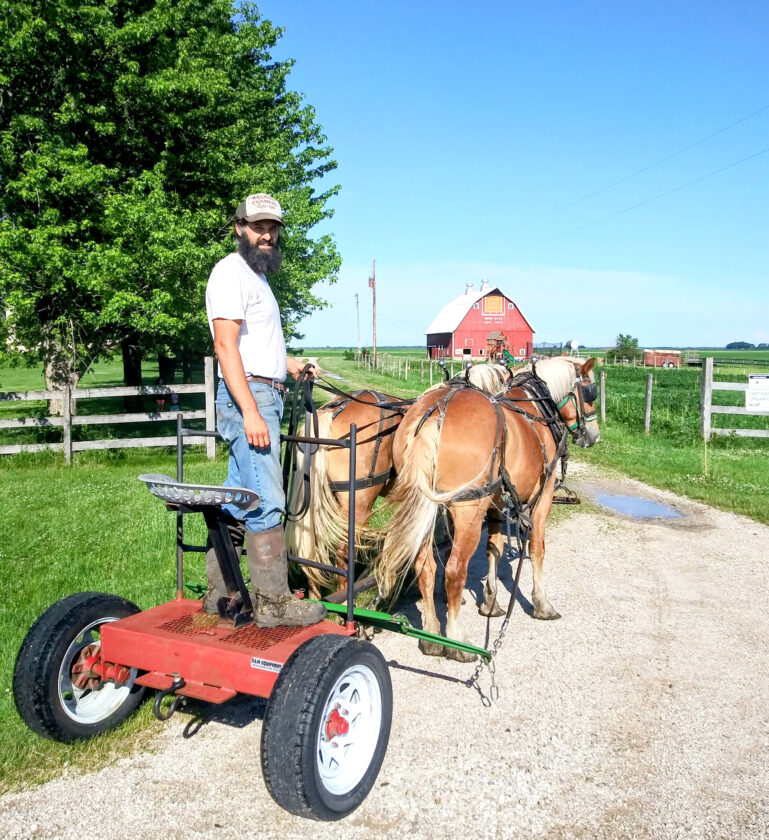
Mike Robertson holds the reins for a team of horses at the scenic Knob HIll Farm near Webster City.
HIGHVIEW — It’s not so much about making a living for Knob Hill Farm owners Mike and Janine Robertson. It’s about making a life. The couple shared a vision to make this place a farm that they could call home for a long time.
“When we moved here it had been stripped down to the bones,” said Janine Robertson. “We wanted to bring it back to an actual, working farmstead.”
Located on a small knob of a hill a few miles south of Highview, Knob Hill is a farm with a long history. After purchasing the acreage in 2013, the Robertsons went to work making history work for themselves in today’s world.
“The only buildings that were left were the house and original barn, and a little cob shed that was about ready to fall down,” recalled Mike Robertson.
The couple went to work building fences and putting up buildings for hogs that would be raised the ways hogs used to be raised, with freedom to go outside as they please or take shelter in the warmth of a barn when they wish to do so.
-Submitted photo
Hogs roam free with the option of spending time outside in the summer and returning to warm barns in the winter at Knob HIll Farm west of Webster City.
They made indoor and outdoor places for chickens, horses, and a large garden — the type of diversified agriculture that was once the norm on Iowa farms.
“We owned a team of horses at that time so we needed a place for them, and that was our first goal. And then we started building buildings for our hogs,” Janine Robertson said.
The couple also began the arduous process of becoming certified organic producers. That certification extends from the feed used to the ground the livestock walk upon, according to the Knob Hill website. Deep beds of certified straw await the animals when they come in from the outside on a crisp winter day.
Chickens, eggs and a full range of pork products are marketed, mostly in central Iowa, but some of the pork has even been shipped as far as South Korea, Mike Robertson said.
The Robertsons raise a heritage breed of Berkshire boars bred with crossbred sows, including the Berkshire, Duroc, and Gloucester Old Spot breeds. The combination produces pork that is moist, flavorful, and known for its marbling, according to the website.
“We’ve had a lot of comments about the flavor of the pork,” Janine Robertson said. “Whether they say it tastes like pork used to, or if they just say it tastes good.”
Drawn in by the fuller flavor of pork from hogs that are not confinement-raised, many of the customers keep coming back because of the way the animals are raised.
“Our tried and true customers come back because they like the way we raise them,” Janine Robertson said. “They want it clean; they want it to taste good.”
Much of the marketing is done at the Ames Farmers Market during the summer months. But the couple also is part of the Iowa Food Co-op in Des Moines, making more products available year-round.
“The Iowa Food Co-op is a cooperative of Iowa growers that has a little grocery store and online presence where customers will order,” she explained. “It’s a two-week cycle where customers order one week, and then we deliver to the co-op, and they distribute it out from there.”
The couple has five sows and markets about 100 feeder pigs annually. Organic chicken is another popular commodity for Knob Hill, as are the organic eggs.
“Our chickens are pasture-raised and certified organic,” she said. “We actually have an egg route to Ames every week and we deliver eggs.”
As with all backyard flocks, production can vary widely throughout the year, often slowing down during the shorter days of winter. In summer, when the hens are outside eating grass, the color of the yolks will brighten, making store-bought eggs look pale in comparison.
“This time of year, we deliver about 25 to 30 dozen eggs a week,” Janine Robertson said. “In the summer we can easily double that.”
The couple also has a vegetable garden with all the traditional crops, ranging from tomatoes and green beans to cucumbers, sweet corn, potatoes and more. The garden is about half an acre and gives the couple’s three children a chance to dig in and help with the family farm in the summertime.
They freely explain that they are not intending to make a living off the farm. Mike Robertson works full-time off the farm, serving as director of the agriculture program at Iowa Central Community College. For Janine Robertson, the farm is a full-time occupation — or perhaps more of a calling.
“This is my job,” she said. “I homeschool our kids. I do the deliveries and a lot of the marketing for our products.”
Knob Hill may not make the family’s living, but it is building a life rich in experiences and self-sufficiency for the family.
“This is how we want our kids to grow up,” Janine Robertson said. “We want them to know where their food came from, and to know what’s in it.”