Iowa State University — Wendy Wintersteen: A REWARDING CAREER
Wintersteen's career at helm of Iowa State comes to an end
-

-
-Photo by Dan McClanahan for Iowa State University
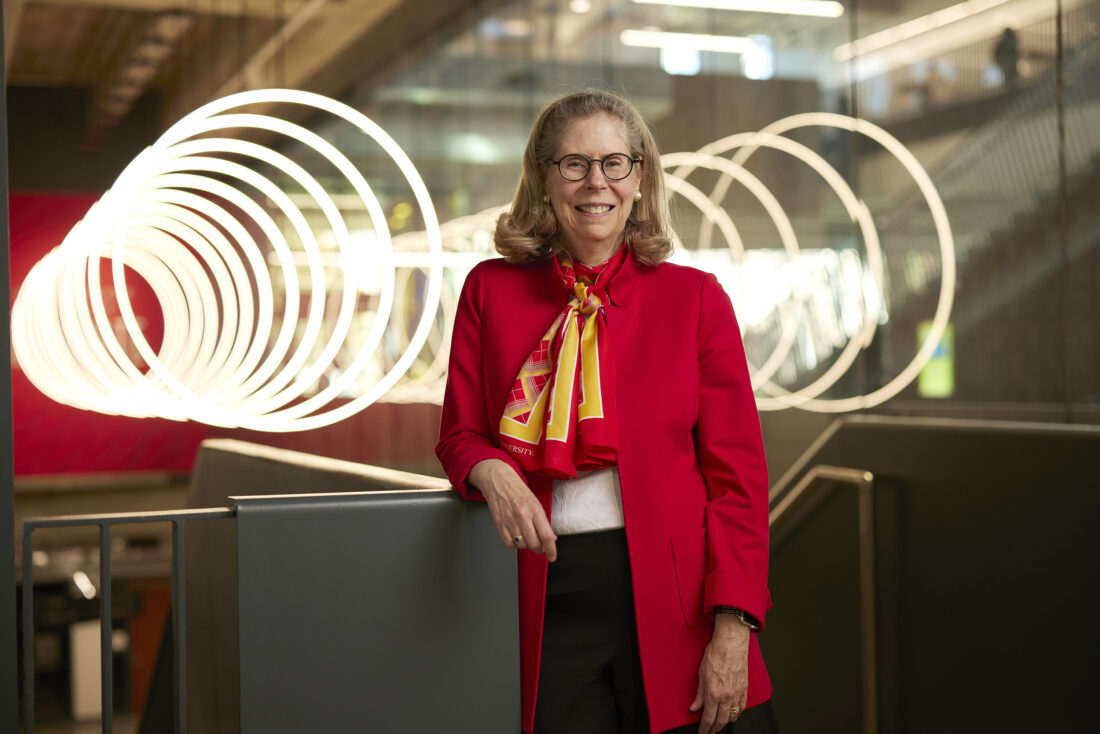
Wendy Wintersteen, former president of Iowa State University, is pictured in the Student Innovation Center on campus.
-
-
-Photo courtesy of Iowa State Extension
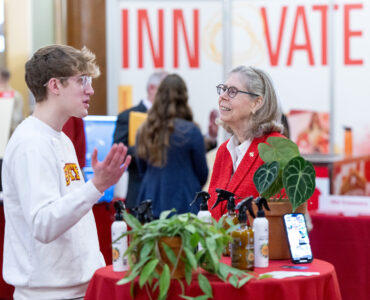
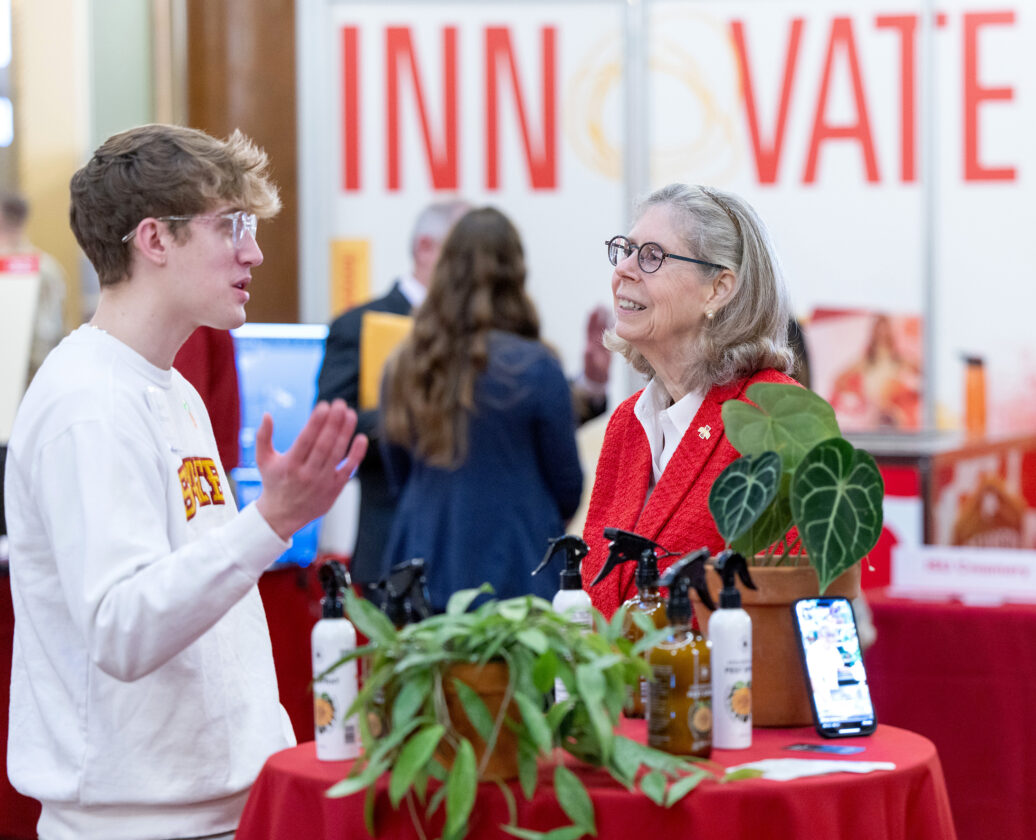
Wendy Wintersteen, then president of Iowa State University, talks with a student during the 2025 ISU Day at the Capitol. She retired on Jan. 2.
-

-
-Photos courtesy of Iowa State Extension
Wendy Wintersteen addresses the crowd during a sheep judging event at the 2018 Iowa State Fair.
-Photo by Dan McClanahan for Iowa State University
Wendy Wintersteen, former president of Iowa State University, is pictured in the Student Innovation Center on campus.
The 16th president of Iowa State University retired Jan. 2 after dedicating 46 years to the land grant institution.
Dr. Wendy Wintersteen first joined Iowa State University in 1979 as an Extension associate in integrated pest management. In 1988, she earned her doctorate in entomology and joined the ISU faculty, working her way through the academic side and into administrative leadership roles.
Wintersteen’s positions included coordinator of pesticide management and applicator training programs, director of Extension to agriculture and natural resources, senior associate dean of the College of Agriculture and Life Sciences, and associate director of the Agricultural Experiment Station.
From 1989 to 1990, Wintersteen paused her tenure at Iowa State to serve as acting National Pesticide Education Program leader for the U.S. Department of Agriculture’s Extension Service in Washington, D.C.
In 2006, she was chosen to lead the College of Agriculture and Life Sciences and the Iowa State Agricultural Experiment Station. During her 11 years as dean, she helped raise more than $247 million in donor support for students, faculty and staff. Undergraduate enrollment in the college grew by 90 percent, and the college’s placement rate for recent graduates consistently remained at 97 percent or higher.
-Photo courtesy of Iowa State Extension
Wendy Wintersteen, then president of Iowa State University, talks with a student during the 2025 ISU Day at the Capitol. She retired on Jan. 2.
In 2017, Wintersteen was unanimously selected by the Iowa Board of Regents to become the 16th president of Iowa State — and the first woman and first alumna to lead the university.
“I had been serving as dean of the College of Agriculture and Life Sciences. I had been at Iowa State for quite awhile and I felt that I knew Iowa State well as a university and I knew Iowa,” Wintersteen said. “I thought it was time for an internal candidate to throw their hat in the ring.”
Agriculture at Iowa State
Leading Iowa State University has been a rewarding position for Wintersteen. The college works well with farmers and the ag industry, and works closely with all entities, she said.
“The college is so tuned in and listening to farmers, listening to our local co-ops, working with the Iowa Institute of Cooperatives, agribusinesses, our commodity boards — that’s really the key — listening and hearing what their current needs are and how we can better serve ag in Iowa,” Wintersteen said. “They open our eyes to what issues we should focus our research on and ways we can work together.
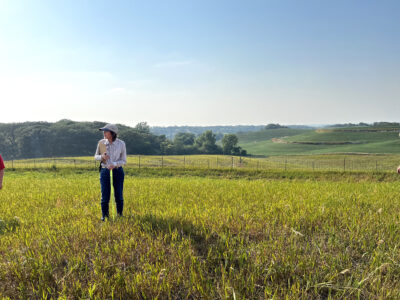
-Photos courtesy of Iowa State Extension
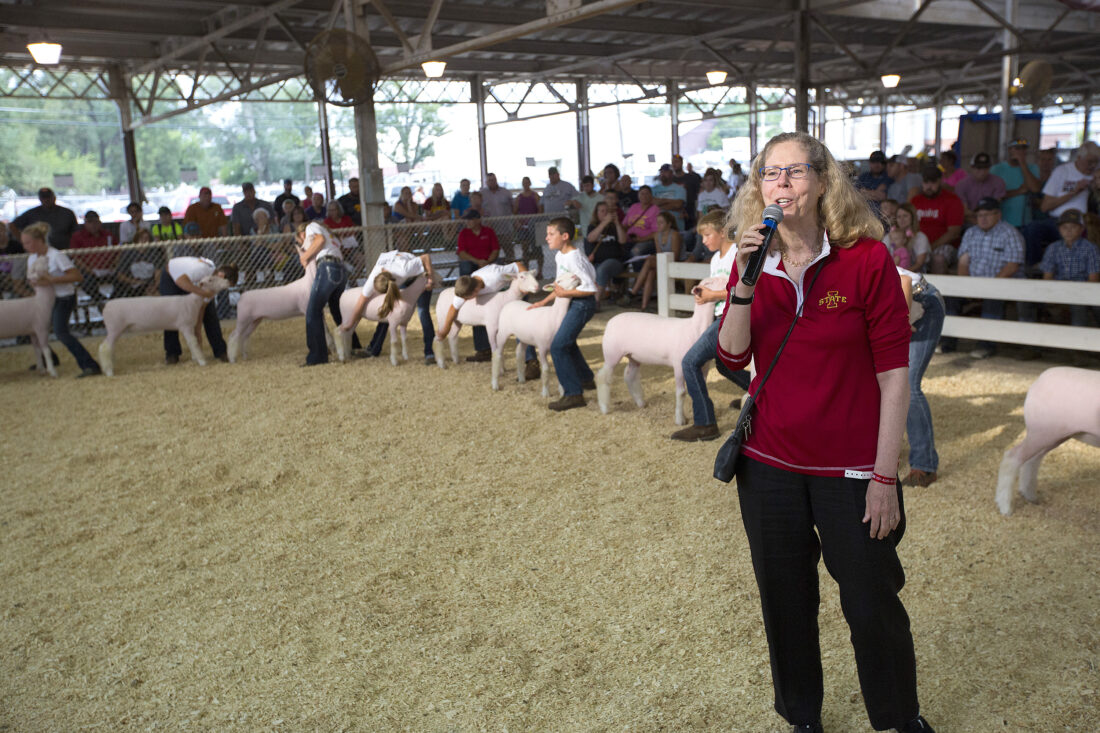
Wendy Wintersteen addresses the crowd during a sheep judging event at the 2018 Iowa State Fair.
“That not only helps Iowa, but puts Iowa State on the cutting edge of research and solving issues across the Midwest and around the world,” she added. “The college of ag does a tremendous job of addressing those issues in ag both here in Iowa and internationally.”
The newer ag and biosystems engineering degree is a blend of how agriculture and engineering come together to support the farming industry, Wintersteen said.
“Students who want to get in there and get their hands dirty, so to speak, but not worry about becoming an engineer really embrace this degree. They do really well finding jobs and get paid incredibly well. There are lots of different pathways for employment with this degree,” Wintersteen said. “ISU normally is ranked No. 1 in the nation for the work we do in teaching, research and Extension.”
Walking into the Sukup atrium is an eye-opening experience, Wintersteen said, and a lot of donors from the farming industry have helped to make the facility world-renowned.
“One area they work on is the really critical work on water quality. No one does research on water quality like the biosystems engineering students and the agronomy team with the natural resources, ecology and management,” she said. “They help farmers address this issue, and I couldn’t be prouder of how they’re making a real difference in the issue of water quality.”
There are numerous research farms at Iowa State, which Wintersteen said offers students a unique opportunity to be hands on in numerous ways.
“Just a couple of miles from campus, students can take advantage of the hands-on learning they need with their majors, from the beef teaching farm to the swine farm, the turkey farm, poultry farm, dairy farm and north of campus is the horticulture farm, which is phenomenal,” Wintersteen said. “They can be there for labs, internships, hands-on experiences, work with farmer associations, demonstration farm chores and more.”
Agronomy department faculty have carried out nitrogen rate trials not just on Iowa State research farms, but also on farmers’ land to help them generate the right nitrogen recommendations for farmers to follow, she added.
Carving her own path as president
As she looked back at her time serving as president, Wintersteen shared some incredibly memorable experiences and hurdles she had to overcome during her tenure at the helm of ISU.
“The student, faculty and staff — all of us went through the pandemic together and came out of that successfully. Then the derecho came through Iowa — something we didn’t even know existed. We were just getting ready for classes to resume in person, we had 10,000 students in residence halls and the derecho hit,” Wintersteen said. “We were just so close to a real disaster in terms of not having electricity and water.”
But in true Midwestern fashion and Iowa Strong, Wintersteen and the Cyclones made it through the derecho.
“There were periods of social unrest, but we went through it all and came out successful in the end. I feel good about all of the challenges we meet,” Wintersteen said. “I also feel good about how we have been a student-centric, leading research university. That’s one of our taglines.”
This past fall, Wintersteen said she was proud that ISU experienced its highest student retention rate of 89.1%. That number is measured by the number of freshmen who return for their sophomore year.
“That’s a great number. It’s something that’s measured every four years across the nation. We look really great and have great students,” Wintersteen said. “We want our freshmen to have an incredible experience and return not just as sophomores, but to graduate. They’re quite successful at finding a career and going on to have a successful life.”
Perks of being a Cyclone
All Cyclones are special in Wintersteen’s eyes, but she emphasized that one thing that sets Iowa State apart from other universities is the Greek system.
“We have a great student affairs unit that we do a really outstanding job of working with and making sure everything functions as well as it does,” Wintersteen said. “The members of sororities and fraternities are leaders on campus.
“There was a period of time under my presidency where the weekend before classes started, we had some problems, so we called on the students in the Greek system and asked them to help us. We held a series of events for Cyclone Welcome Weekend and it really was the Greek system that came together to help us bring our students to the events,” Wintersteen continued.
Wintersteen also credited the ISU police chief for working with the student advisory committee to hear what the police department could be doing better for the students.
Growing up in Kansas
Wintersteen’s parents farmed in southeast Kansas and when she was younger, they moved into town. Her dad taught at a community college, but they never severed their ties to agriculture.
“We still go back and visit often, because of that love of agriculture,” she said.
Wintersteen earned her bachelor of science degree in crop production from Kansas State University.
Awards and accolades
Outside of her devotion to Iowa State, Wintersteen served on the board of trustees of the Farm Foundation and the board of directors of the U.S.-Israel Binational Agricultural Research and Development Fund. She also served as president of the board of directors for the Charles Valentine Riley Memorial Foundation.
Wintersteen received the Carl F. Hertz Distinguished Service to Agriculture Award from the American Society of Farm Managers and Rural Appraisers in 2016. She was honored as a Kansas State University Alumni Fellow for professional accomplishments and distinguished service in 2007. She also is a member of the Entomological Society of America and the American Association of University Women.
What’s next?
With a little more than a month of retirement under her belt, Wintersteen is still figuring out what this new phase of her life looks like.
She’s had the chance to travel and spend time with friends and family.
“I’m going to wait and see what it is I really want to do,” Wintersteen said.
Wintersteen did open the door for the next president of the university, David Cook, and wished him well.
“He’ll be a great new president of Iowa State University. He’ll do an absolutely wonderful job,” she said. “He’s not just an Iowa State alum, but also a graduate of Ames High School.”