Iowa Pork Producers: Cautiously optimistic
Iowa Pork Producers point to positive signs heading into 2026
-
-
-Messenger file photo
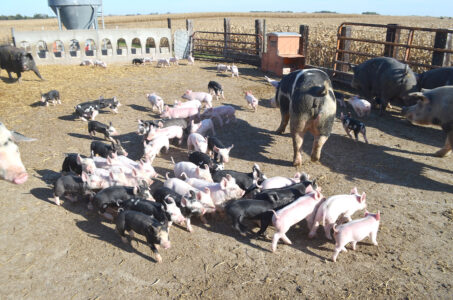
Dean Frazer, pig farmer and president of the Iowa Pork Producers Association from Conrad, believes 2026 could offer pork producers some relief if demand for pork can remain a top priority, both by producers and by those charged with keeping Iowa and U.S. pork in front of potential buyers.
-Messenger file photo
Dean Frazer, pig farmer and president of the Iowa Pork Producers Association from Conrad, believes 2026 could offer pork producers some relief if demand for pork can remain a top priority, both by producers and by those charged with keeping Iowa and U.S. pork in front of potential buyers.
Following significant losses in 2023 and 2024 and a challenging 2025 in the Iowa pork industry, Iowa producers have hope that 2026 might be a little more stable.
Dean Frazer, a pig farmer from Conrad and president of the Iowa Pork Producers Association (IPPA), said Iowa pork producers faced a mix of familiar and evolving challenges in 2025.
“Animal health, particularly PRRS, continued to pressure productivity and added costs. Regulatory uncertainty, especially around Proposition 12 and WOTUS, made long-term planning harder. On top of that, producers navigated market volatility, labor challenges and significant losses in 2023 and 2024,” he said.
Frazer said many of those same challenges will follow them into 2026, but that Iowa is “well positioned to respond.”
“Continued focus on herd health, biosecurity, and efficiency will be essential as markets remain steady but competitive,” he said. “At the same time, demand-side efforts matter more than ever. Through the National Pork Board’s ‘Taste What Pork Can Do’ campaign, Iowa producers are helping lead a national push to drive consumer demand by highlighting pork’s versatility, nutrition, and value.”
He said 2026 offers some cautiously good news, in that 2025 was an improvement over the previous two years that were so difficult, and that expectations for 2026 are more stable. That push for demand, he said, will help carry the nation’s pork producers into a 2026 that might offer some relief.
“It’s not a boom cycle, but it’s a more sustainable outlook if feed costs, productivity and demand — especially exports — remain supportive,” he said.
Frazer said as the nation’s top pork-producing state, Iowa plays a critical role in ensuring that strong domestic and global demand supports producers as they navigate regulatory pressure (especially around Proposition 12 and WOTUS) and evolving and often volatile markets.
Proposition 12, while a California law, continues to impact Iowa pork producers, Frazer said.
“It clearly impacts Iowa because we supply pork nationwide,” he said. “It’s led to more market segmentation, added documentation and tougher decisions about facilities and production systems. Producers are understandably frustrated that one state’s rules affect interstate commerce, but they’re also pragmatic, adapting where possible while continuing to advocate for a federal solution that works for everyone.”
Frazer said water quality and manure management requirements continue to be a major focus in Iowa.
“At the federal level, ongoing uncertainty around Clean Water Act and WOTUS definitions affect long-term planning,” he said. “Iowa producers remain committed to protecting soil and water while also asking for clear, workable regulations.”
Frazer added that PRRS remains the most persistent and costly disease challenge for Iowa pork producers. Still, the industry is working toward a sustainable solution to a problem that has come and gone for decades.
“The industry is responding with layered biosecurity, improved transportation protocols, enhanced monitoring and testing, and strong collaboration through research and information-sharing,” said Frazer. “Disease prevention is an everyday priority on Iowa farms.”
Frazer added that producers are also finding and adopting new ways to raise pork more efficiently — something that has also been ongoing, and something that is necessary for them to be able to try to make money on their pork farms and keep them on the global playing field.
“Producers are increasingly using precision livestock technologies — (for example), better barn monitoring, improved ventilation and environmental controls, data-driven nutrition, and smarter manure and nutrient management. These tools help improve animal care, reduce costs, and make better use of labor and resources.”
Frazer said giving consumers what they want has become more and more important in the food supply overall, but certainly within the pork industry, too.
“Consumers are asking for transparency, strong animal care, sustainability, and great-tasting, affordable protein,” he said. “Iowa pork producers are answering that call by continually improving how pigs are raised and by telling that story more clearly.”
He said efforts such as the National Pork Board’s “Taste What Pork Can Do” campaign showcase pork’s flavor, versatility, and nutritional value while reinforcing the care and responsibility behind it — also answering questions consumers have about the way their food is raised, which has come more and more to the front burner in the last few years.
“Iowa producers are proud to be at the forefront of that effort, connecting modern pork production with what today’s consumers expect from the food they serve their families,” said Frazer.
He said pork remains a safe and healthy product amid concerns about disease transmission.
“Pork safety is built into every step of the process,” he said. “It starts on the farm with strong biosecurity and herd health practices, continues through rigorous inspection and food safety systems at processing plants and is supported by science-based handling and cooking guidelines. The result is a safe, nutritious protein that consumers can trust.”
Iowa pork economic impact by the numbers
Every five years, USDA conducts a Census of Agriculture, with the most recent results coming from the 2022 census. The following numbers contain some information from that most recent census.
25.0 million — The number of hogs; (based on the USDA 2022 Census of Agriculture and adjusted for the statewide rate of change for Iowa shown in the Dec 1, 2023 NASS Hogs and Pigs Report.)
5,172 – Number of hog farms in Iowa (based on USDA 2022 Census of Agriculture and adjusted for the statewide rate of change for Iowa shown in the Dec. 1, 2023 NASS Hogs and Pigs Report.)
120,231 – Number of full-time and part-time jobs created by the pork industry in Iowa, including jobs in hog production, slaughtering, processing and related activities.
$15.4 billion — dollars’ worth of value-added activity. (Difference between sales from pork production, slaughter, processing and related activities, and the cost of the inputs. Inputs include household income, taxes and other economic activity.)
$40.5 billion — pork production and processing sales. (Represents current annual revenue projections for the pork industry based on 2022 USDA Census of Agriculture. It is adjusted for 2022 by calculating the rate of change determined by the IMPLAN calculator for projected revenues of Iowa’s hog production, slaughter and processing activity, and other related activities.)
$8 billion — household income. The total payroll related to hog production, slaughter, processing and other related activities — including employee wages, salaries and benefits, in addition to payments received by self-employed owners.
2,272,856 acres — corn consumption.
1,514,892 acres — soybean consumption.
These corn and soybean acres are the number of crop acres in Iowa needed to feed the pigs raised in Iowa. Consumption rates are based on average yields from NASS 2023 report on county acreage, production and yields. From weaning to market weight, a pig will consume (on average) 12 bushels of corn and 2.5 bushels of soybeans.
$915 million — amount of state and local taxes generated by the Iowa pork industry and related activities.
$1.8 billion — amount of federal taxes generated by the Iowa pork industry and related activities.
USDA conducts a quarterly hogs and pigs report that looks at the 13 major pork producing states. Iowa continues to be the top-producing state.