
Alliant Energy Solar Farm: Promising results
Alliant Energy, ISU undertake four-year study; Officials: Vegetables can thrive on solar farm
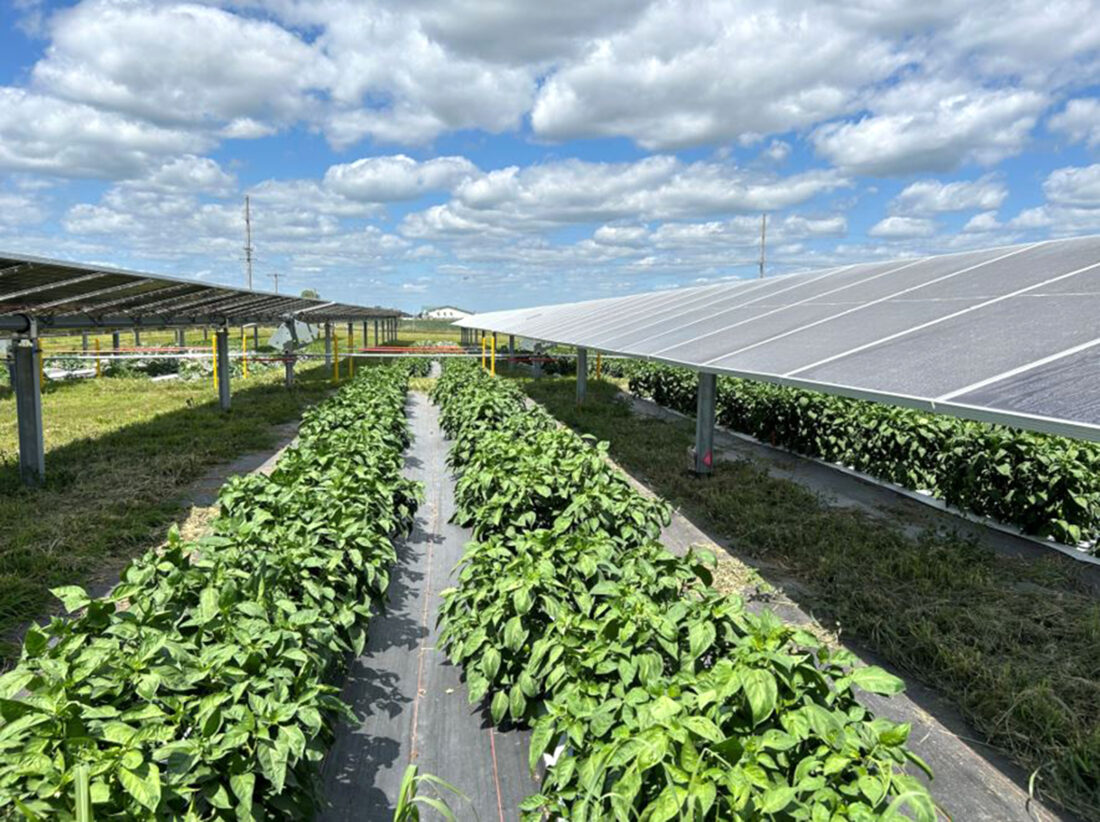
-Photo courtesy of Iowa State University <br> Bell peppers grow in abundance on the Alliant Energy Solar Farm at Iowa State University. The first year of a four-year study in agrivoltaics — the agricultural use of land that's also used by solar panels — has been completed on the farm, and researchers say it is showing promise.
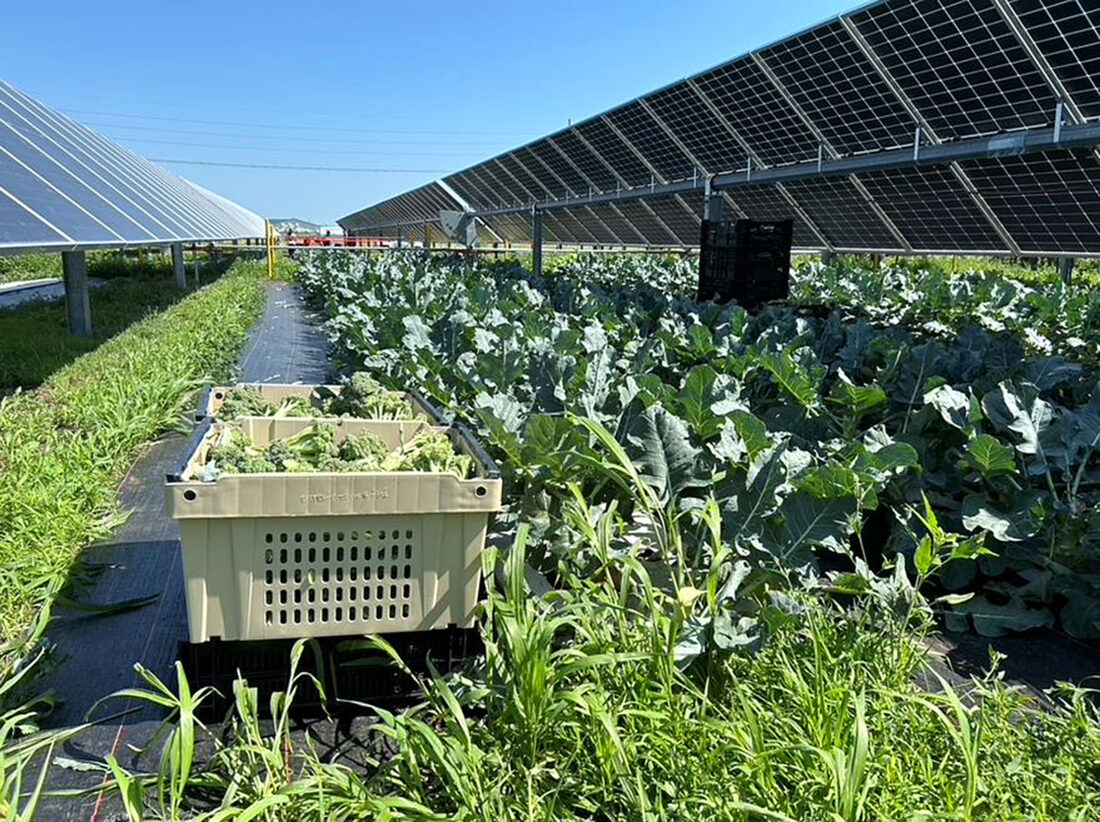
-Photo courtesy of Iowa State University <br> Broccoli grows amid the solar panels on the Alliant Energy Solar Farm at Iowa State University.
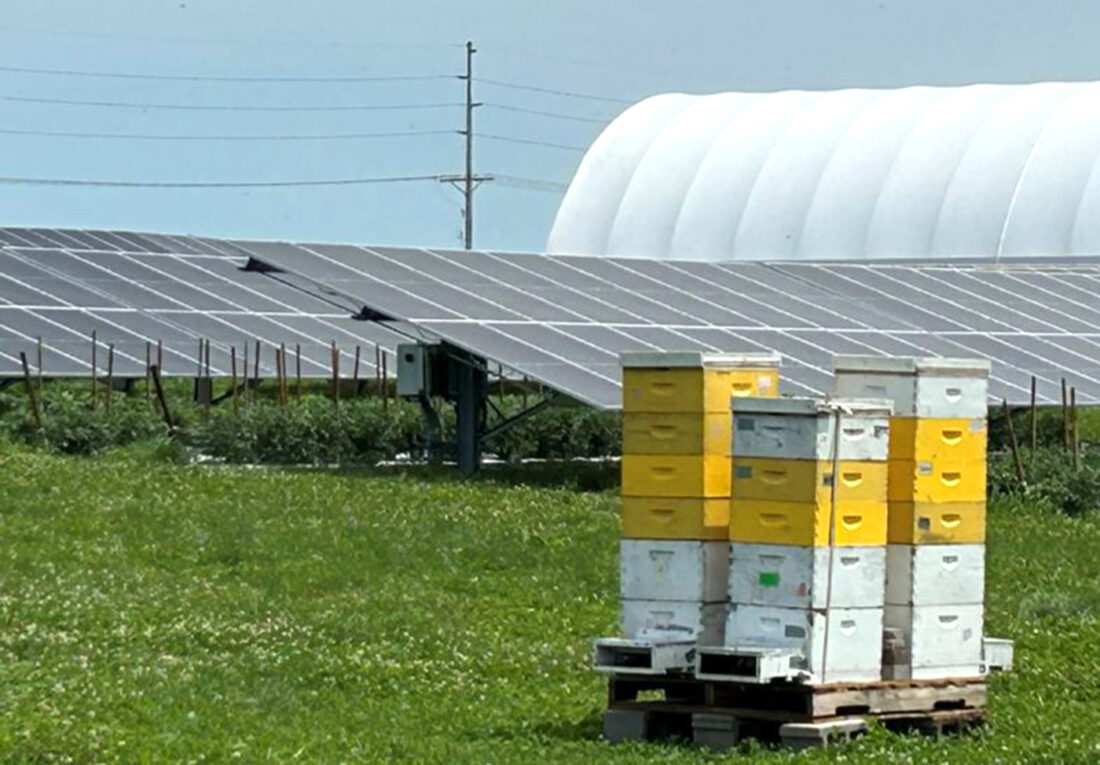
-Photo courtesy of ISU <br> Researchers decided that fruit, vegetables, beekeeping and pollinator conservation were the best options to explore at the solar farm. Beehives are seen next to solar panels in this photo.
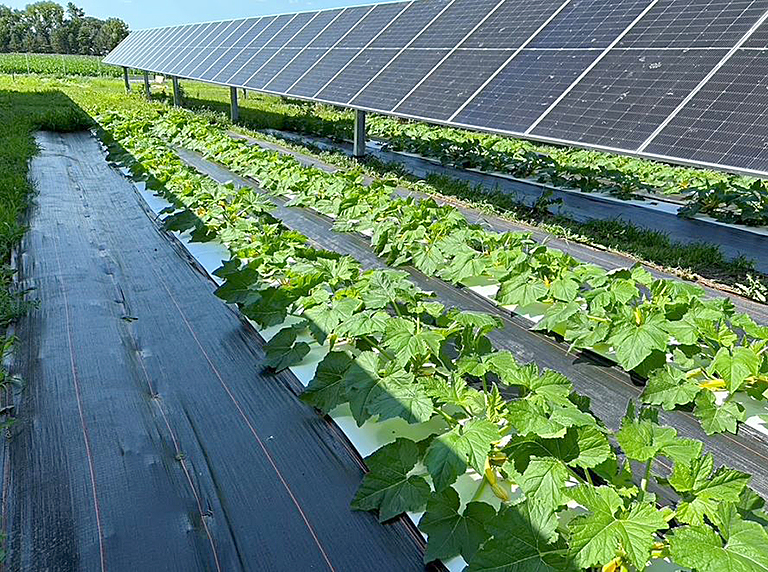
-Photo courtesy of ISU <br> Researchers decided that fruit, vegetables, beekeeping and pollinator conservation were the best options to explore at the solar farm. Squash is seen growing next to the solar panels in this photo.
-Photo courtesy of Iowa State University <br> Bell peppers grow in abundance on the Alliant Energy Solar Farm at Iowa State University. The first year of a four-year study in agrivoltaics — the agricultural use of land that's also used by solar panels — has been completed on the farm, and researchers say it is showing promise.
-Photo courtesy of Iowa State University <br> Broccoli grows amid the solar panels on the Alliant Energy Solar Farm at Iowa State University.
-Photo courtesy of ISU <br> Researchers decided that fruit, vegetables, beekeeping and pollinator conservation were the best options to explore at the solar farm. Beehives are seen next to solar panels in this photo.
-Photo courtesy of ISU <br> Researchers decided that fruit, vegetables, beekeeping and pollinator conservation were the best options to explore at the solar farm. Squash is seen growing next to the solar panels in this photo.
Trending
AMES -- Cattle and horses can share a pasture, wheat and soybeans can grow side by side in the same field, and -- according to Iowa State researchers -- vegetables can thrive on the same plot as solar panels.
Agrivoltaics is the agricultural use of land that's also used by solar panels. The first year of a four-year study at the 10-acre Alliant Energy Solar Farm at Iowa State University, south of Ames, showed promise, researchers say.
Matthew O'Neal, one of the project's leaders and professor of plant pathology, entomology and microbiology at Iowa State University, said Alliant Energy and Iowa State queried researchers to see if anyone wanted to study agrivoltaics thanks to the partnership.
"Given the size and configuration of the solar farm, a group of us decided that fruit, vegetables, beekeeping and pollinator conservation were the best options to explore at the solar farm," O'Neal said. "There are other things you can do at a solar farm, such as grazing livestock, even growing corn and soybeans, but given the size of the Alliant Energy solar farm, they felt the smaller plants would grow best, along with the bees."
They studied whether the basics of farming -- irrigation, fertilization, machinery and weed and pest management -- could be carried out around solar arrays and produce could be prolific. Iowa State University Horticulture Professor and Chair Ajay Nair, one of the project leaders, confirmed that it could.
"We used conventional farming practices between the rows of panels. One thing we did do differently for raspberries and grapes is that they were planted directly under the panels and we had to adjust the trellis height so it didn't interfere with the panels," O'Neal said. "There also are beehives at the site, and in 2025, they produced an estimated 120 pounds of honey.
"One thing we've for sure found out is we can grow vegetables on a commercial scale on a solar farm. Period. There's no doubt about it. We have demonstrated the practical aspects of an operation such as this will clearly work," Nair said.
In the study's first year, the planted vegetable crops included broccoli, summer squash and bell peppers. While broccoli planted between the panels grew a little smaller than in control plots, summer squash and peppers within the solar panel area produced better, Nair said.
In its second year, research plots were located between fixed angle solar panels after 2024 used tilting panels. Tomatoes were added to the growing schedule, along with more pollinator habitat. One thing researchers did observe is that the ground under and between panels is cooler and wetter than the surrounding landscape, which could be a concern for diseases to pop up in that environment. At the same time, researchers saw there were fewer Japanese beetles on the crops under the panels.
"What we've learned so far is the site is fantastic for honeybees. We have seen a 400% increase in honey production by the bees we've kept there for the past two years," O'Neal said. "We deliberately planted perennial flowering plants that honeybees use to make honey and we've seen a remarkable increase in the number of flowers, too. We've also seen that some of the perennial fruit crops, like raspberries and grapes, survived the winters better under the panels than when out in the open air. They're producing ample fruit and appear to be thriving."
Additional years of growing data will be needed to confirm what researchers are seeing, but they think planting produce between panels could offer some relief from summer's hottest days. Certain plants seemed to grow better under the panels, too, such as summer squash and bell peppers.
"We know that vegetables need full sun. That's true, but in July and August it can cause stress," Nair said. "Partial shade may help some plants cope."
It was too early to tell if the strawberries, raspberries, grapes and honeyberries fared better with some shade, as they typically don't produce a full crop in their first year. But the fruit plants under the panels appeared to establish well, Nair noted.
"At both our solar panel farm and other farms, we're learning that plants that are shade tolerant do really well planted near the panels, such as leafy vegetables," O'Neal said. "Ajay found that broccoli grows taller and puts out more leaves by the panels, but didn't produce as much of the stalks. Lettuce and basil also really thrive in the solar setting."
The project was funded by a $1.8 million grant from the U.S. Department of Energy. The interest in its results has garnered quite a bit of attention. Forty different groups visited the farm in 2024, including students, growers, nonprofits, government officials, utility companies and other researchers interested in the study.
"I have been overwhelmed by the positive responses. Some visitors have been skeptical that it's a good approach to using the land. But there generally was less skepticism as people walked through the site and saw what's possible," O'Neal said. "What's really cool about all of this is the opportunity to generate revenue from multiple streams on one piece of land. So the landowner gets a rental fee that is often two to three times what they'd get if it was rented for corn or soybean production. If they chose to farm the land, there's an opportunity to generate even more revenue."
Alliant Energy built, owns and operates the solar farm involved in the study, which has 3,300 panels capable of generating nearly 1.4 megawatts of electricity -- enough to power about 200 homes at maximum capacity. The panels are mounted two different ways, with the fixed tilt panels facing south at a 45-degree angle and then single access tracking panels that are in rows and go north and south, rotating throughout the day following the sun.
"The solar farm at Iowa State University was our company's first solar project to incorporate agrivoltaics, and we're thrilled the first-year research results are promising," said Nick Peterson, strategic partnerships manager for Alliant Energy. "This solar farm advances the concept that land can be used for energy production and agriculture, while also delivering the energy solutions our Alliant Energy customers and communities can count on in a unique way."
O'Neal said anyone skeptical of taking land out of production can see that solar panels don't prevent anyone from farming the land.
"Some may still be skeptical because this isn't a form of agriculture that is common in our landscape. That's why we're now interested in how we can combine livestock grazing at solar farms. But that takes up more space than fruits and vegetables, although horticulture production is a big part of Iowa agriculture in terms of cash receipts and not acres," he said. "Our results are suggesting you can combine the two. We have livestock producers wanting to know if they can couple their grazing ground with solar farming."