
Made in Manning
Puck Enterprises expands beyond manure management
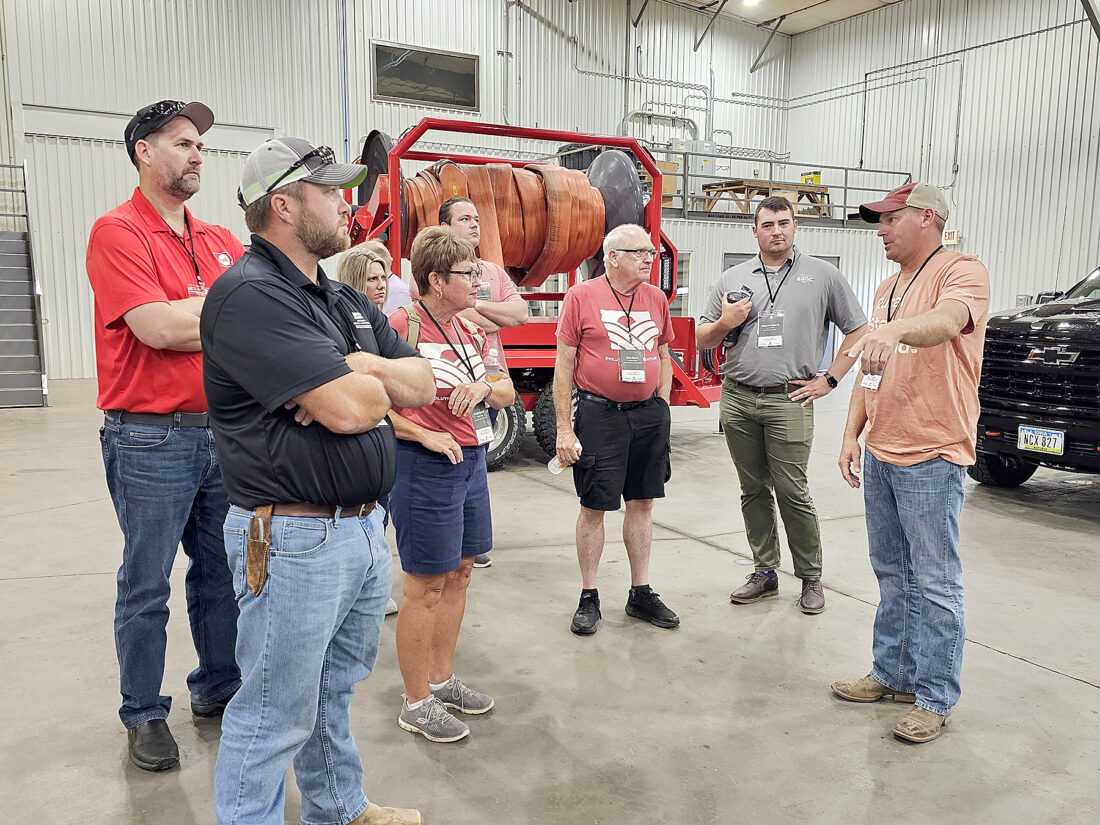
-Messenger photo by Darcy Dougherty Maulsby <br>Jeremy Puck gives a guided tour of Puck Enterprises in August to participants in Evolution of the Heartland, which helps non-farm audiences learn more about modern agriculture.
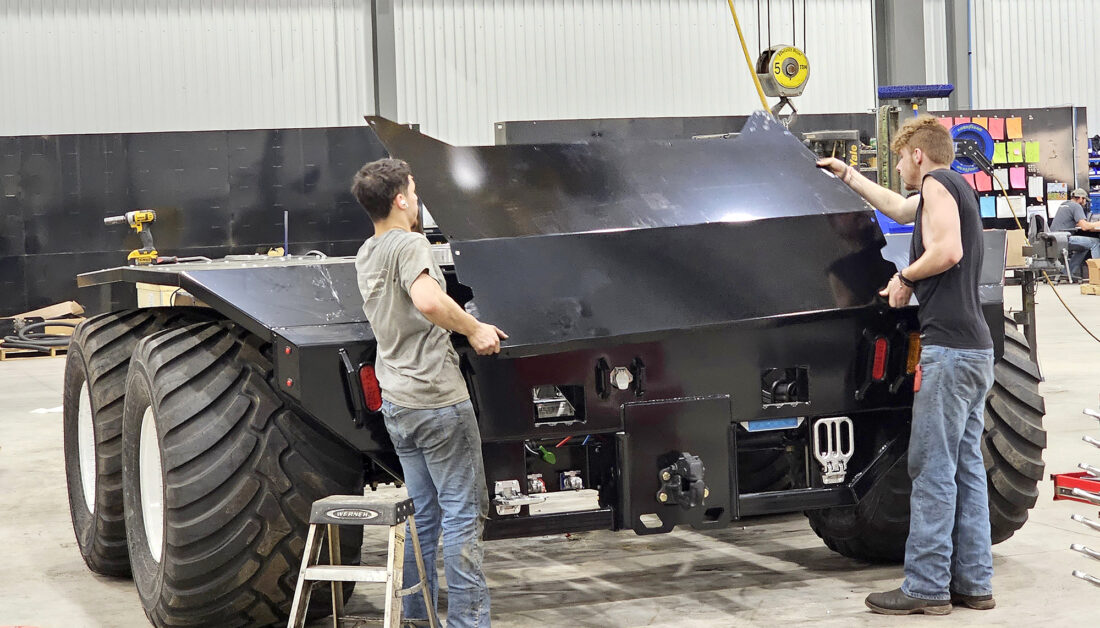
-Messenger photo by Darcy Dougherty Maulsby <br>Puck Enterprises employees work to assemble a TTR20 hose cart at Puck Enterprises' manufacturing facility south of Manning.
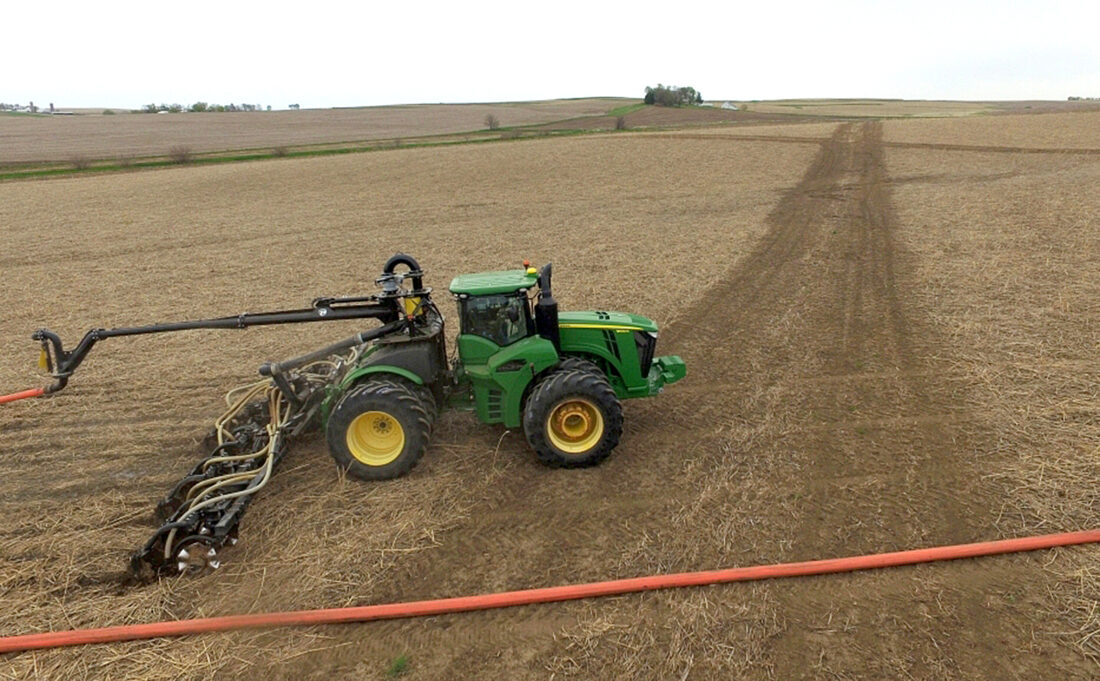
-Messenger photo by Darcy Dougherty Maulsby <br>Today's manure application to fields is much more precise than in years past, thanks to sophisticated equipment like Puck manufactures.
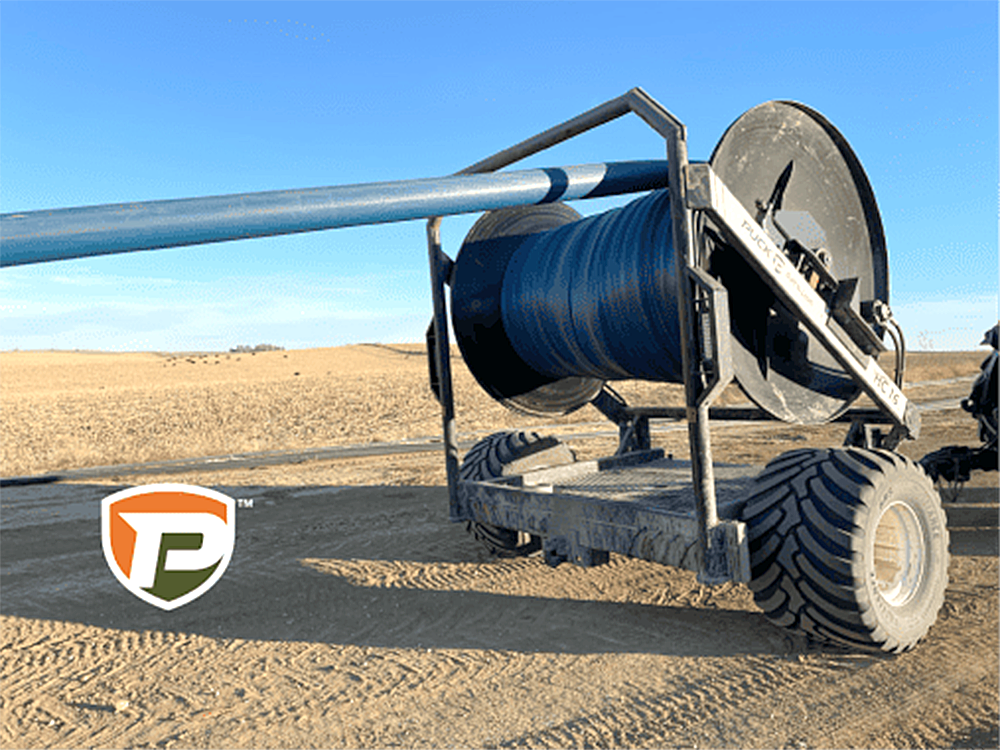
-Messenger photo by Darcy Dougherty Maulsby <br>Puck Enterprises has patents on a number of its products, from its hose reel equipment to its floating boat for manure agitation.
-Messenger photo by Darcy Dougherty Maulsby <br>Jeremy Puck gives a guided tour of Puck Enterprises in August to participants in Evolution of the Heartland, which helps non-farm audiences learn more about modern agriculture.
-Messenger photo by Darcy Dougherty Maulsby <br>Puck Enterprises employees work to assemble a TTR20 hose cart at Puck Enterprises' manufacturing facility south of Manning.
-Messenger photo by Darcy Dougherty Maulsby <br>Today's manure application to fields is much more precise than in years past, thanks to sophisticated equipment like Puck manufactures.
-Messenger photo by Darcy Dougherty Maulsby <br>Puck Enterprises has patents on a number of its products, from its hose reel equipment to its floating boat for manure agitation.
Trending
MANNING -- When you see rigs applying manure in local farm fields after the crops are harvested, it's easy to underestimate just how sophisticated, precise and environmentally-friendly this process has become.
"These aren't just manure spreaders anymore," said Jeremy Puck, 42, CEO of Puck Enterprises in rural Manning.
This innovative ag company has more than 40 years of liquid transfer experience, starting with high-quality manure pumping units and dragline equipment.
Draglines allow precise manure application to fields, without the use of heavy manure-hauling tanks. Livestock manure dragline systems cut some of the hazards and hassles of manure handling and applications.
Draglines minimize odor as manure is removed from the pit, transferred through hoses and applied to the field. When liquid livestock manure is incorporated into the soil, a dragline system enables precise placement, compared to broadcast applications.
Puck Enterprises has patents on a number of its products, from its hose reel equipment to its floating boat for manure agitation.
"Our agitation boat came to market in 2012 and has helped us grow tremendously," Puck said.
Manure in storage pits needs to be agitated (stirred briskly) before the manure is pumped out. This helps mix the liquid with the solids that have settled.
There are two big advantages to this process.
The settling of manure solids can cause uneven levels of nutrients in the stored manure, which impacts proper nutrient management planning. If manure isn't agitated before pumping, phosphorus can vary more than 300% from top to bottom in the manure storage facility, according to the University of Wisconsin-Extension. In addition to more uniform nutrient applications, agitating manure prevents solids from building up and reducing the effective storage volume of the pit or lagoon.
While farmers can use a traditional stick agitator powered by a tractor, Puck Enterprises' easy-to-operate agitation boats (which are about the size of a pontoon boat) are well-suited for large lagoons, said Puck, who noted that the equipment includes a 300-horsepower motor.
The efficiency of modern manure-handling equipment is impressive. In the early 2000s, it took about three days to empty a lagoon connected to a 2,400-head swine finishing barn.
"Today, it takes about eight hours to apply it," Puck said. "Our solutions help customers get more work done in the shortest amount of time with great precision, thanks to cellular control systems for the pumps and GPS guidance for the tractor."
This focus has helped Puck Enterprises carve a unique niche.
"Big ag manufacturers like Deere, Case, New Holland and Vermeer don't compete in this space," Puck said.
Rural roots run deep
Puck Enterprises grew into this niche from humble beginnings. The company started more than 40 years ago as a custom hay baling and manure application business serving farmers around Manning.
Puck's parents, Ben and Kathy Puck, ran the business from the family's Century Farm south of Manning.
While farming was profitable in the late 1970s when Puck Enterprises started, everything changed in a few short years.
"Dad walked out of high school and into the Farm Crisis of the early 1980s," Puck said. "He had to find other opportunities to continue to farm."
There was still opportunity in the 1980s, however, for forward-thinking ag entrepreneurs like the Pucks. Hog production was beginning to evolve, as some farmers began using small confinement barns with slatted floors that allowed the manure to drop into a pit.
"Dad got a small manure-hauling truck and started working with some of these farmers," Puck said.
The business took off when Puck Enterprises connected with the Audubon Manning Veterinary Clinic (AMVC), as well as dairy farms near Atlantic and Harlan. As 1,000-head swine barns and 2,400-head swine barns became the norm in western Iowa and beyond, the demand for custom manure hauling and application work grew.
Puck grew up in this business and wanted to carry on this family tradition.
"I was all in and loved the custom work," said Puck, who studied ag business at Iowa State University and returned to western Iowa in 2004. "I looked forward to coming back home after college."
Then came 2005, when corn prices shot up to $4 a bushel as the ethanol industry grew.
"Farmers began plowing under alfalfa to grow more corn," Puck said. "All of a sudden we were out of custom baling work."
Puck Enterprises pivoted to design and fabricate manure-handling equipment.
"We don't just build the equipment; we use it," Puck said. "That's how we find better solutions to make our customers' businesses more efficient and profitable."
Liquid-transfer technology taps new markets
Puck Enterprises' patented products and strategic vision are helping the company serve industries beyond agriculture. The company has expanded its liquid-transfer technology to incorporate BullDog Hose in North Carolina (where lay-flat hose is manufactured) and U.S.
Coupling in Alabama into the Puck family of brands.
"We've expanded into the fire-protection industry, water transfer in the oil and gas industries, and military fuel applications," Puck said.
Today, Puck Enterprises has more than 130 employees at its rural Manning facility, which covers roughly nine acres and includes 250,000 square feet under roof. The company also has 250 employees at five other locations in four states.
The team works together to provide turn-key solutions.
"We try to do everything we can in-house, from welding to powder coating," Puck said.
The company markets its products across North America and eastern Europe, thanks to Puck Enterprises' store in Croatia. Closer to home, Puck has also launched Level B, a new restaurant in Manning.
"To me, rural Iowa is the best place on earth," said Puck, who opened Level B in May 2023 with his wife, Melissa. "We're proud to raise our five kids here, and we want to contribute to the quality of life here."
Puck looks forward to helping his businesses -- and rural Iowa -- thrive. "We continue to create new solutions to meet challenges, while always being good stewards of the fertile Iowa farmland we call home."