
Sabanto
Making the old new; Company focuses on retrofitting older tractors to become autonomous
Trending
AMES -- Ames-based Sabanto offers producers a simple and cost-effective way to automate their older tractors, an option that might fit farmers' budgets better than purchasing a newer model.
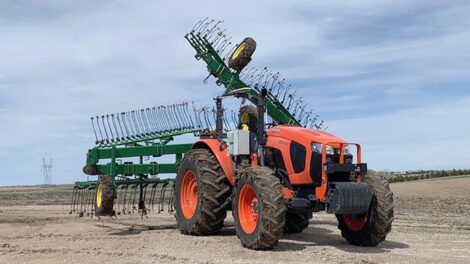
Company leaders explained that Sabanto can equip their current tractors with an after-market autonomy system to make the machinery drive autonomously. By using the company's mission control, farmers can plan autonomous field operations and control their tractors from anywhere using a mobile device or computer.
Craig Rupp, founder and chief executive officer of Sabanto, which has headquarters in Illinois, said autonomous tractors help alleviate the labor shortage and expertly solves other difficulties for farmers.
"One benefit we've seen is the system has rules it is not allowed to break. For example, we have an absolute minimum turning radius. The tractor will never violate this rule in its path plan. We worked with an organization that bent seven PTO shafts throughout the season," Rupp said. "Farmers are some of the most progressive, clever and innovative people you will ever meet. We are providing a platform that they will build upon."
Matt Hesse, vice president of sales and marketing at Sabanto, noted that until now, the only way to expand an operation machinery-wise is to buy larger equipment. But there's a cap on horsepower and sizes of expensive machinery.
"Autonomy will help address the lack of skilled labor. Now we will enable growers to completely rewrite how they scale their operations, including using much lighter machines that will have a yield benefit with it as well due to less soil compaction. For example, if a grower today plants corn and soybeans, normally they plant one or the other first. This technology will allow a grower to be able to plant both at the same time with machines that could be running day and night with the grower tending to the fuel, seed, etc. as it is needed," Hesse said.
Sabanto currently works with dealers who install the systems and offer local support.
Currently, Sabanto has rolled out automating systems for certain models of tractors, including the Kubota M5, and plans to release other models throughout the year, Rupp said. He added that Sabanto experts are "working diligently" to offer the system for many other models.
"We see a future of smaller, lighter, lower-HP tractors performing field operations. We automated a 60-HP tractor that planted 750 acres in a growing season. We believe this approach will scale a single unit capable of handling smaller operations and multiple units in a swarm servicing larger operations," Rupp said.
Hess noted that autoguidance, which is available today, still requires a person sitting in the tractor seat.
But autonomy allows growers to get twice the amount of work down in a day, as long as Mother Nature cooperates.
"A grower can now fully multitask, meaning they could have a tractor doing tillage work at the same time he or she is at a meeting or doing a different task on the farm," he said.