
Not once, but twice
FD native is double organ donor
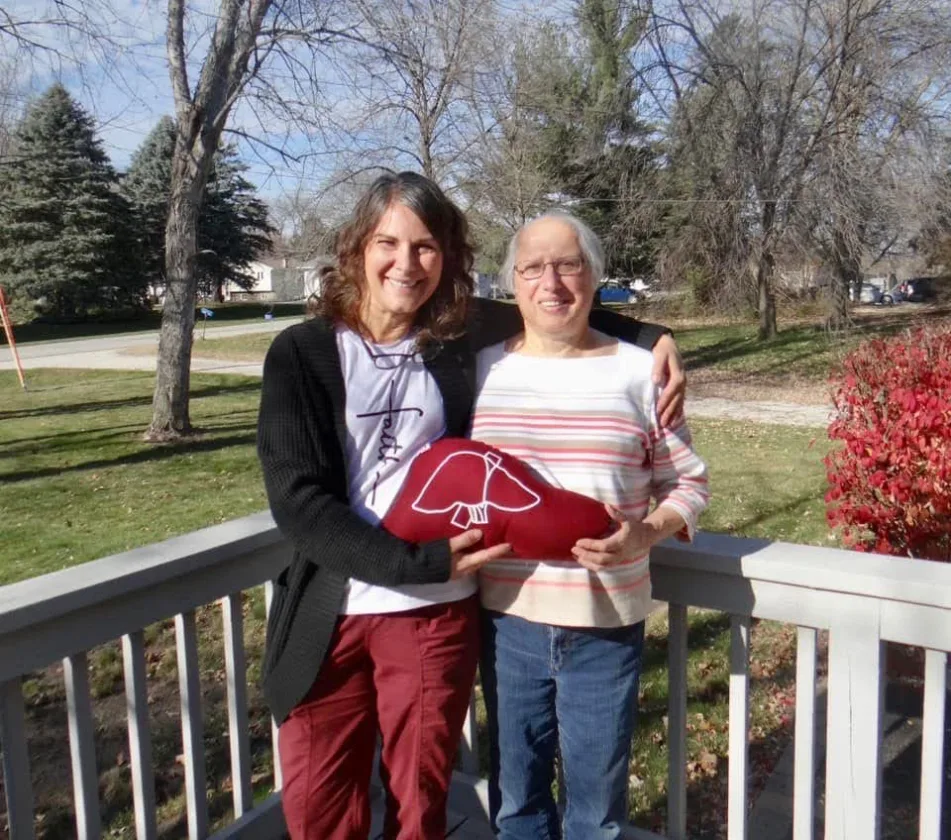
-Submitted photo <br> April Wilson and her mother, Mary Lou Walker, of Fort Dodge, pose with a pillow shaped like a liver. Wilson donated a lobe of her one liver to save her mother’s life.
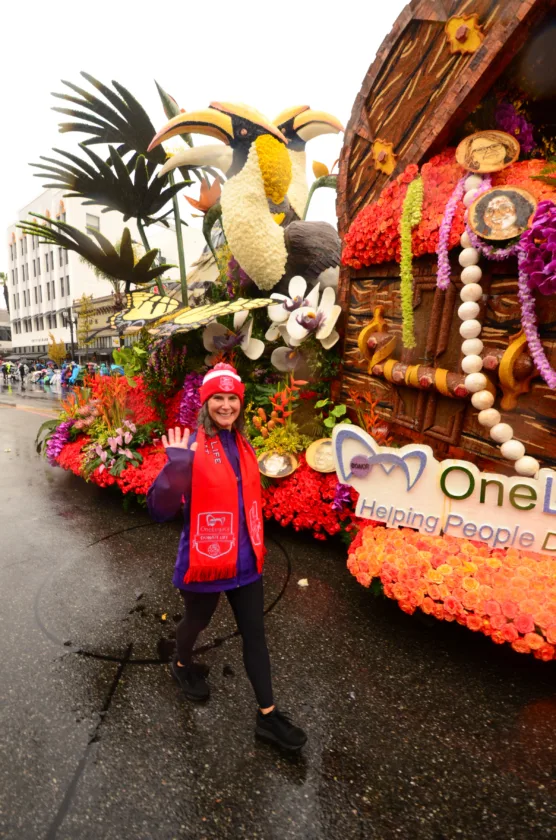
-Submitted photo <br>April Wilson walks alongside the Donate Life float during the 2025 Rose Parade in California. She was nominated for the honor of being in the parade after donating a lobe of her liver to her mother and a kidney to someone she had never met.
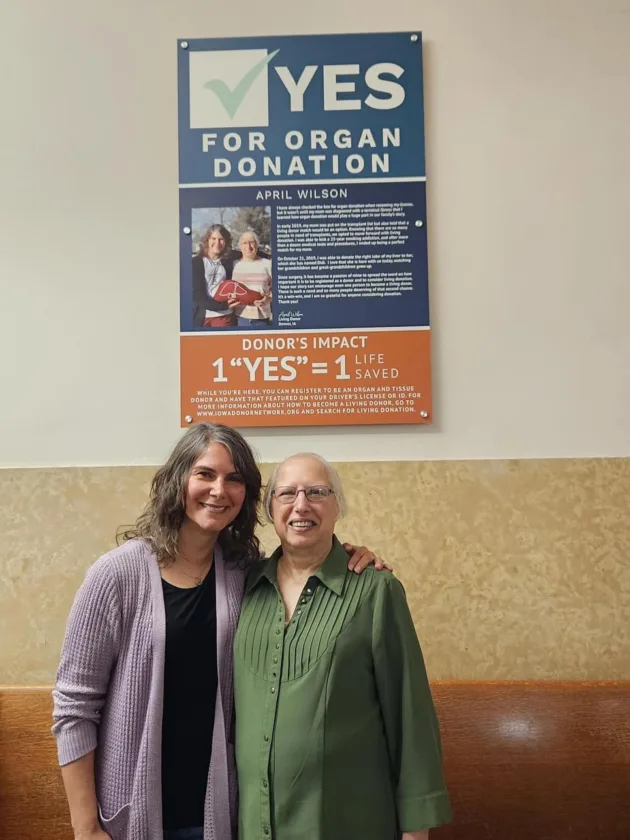
-Submitted photo <br>April Wilson and her mother, Mary Lou Walker, pose with a poster promoting organ donation that features a photo of them. Wilson donated a lobe of her liver to her mother and a kidney to a stranger.
-Submitted photo <br> April Wilson and her mother, Mary Lou Walker, of Fort Dodge, pose with a pillow shaped like a liver. Wilson donated a lobe of her one liver to save her mother’s life.
-Submitted photo <br>April Wilson walks alongside the Donate Life float during the 2025 Rose Parade in California. She was nominated for the honor of being in the parade after donating a lobe of her liver to her mother and a kidney to someone she had never met.
-Submitted photo <br>April Wilson and her mother, Mary Lou Walker, pose with a poster promoting organ donation that features a photo of them. Wilson donated a lobe of her liver to her mother and a kidney to a stranger.
Trending
April Wilson has given away a piece of her liver and one of her kidneys.
She says she’d do it again if she could.
In October 2019, Wilson donated a lobe of her liver to save her mother, Mary Lou Walker, of Fort Dodge, who had been diagnosed with non-alcoholic cirrhosis.
Five years later, she gave a kidney to a stranger in Wisconsin she had never met.
Today, at 48, Wilson counts herself among an estimated 300 people nationwide who have made two living organ donations, according to Walker, and has turned the experience into a second calling: raising donor awareness.
She has competed in the Transplant Games of America and rode on the Donate Life float in last year’s Rose Parade after being nominated for the honor.
“I’m so grateful to have my mom still here -- and Lindsey,” Wilson said, referring to her kidney
recipient. “The (donor) community is so amazing, and these people have become like family to
me.”
A Christmas Eve emergency
Walker’s health crisis began on Christmas Eve 2018, when she was rushed to the hospital and
diagnosed with cirrhosis of the liver. Doctors placed her on the waiting list for a deceased donor,
but warned the family she likely wouldn’t survive the wait.
Wilson and her sister both volunteered to be tested as living donors, but Mayo Clinic could
evaluate only one candidate at a time. Wilson’s sister went first; her liver ultimately wasn’t a fit.
Wilson, a smoker at the time, had to quit before Mayo would even consider her -- the clinic
required 30 nicotine-free days before testing could begin. She quit in March 2019, a decision
she credits to her faith.
“I had found my way back to my faith in 2018, and the only way I was able to quit was through
prayer,” Wilson said.
She has now been smoke-free for seven and a half years.
Mayo called her in June 2019 for an initial CT scan, which showed she could be a match. What
followed was roughly 14 additional tests -- cardiology screening, mental health evaluations and
extensive bloodwork -- designed to make sure the donation wouldn’t compromise her own
health. Her cardiology results cleared her on Aug. 21, 2019. Two months later, to the date, she
donated a lobe of her liver to her mother.
“I knew when they told us she would need a living donor – I just knew it would be me,” Wilson
said.
The donated lobe began regenerating almost immediately; a liver typically regrows to full size
and function within about a year. Wilson said her recovery was easier than she expected --
she’d braced herself after reading accounts from a Facebook support group for living liver
donors -- though an adverse reaction to pain medication kept her hospitalized for six days.
Self-employed and able to work from home, she said she needed no lasting lifestyle changes:
she still eats and drinks as she did before.
“I think I’m a bit more self-conscious because my mom’s cirrhosis was sort of a wake-up call,”
she said.
Walker said the moment is still hard for her to put into words.
“I can’t explain sometimes how I felt when I found out she was a match,” Walker said. “The first
time I carried her for nine months, and now I get to carry a piece of her for the rest of my life.”
A second gift, to a stranger
Wilson’s second donation traces back to the support of other donor members she had met. After
joining Team Iowa, a group that competes in Olympic-style events for transplant recipients and
donors, she learned that living kidney donors who ever need a transplant themselves are moved toward the front of the waiting list through a program known as Donor Shield.
Motivated partly by the thought of protecting her mother or another family member should they
ever need a kidney, Wilson contacted Mayo Clinic’s transplant center directly and went through
testing a second time. She was entered into the National Kidney Registry, which matched her
with a recipient also being treated at Mayo: Lindsey, a Wisconsin woman who was deaf, losing
her eyesight and on dialysis.
Wilson donated her kidney to Lindsey in November 2024. Lindsey’s parents reached out to
Wilson while she was still recovering in the hospital and asked to meet her; the two families
have connected ever since.
“When I learned her story, it was a relief to know my kidney went to someone who had already
been through so much,” Wilson said.
"You rely on God to take care of her, because she's doing a charitable thing," Walker says of
watching her daughter donate a second time.
From patient to advocate
Since her donations, Wilson has become an advocate for living organ donation. This year she
competed for Team Iowa at the Transplant Games of America in Denver -- an event that draws
roughly 10,000 people and rotates cities every two years. In her first appearance, Wilson won
13 medals across track and field, bowling and Texas Hold’em.