
Afro-Latino Festival comes to Iowa Central
Event marks National Hispanic Heritage Month
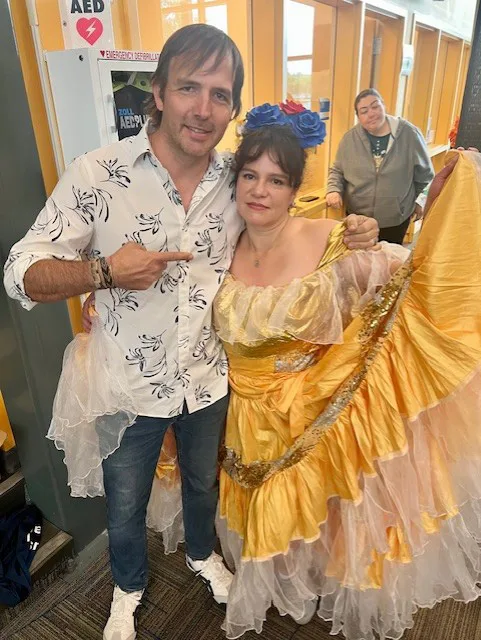
-Messenger photo by David Drissel <br> Craig Klein. of Des Moines, stands next to Andrea Estling Mendoza, Iowa Central instructor and organizer of the Afro-Latino Festival. They are both originally from Colombia.
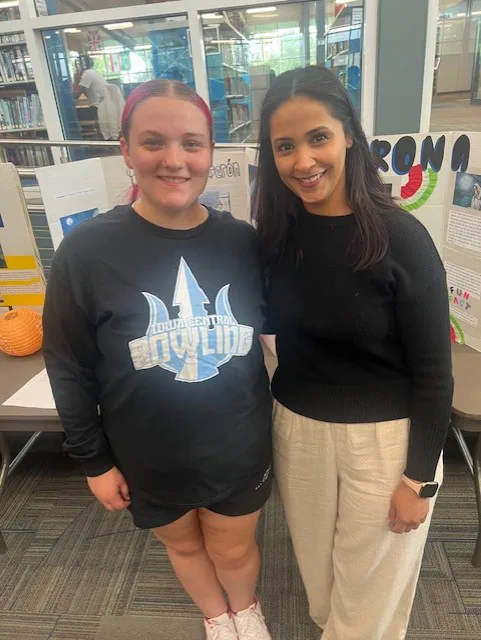
-Messenger photo by David Drissel <br> Iowa Central students Ren Starmer from Ankeny and Mayra Larios from San Jose, California, attended the Afro-Latino Festival.
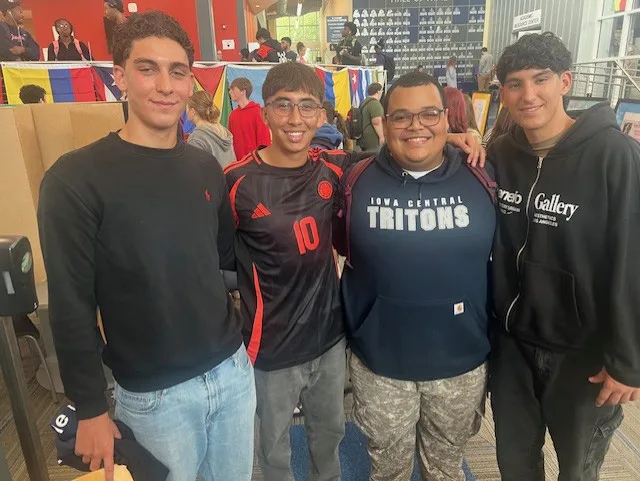
-Messenger photo by David Drissel <br> Iowa Central students from Spain, Colombia, Honduras (second generation), and Uruguay, attended the Afro-Latino Festival.
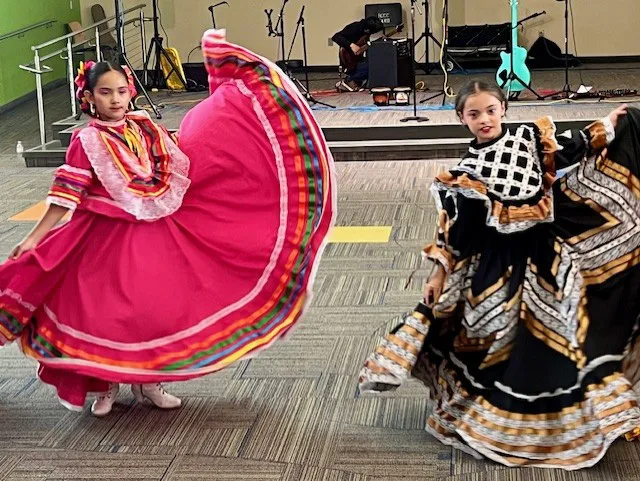
-Messenger photo by David Drissel <br> Danza Folklorica del Oeste, a Mexican-American dance group from Des Moines, performed at the Afro-Latino Festival at Iowa Central Community College on Wednesday.
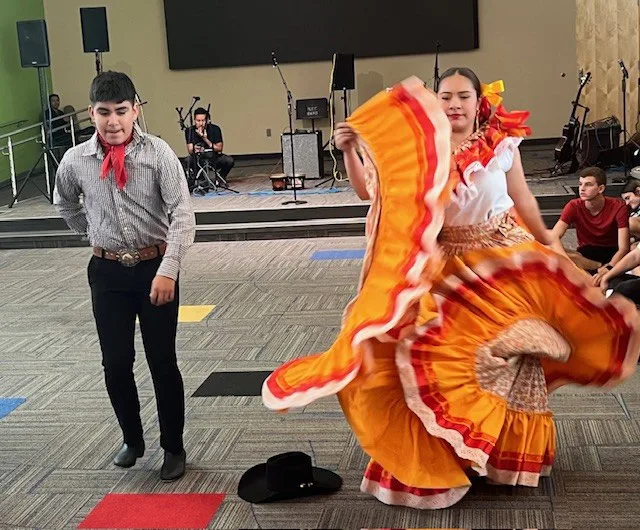
-Messenger photo by David Drissel <br> Danza Folklorica del Oeste, a Mexican-American dance group from Des Moines, performed at the Afro-Latino Festival at Iowa Central Community College on Wednesday.
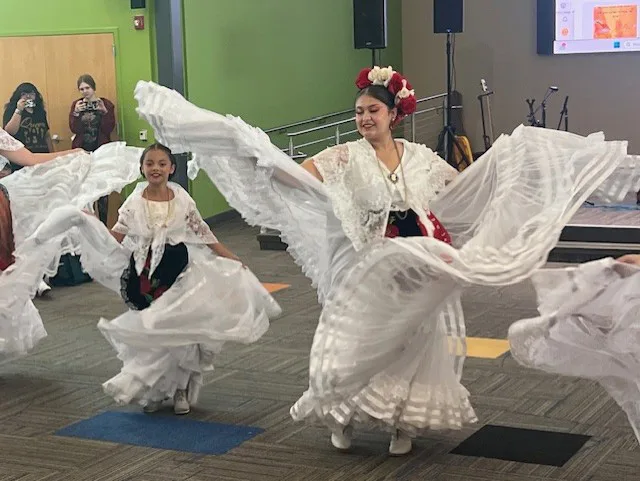
-Messenger photo by David Drissel <br> Danza Folklorica del Oeste, a Mexican-American dance group from Des Moines, performed at the Afro-Latino Festival at Iowa Central Community College on Wednesday.
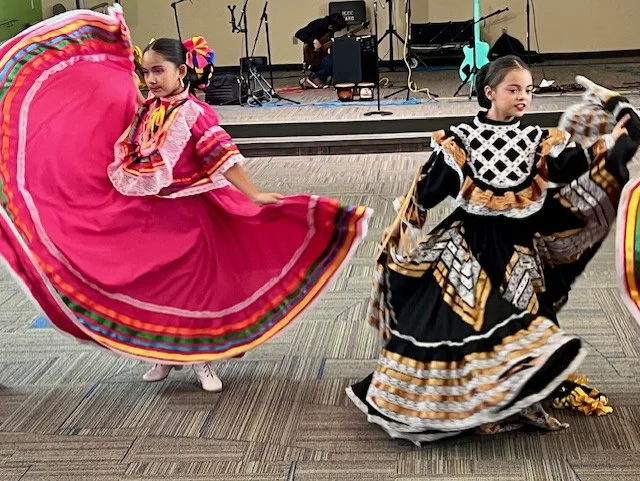
-Messenger photo by David Drissel <br> Danza Folklorica del Oeste, a Mexican-American dance group from Des Moines, performed at the Afro-Latino Festival at Iowa Central Community College on Wednesday.
-Messenger photo by David Drissel <br> Craig Klein. of Des Moines, stands next to Andrea Estling Mendoza, Iowa Central instructor and organizer of the Afro-Latino Festival. They are both originally from Colombia.
-Messenger photo by David Drissel <br> Iowa Central students Ren Starmer from Ankeny and Mayra Larios from San Jose, California, attended the Afro-Latino Festival.
-Messenger photo by David Drissel <br> Iowa Central students from Spain, Colombia, Honduras (second generation), and Uruguay, attended the Afro-Latino Festival.
-Messenger photo by David Drissel <br> Danza Folklorica del Oeste, a Mexican-American dance group from Des Moines, performed at the Afro-Latino Festival at Iowa Central Community College on Wednesday.
-Messenger photo by David Drissel <br> Danza Folklorica del Oeste, a Mexican-American dance group from Des Moines, performed at the Afro-Latino Festival at Iowa Central Community College on Wednesday.
-Messenger photo by David Drissel <br> Danza Folklorica del Oeste, a Mexican-American dance group from Des Moines, performed at the Afro-Latino Festival at Iowa Central Community College on Wednesday.
-Messenger photo by David Drissel <br> Danza Folklorica del Oeste, a Mexican-American dance group from Des Moines, performed at the Afro-Latino Festival at Iowa Central Community College on Wednesday.
Trending
Just in time for National Hispanic Heritage Month, the annual Afro-Latino Festival was held Wednesday at the Student Resource Center on Iowa Central Community College's Fort Dodge campus.
Hundreds of students and other members of the public packed the venue, sampling Afro-Latino food dishes and perusing dozens of colorful educational posterboards focusing on various Hispanic traditions, history, and culture.
The audience was treated to various live music and dance performances on stage - including Carlos Chacon (Venezuelan), Chuco and Mambo Soul Dance (both Peruvian), Danza Folklorica del Oeste (Mexican), and Son Peruchos (Latin American).
The Afro-Latino Festival commemorates National Hispanic Heritage Month, which is celebrated officially each year from Sept. 15 to Oct. 15. The month recognizes the histories, cultures, and contributions of American citizens whose ancestors came from Latin America.
This is the eighth annual Afro-Latino Festival sponsored by Iowa Central. The festival was founded in 2019 by Andrea Estling Mendoza, Iowa Central Spanish instructor. She continues to manage the festival each year, with help from other Iowa Central faculty and staff members.
Identifying as a Latina, Mendoza explains that the festival originated because of student interest. "I had some Hispanic students, and they came to me and asked, do we celebrate Hispanic Month at Iowa Central?' she recalls. "I said, no, but we are going to start doing it."
Hispanic Heritage Month begins each year on Sept. 15, marking the anniversary of independence for several Latin American nations, including Costa Rica, El Salvador, Guatemala, Honduras, and Nicaragua. Mexico celebrates its Independence Day on Sept. 16 followed by Chile on Sept. 18. The heritage month ends soon after Columbus Day on Oct. 12.
Mendoza said she created the Afro-Latino Festival not only for the Hispanic community, but also for other non-Hispanic students and anyone who loves or embraces Hispanic culture.
"And I do this because it’s about representation, and representation is power," she said. "So, I want to represent the minorities, including the Afro-Latinos and Hispanics, and also anyone else who wants to learn about our beautiful culture."
She said the festival is named for both Africans and Latinos because of the mixed cultural heritage of Latin America. The region is a combination of indigenous (native), European (especially Spanish and Portuguese), and African, ancestral origins, she said.
"We cannot talk about Latin America without Africa, because, for example, 10 million Africans came to America, the continent, but only half a million came to the United States," she said. "The rest came to Latin America - 7.5 million Africans."
Like most other Hispanic people, Mendoza is a mixture of various cultural backgrounds.
"I’m a mestiza - a combination of many different races - that is a large representation about who we are in Latin America," she said. "We are not one thing or one race."
Originally from Bogota, Colombia, Mendoza immigrated to Minnesota in 2002 after marrying an American man who was visiting her homeland.
"When I came to this country, I didn’t know any English at all," she said. "So, I started as a housekeeper. And then I started going to English classes."
Mendoza eventually graduated with her Bachelor's degree from the University of North Dakota, and received her Master's degree from the University of Northern Iowa.
She began teaching full-time at Iowa Central in 2018, though she continues to commute to the Fort Dodge campus each day from her family home in Ames. She is a dual citizen of both the United States and Colombia.
Iowa Central students attending this year's Afro-Latino festival represent a wide variety of cultural and ethnic backgrounds - including numerous Hispanic students.
Maryra Larios, for example, identifies as a Mexican American from San Jose, California. Though her parents are originally from Michoacan, Mexico, she was born and raised in San Jose.
"I'm Mexican American because both my parents are Mexican, so therefore my genes and my blood are Mexican," she said. "But I was born here in the United States, which I’m grateful for and I appreciate. I love the United States. So, I guess I’m half and half. My heart is here."
Larios said that she came to Iowa Central three years ago to major in nursing.
"It’s a lot less expensive at Iowa Central than in California, and less competitive too," she said.
When asked about the Afro-Latino Festival, she said it is a fun and interesting event that encourages students to learn from one another about their cultural backgrounds.
"I think it’s nice to learn about other cultures, and other perspectives," she said.
The festival also attracted Latino Americans from other cities in Iowa. Craig Klein, for example, is a Spanish teacher from Des Moines. He teaches elementary and middle-school students.
Klein is originally from Colombia, but moved to the United States when he was 19 years old.
"My mother is Colombian and my father is from Iowa," he said. "So, you can consider me a half-breed. But I see myself as much more Colombian, because that’s my upbringing."
Besides teaching kids to speak Spanish, Klein also is a Spanish teacher trainer who organizes annual summer trips to Colombia.
"Spanish teachers from all over the world participate in the trip," he said. "We spend a whole week in Colombia, and we do professional development, wellness, cultural immersion, everything."
Klein emphasizes the significance of Iowa Central's Afro-Latino Festival, especially given the growing size of the Hispanic population in Iowa and the rest of the United States.
"Whether some people agree with it or not; our community is here and we’re not going anywhere," he said. "You know, it’s just what it is. And if you look at young people performing at the festival today, they’re already second and third generation. They’re keeping our culture alive."