
Lahn offers his plans for Iowa
Republican hopes to become state’s next governor
Trending
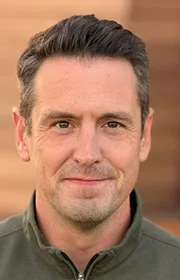
Zach Lahn, the Republican nominee for governor, recently sat for an exclusive interview with Messenger Editor Bill Shea, during which he talked about his proposal to address water quality issues and the surging rate of cancer cases in Iowa.
Lahn also talked about redirecting the Iowa Economic Development Authority to provide more growth incentives to farmers and small businesses.
The Aug. 4 interview is presented here in question-and-answer format.
Why do you want to be governor?
"Really, I was looking at some of the long term issues that the state and the region has been facing. I really boil that down to four key issues.
"But ultimately, I'm an outsider here. I've never ran for office. And as I looked around the country, there's a lot of issues that were seemingly being ignored.
"In Iowa those issues are, our kids are leaving the state faster than 46 other states, we've lost 10,000 family farms over the past 20 years and now a quarter of our land is owned by people who don't live here, and our public education system, which was once No. 1 in the nation when I was in elementary school in Sioux City, is now in the bottom half.
"And a final issue that really became a flashpoint for my campaign is that we have the fastest rate of new cancer anywhere in the country.
"And so when I looked at this, I wasn't running because I thought oh, there’s one policy I'd like to change. It's more so how do we preserve the culture of our state? I think that's agriculture, education, the health of our people and keeping our kids here."
If you are elected, what will be your No. 1 priority?
"I think the first thing we have to tackle is the cancer crisis and water quality. I think that is one of these acute issues that we can't ignore any longer or not give its due. It's one of the reasons I got in the race in the first place."
Do you see the two as being related?
"Yes. High nitrate load in water is one of the top causes of colon cancer. High environmental toxin load is not a good thing for us to have in the state."
What would be your plan to deal with, first, the cancer crisis?
"I look at the largest levers I can pull when I'm confronting a problem like this. I think No. 1, we have to get the Iowa program funded. That was passed in 2010 by a vote of 63 percent of the people.
"I would like to direct those resources to targeted interventions to improve our water quality. So what would that look like? Looking at the most affected areas on the Des Moines River, the Raccoon River, specifically, to start putting in place measures like saturated buffers to stop tile lines from daylighting directly into streams.
"And then also incentivize a deeper application of nitrogen rather than just top dressing or top application that is more susceptible to washout. If you have deeper application of nitrogen, by some estimates you can reduce application load by up to 30 percent.
"To do that, we need to put it on a cost parity with the top application, which is much cheaper. I would like to provide refundable tax credits for doing that so farmers can use less product and have the same cost, ultimately saving money.
"More broadly speaking, looking at more regenerative agriculture practices in general. I'd like to use the Economic Development Authority to start treating family farms as entrepreneurial activities. So for the farmers who would like to try something different, which there are so many across the state that I've talked to, that they could present a plan just as a company seeking incentives could present a plan to the Economic Development Authority, and they could be eligible for incentives to move to a rotationally grazed cattle herd, install water infrastructure, get GPS collars for cattle, things like that, to start moving towards more pasture grass and prairie."
What kind of incentives do you envision?
"I think I take a lot of the cues that the Economic Development Authority has already done with large businesses. I think a lot of these incentives have gone to global companies. They'll give grants, they'll give tax abatements. I think for what we're talking about, I think grants toward these types of projects would be the first lever I try to pull, and if we for instance stop giving refundable tax credits to global companies who are coming in and oftentimes cutting jobs after they get here, we could make a tremendous impact with a lot less money."
Where would the money for these grants come from?
"By cutting it from the large global companies we've been giving it to.
"For instance, there's one company that's been given $100 million in refundable tax credits for job creation, but over that same time they've cut 1,200 jobs.
"So the first step is to redirect the Iowa Economic Development Authority's priority to focus on Iowa's home-grown businesses and entrepreneurs. The ultimate reason for that is they're the last people who will cut the jobs of their friends, their neighbors, the people they go to church with, where a lot of times these companies that want to come in and open up will just treat us like a cell on a spreadsheet. If the economy gets bad, they're gone."
You talked about the Iowa program. That's the sales tax increase?
"Yes, three-eighths of a cent."
Can you do what you want to do with that sales tax or is that all earmarked for parks and recreation stuff?
"The statutory part of it is how much and that the trust fund will be established. Then when it comes into how it is doled out or spent, that's actually up to the legislature. Now there's a traditional breakdown of that to the DNR and other programs, but the legislature could amend that to focus specifically on what I think is the largest issue we're facing, which is the water quality issue in the state.
"If the voters back, then we're open to supporting it by 63 percent of the vote, I guess it would pass with 75 percent of the vote right now with where we're at with the cancer rates and water quality."
What else would you recommend to deal with the cancer crisis?
"I think some things the governor has done, such as passing the MAHA (Make America Healthy Again) bill for schools in the state to start to get less processed food, less food dyes, increase exercise within our public schools, I think that would be very good. I would actually like to take it a step further, thinking about the most vulnerable populations being kids.
Last week, a week and a half ago, I was in Washington, D.C, I met with Secretary Brooke Rollins, secretary of agriculture, and we discussed changing regulations within the USDA school food program that would allow small family farms in Iowa to be eligible for food subsidies. That means we could start to put in place, pass legislation, to begin to transition our public schools to serving food grown in the state of Iowa. And we can also put our own requirements on. That's a huge lever we can pull because the USDA already subsidizes a very large part of the commodities that come in. The problem is right now, only the big guys are eligible -- Tyson, Cargill, people like that.
"I'd like to find ways to incentivize health savings accounts for preventive care, including looking at one of the larger levers, the Medicaid program, to give incentive for those who are engaging in preventive care.
How would that work?
"You know, I've thought about it. What I'm looking at right now would be twofold. One, I also want to find a way to incentivize the use of rural health care facilities. So for instance if somebody on Medicaid would be able and willing to utilize a rural health care facility, that they would have some sort of a bonus into a health savings account, which we do in other regards. I think we could tie those two things together, give our rural health care facilities more business, and then also give a bonus for preventive type care."
How would you define what a rural health care facility is?
"I don't know the exact definition that they have right now. I would say primarily outside of the large city centers that are in our state."
How do we revitalize these tiny rural communities?
"Again I think the largest lever we can pull on economic development is the Economic Development Authority. We need to start looking at these businesses that are in these communities already and start incentivizing them to grow. Oftentimes, we are actually incentivizing their competitors.
"We have to get creative as states, which under the 10th Amendment, we have a tremendous amount of options in front of us. So for instance, if you graduate from a rural high school, I would put in place a program that if you agree to stay in the state for X amount of years that you will have a complete income tax abatement -- zero income tax paid -- and that will go into an account that you can then use for a down payment of a home in Iowa. And the same thing if you've moved away. If you graduated from an Iowa high school and moved away, you're eligible for the same program.
"And then if we start to look at targeted incentives toward the jobs we most need in rural communities -- nurses, mental health professionals, trades. We have to have target incentives for those people to go through Iowa community colleges. For instance if they agree to go to a rural community, we'll help with the tuition.
"As we grow, we have to put these measures in place. As we start growing, it can be self-sustaining and it will reduce the need for them to be in existence.
"It really is to give people the start that they need, get them doing the jobs that are needed. If we put a moratorium on economic development incentive dollars going to the top two or three largest city centers in our state at least for five years, maybe longer, we can do a tremendous amount in our rural communities. People do not realize how little it takes to make a huge impact in a rural community."
What is your position on Education Savings Accounts?
"I think that school choice is a foundational freedom. Parents should have more say in where their kids go to school, and more say over where their tax dollars are spent. But if you want to know what my position is as governor, I think the governor has to be the No. 1 advocate for public schools. I don't think those two are mutually exclusive.
"Competition is a good thing, and when over almost three decades we've dropped from No. 1 to No. 27, the wrong answer is to eliminate your competition.
'When I was growing up in Sioux City, nobody cared about school choice because we were so good. People that have means to do this have always had school choice. The people who don't have means haven't. So this gives that opportunity to all Iowa kids."