
Fort Dodge residents made their mark on the world
From politics to the movies, the influence of locals was felt
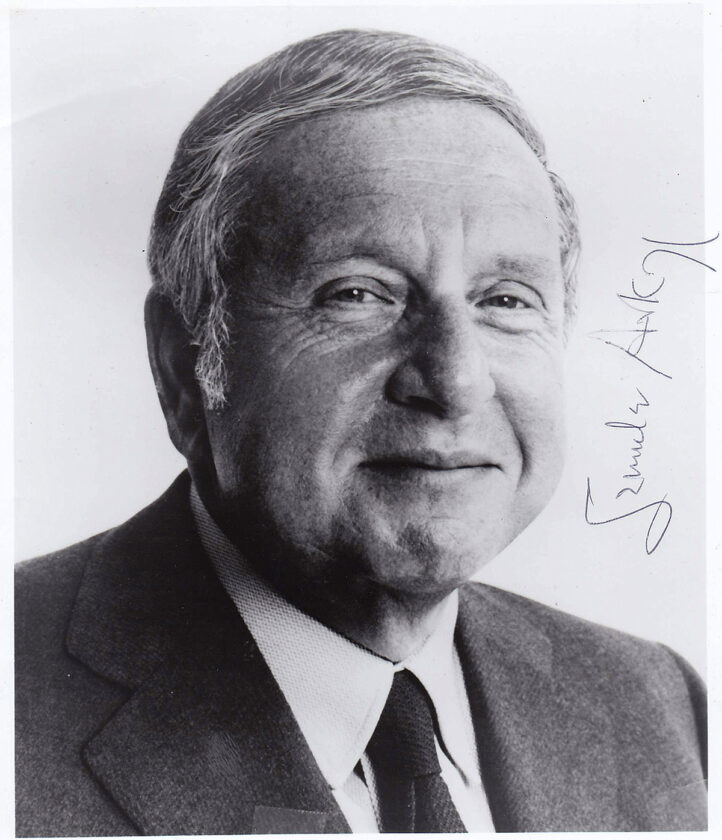
Samuel Arkoff
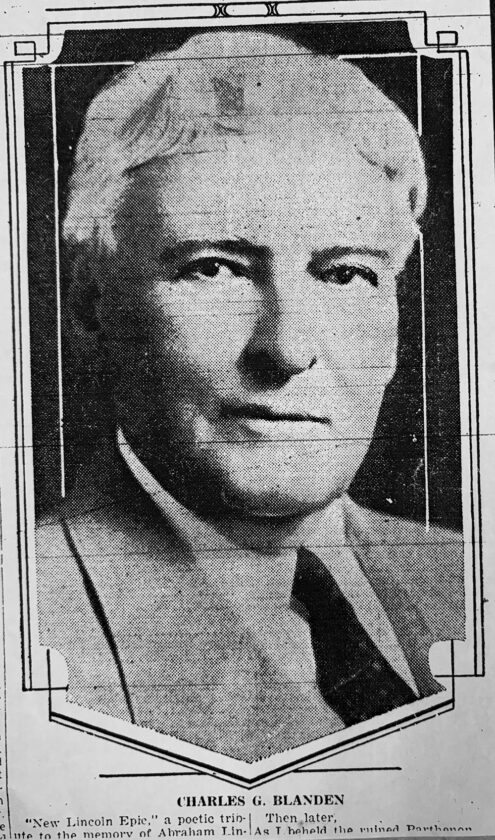
Charles Blanden
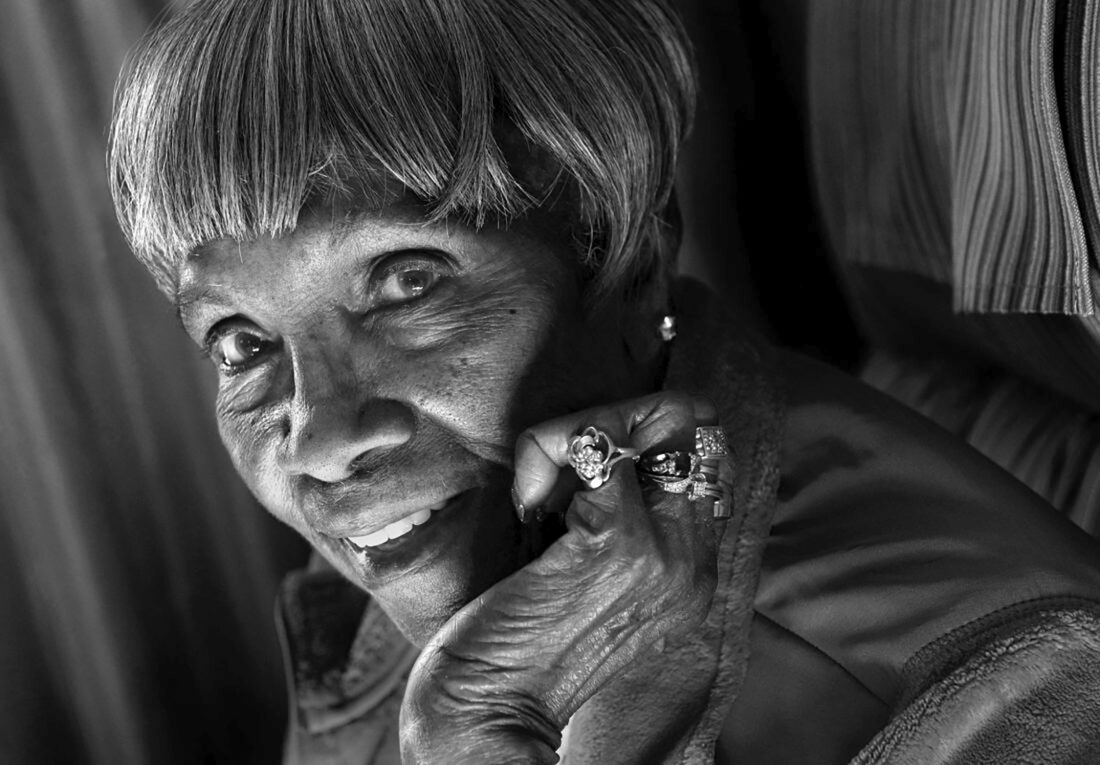
Jane Burleson
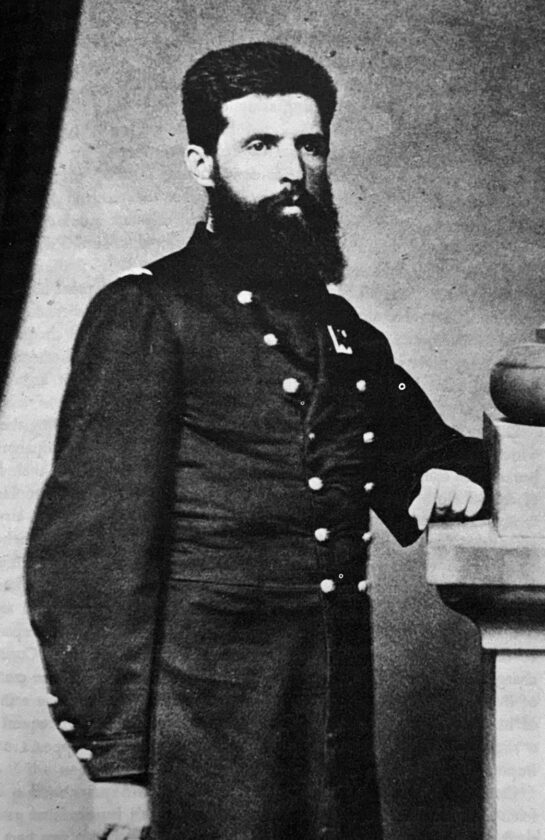
Cyrus Carpenter
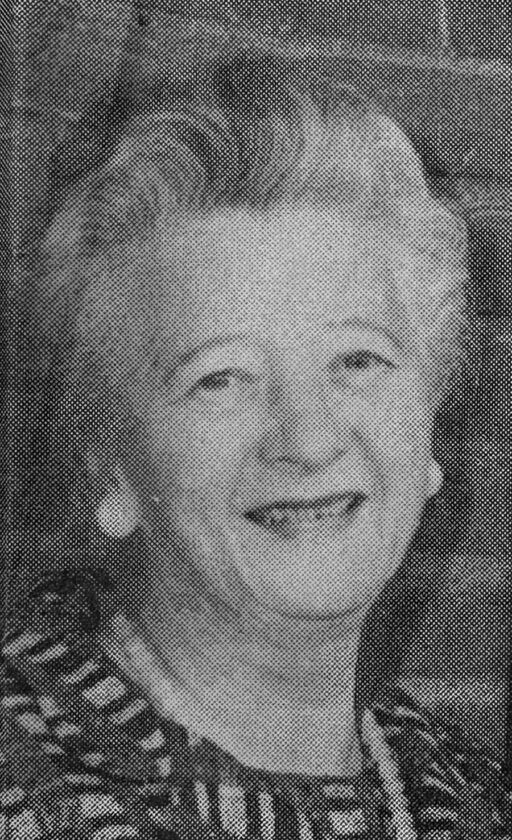
Catherine Vincent Deardorf
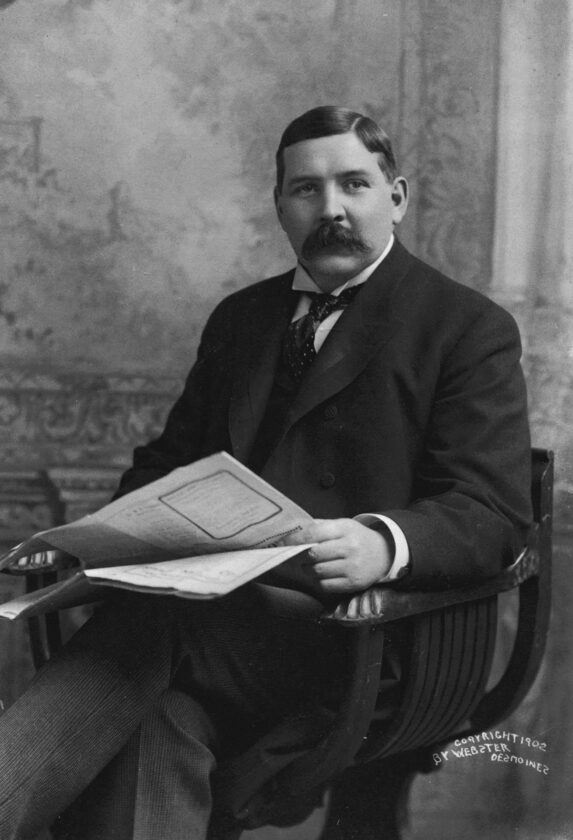
Jonathan Dolliver
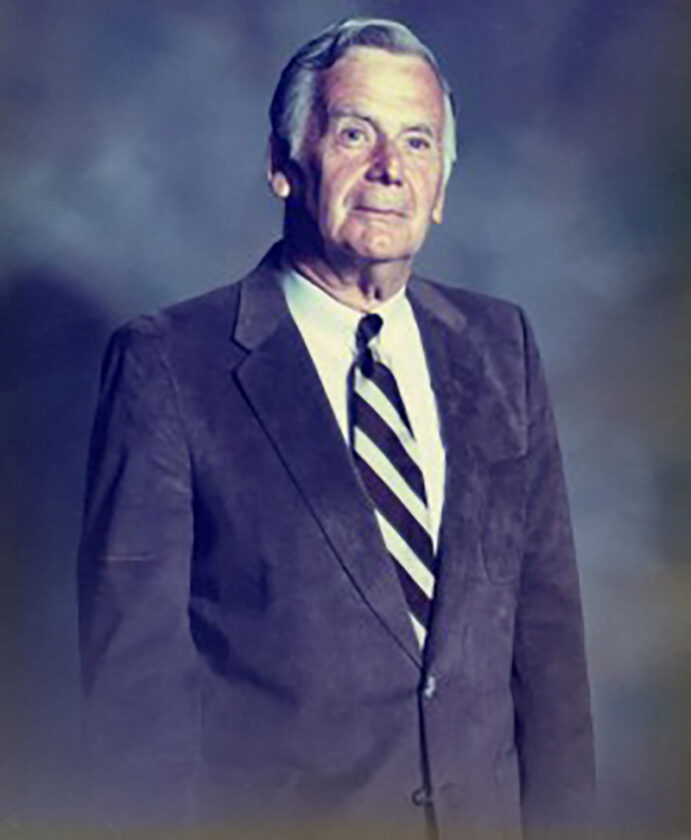
George E. Q. Johnson
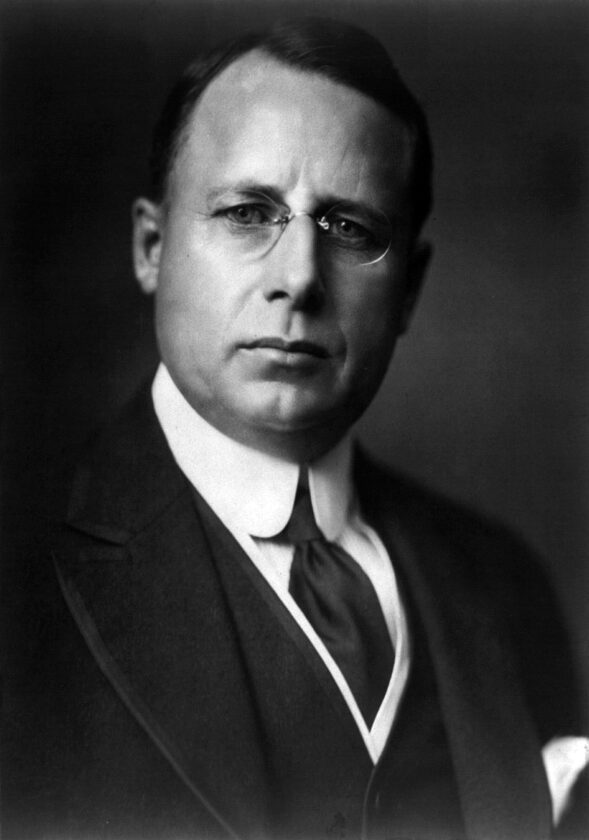
Judson Welliver
Samuel Arkoff
Charles Blanden
Jane Burleson
Cyrus Carpenter
Catherine Vincent Deardorf
Jonathan Dolliver
George E. Q. Johnson
Judson Welliver
Trending
Throughout the long history of the community, people with connections to Fort Dodge have made an impact.
Some were Fort Dodge natives. Others moved to the community.
They made an impact locally, across the state and the nation in a wide range of careers.
For a community of its size, Fort Dodge has been home to an astounding number of notable people.
It would be impossible to provide a comprehensive list of those people in today's edition of The Messenger. Short biographies of a handful of those individuals are provided here.
Much of the information came from the Fort Dodge history web site maintained by the Fort Dodge Community Foundation.
Samuel Arkoff
Samuel Arkoff was born on June 18, 1918, in Fort Dodge to immigrant parents. As he grew up, he attended Fort Dodge schools, worked at his father's clothing store and spent a lot of time going to movies at the Rialto, the Iowa and the Strand, often sitting through several showings of the same feature.
After graduating from Fort Dodge Senior High School in 1935, Arkoff enrolled at the University of Colorado then later transferred to the University of Iowa to major in speech.
After being asked to leave the university because of poor attendance, Arkoff enlisted in the United States Army Air Force and served his country as a cryptographer during World War II. After the war, Arkoff married and moved to Los Angeles where he attended Loyola Law School, from which he graduated in 1948.
Arkoff started his career in the entertainment industry as a legal expert in producer-distributor-exhibitor cases. By 1950, he had become vice-president of Video Associates, for which he produced the Hank McCune Show, one of television's first series.
In 1954, Arkoff co-founded American Releasing Corp. with his partner, a film exhibitor named James H. Nicholson, and a $3,000 loan from Joseph Moritz, Nicholson's former employer. The company started with the intention of distributing films only, but Arkoff and Nicholson found that, because of the film recession of the 1950s, there was little product to distribute. Thus, they decided to produce their own films as well. They changed American Releasing Corp.'s name to American International Pictures (AIP) in 1955 and started to produce B-movies. Nicholson was president of the organization, Arkoff its chairman of the board.
In order to make AIP successful, Arkoff and Nicholson determined that a youth market existed for action and sensationalistic pictures. The pair consequently directed and marketed their product to teenagers, a successful marketing strategy that earned them wealth and reputation.
The company's first release, "The Fast and the Furious," was produced by Roger Corman for $66,000 and made a profit of $150,000, drawing audiences with its themes of fast cars and women, and fugitives on the run. The formula for the success of AIP was also tied to double-feature films produced on a low budget and built on lurid themes, skillfully illustrated by their titles and craftily marketed. Regardless of the type of movie, whether horror, biker, beach, or science fiction, AIP did not make one film that lost money and it never had a year in the red in the decades of the 1950s and the 1960s.
Arkoff helped launch the careers of a number of well-known actors and movie makers, such as Corman, the director of his first movie. Others included: Jack Nicholson, Peter Fonda, Woody Allen, Frankie Avalon and Annette Funicello (in the beach blanket films), Francis Ford Coppola, Robert DeNiro, Nick Nolte, Bruce Dern and Martin Scorsese.
In 2001, Samuel Arkoff died at the age of 83, only months after the death of his wife.
Charles Blanden
Charles Granger Blanden was born in Marengo, Illinois, in 1857. Blanden arrived in Fort Dodge in 1874, to live with his uncle, "Colonel" Blanden, who made his home where the Carver Building now stands. He married Elizabeth Mills in 1884 and together, they made their home in Fort Dodge for six more years. During his time in Fort Dodge, Charles Blanden was associated with the First National Bank as a teller, assistant cashier, and cashier.
In 1887, he was elected mayor of Fort Dodge at the young age of 30. He served as mayor for two years. During his time as mayor, Blanden was referred to as the "Baby Mayor" because of his young age.
In 1890, the Blandens moved from Fort Dodge to Chicago. He became secretary of the Rialto Trust from, 1891to 1923. Blanden also helped start a bank in Chicago that later became Continental Bank.
It was while he was living and working in Chicago that he gained fame as a writer and poet. Blanden became a regular contributor to the Chicago Post newspaper. He was widely known and respected as a poet, and often sponsored national poetry contests.
The Blandens moved to California sometime after 1927. Elizabeth Blanden died in 1929, and he decided to build the Blanden Memorial Art Museum in her memory. He donated $40,000 to help start the construction of the art museum.
Blanden died in 1933.
Jane Burleson
Jane Burleson is the first woman and the first African-American to serve on the Fort Dodge City Council. No one has served on the City Council longer than her 24-year tenure.
She was a union activist, a volunteer, a church leader, a civil rights leader, a City Council member and a lifelong Democrat. She was also known as a great cook, according to those who know her well -- especially those who have enjoyed her sweet potato pie.
Burleson believed very strongly in the importance of voting and was an advocate for getting people out to vote and do their constitutional duty.
Calvin Coolidge was in the White House when she was born in Fort Dodge to Otavia Bivens Jones Dukes and William Kelly Jones. She was born in 1928 -- as she was quick to point out, the year before Martin Luther King. She grew up in what she still calls "The Flats" in southwest Fort Dodge, attending school at Pleasant Valley, Wahkonsa, Junior High and Senior High.
She left high school to marry at age 17 (later earning credits to get her diploma). After separating from her husband, Charles Turner, she moved to Chicago to work in a packing plant. They had a son, Charles, who tragically died in 1974.
In 1948 Burleson returned to Fort Dodge to care for her ailing father. He died soon after, and she was hired that year by the Tobin Packing Plant, which Hormel purchased five years later. It was a good fit. In her 33 years at Tobin and Hormel, she worked in the sliced bacon department, sausage production line and eventually on the cut floor, and became involved in union activities, serving as secretary for the Local 31, United Packinghouse Workers of North America.
She married Walter Burleson at First United Methodist Church in 1954. He had been in the restaurant business and also worked at the state liquor store, and was the first Black person to serve on a jury in Webster County. He died in 2011.
She has been heavily involved in civil rights, locally and nationally, for more than five decades.
When the Hormel plant closed in the early 1980s, she joined the Fort Dodge Community School District as a special education teacher's aide. That was the year of her first foray into elective politics when she ran for a seat on the Fort Dodge City Council.
Jane lost her first attempt, but she ran again in 1983 and was elected.
During her years of political involvement, Burleson has been active as a volunteer at the polls and during the caucuses and has attended numerous district and state Democratic conventions. She was selected to be an at-large delegate at the Democratic National Convention in New York City in 1980, but injuries from a car accident prevented her from going.
In 2013, Burleson was inducted into the Iowa African American Hall of Fame. She helped to launch Fort Dodge's Martin Luther King Scholarship Committee, served as president of the Fort Dodge A. Philip Randolph Institute, and has been involved with the League of Women Voters and the Democratic Party. She has served her church, Coppin Chapel African Methodist Episcopal, for more than 50 years. She received the Cristine Wilson Medal for Equality and Justice in 2006. In 2002, she was named the Citizen of the Year in Fort Dodge.
After spending the majority of her life in Fort Dodge, Burleson moved to Arizona in the spring of 2017.
Cyrus Carpenter
Cyrus C. Carpenter was Iowa's eighth governor. As a county land surveyor, military officer, governor, and U.S. congressman, he was a prominent figure in Fort Dodge history.
Born in 1829 to Asahel and Amanda Carpenter in Hartford, Pennsylvania, he was one of eight children, of whom only four survived past infancy.
After the death of his parents - Asahel in 1842 and Amanda in 1843 - he and his brothers lived with various relatives in the Hartford area. He was educated in the common schools in Pennsylvania and at the Hartford Academy. He attended school for three to four months a year, teaching in the winters and working on a farm in summers to pay the Hartford Academy.
In 1849, he taught at the Hartford Academy. He left the academy in 1851 and moved westward, out of Pennsylvania. He stopped in Johnstown, Ohio, where he taught in a nearby country school. By 1854 Carpenter had grown restless, and like many other Ohioans, he packed his belongings and left for Iowa.
Carpenter's journey to Iowa included traveling by foot and stagecoach across Ohio, Indiana, and Illinois; by steamboat to Muscatine; by stagecoach to Iowa City; and by foot to Fort Des Moines. Although Fort Des Moines was regarded as a growing community, Carpenter was unable to find employment. After hearing of Fort Dodge 85 miles to the north, he struck out on foot for the northern fort. He found work as a surveyor on his first day in the small Iowa frontier town that would remain his home for the rest of his life. In 1854, an effort was made to have a school and Carpenter was employed as Fort Dodge's first school teacher. During this period, Carpenter also studied law with hopes to land in the profession one day.
In 1855 Carpenter won his first public office as county surveyor. In addition to his surveying work, he soon became involved in the activities of the expanding Iowa Republican Party. In March 1857 Carpenter offered his assistance to the relief expedition to aid the settlers who had been attacked by Sioux renegades near Spirit Lake. By the conclusion of the relief expedition, Carpenter had become a fixture in the community's social and political life. In the fall of 1857 the Republicans of the district that included Fort Dodge had taken notice and nominated Carpenter as their representative to the Iowa General Assembly. Despite strong competition from Democrat John F. Duncombe, Carpenter won the election.
During the Civil War, he was commissioned a captain, and rose through the ranks to colonel. At the outbreak of the Civil War, Carpenter was appointed Commissary of Subsistence, responsible for feeding Union troops. His orders included supervising the feeding of the Army of the Mississippi under the direction of General Pope in preparation for the advance on Corinth, Mississippi. On a 20-day furlough, he married his longtime sweetheart, Susan Kate Burkholder, in Fort Dodge on March 14, 1864.
At the conclusion of the Civil War, Carpenter was elected register of the State Land Office and served two terms dealing with public domain and land title issues. With the Republican Party well entrenched in Iowa after the Civil War, Carpenter's political capital grew, culminating in his nomination for governor at the Republican Party State Convention in 1871. Carpenter won the election by a majority of over 40,000 votes. He was reelected in 1873.
A highly popular governor, Carpenter is remembered for pushing to produce more industry in the state. He advocated for education at the State University and its department in agriculture. As governor, he risked alienating powerful forces in his party by promoting railroad regulation.
After leaving the governor's office, Carpenter continued to stay active in public service. He accepted an appointment as second comptroller in the U.S. Treasury Department and subsequently, in 1878, as railroad commissioner. He also served two terms as a U.S. congressman (1879-1883), one term in the Iowa General Assembly (1884-1885), and several years as Fort Dodge's postmaster.
As a congressman, he was a vocal supporter of an unsuccessful effort to raise the Department of Agriculture to cabinet level and a successful effort to divide Iowa into two judicial districts. Otherwise, he seldom participated in House debates.
After retiring from public service in the later years of his life, Carpenter was engaged in the management of his farm and in the real-estate business in Fort Dodge.
He died on May 29, 1898, and was buried in the Oakland Cemetery in Fort Dodge.
Catherine Vincent Deardorf
Catherine Vincent Deardorf established the Charitable Foundation bearing her name late in her life. Her family had acquired wealth in early Fort Dodge, and she chose to acknowledge and thank the community via the foundation. She selected professional advisers and trusted friends to serve as the first directors at the foundation's establishment in 1993.
After graduating from Fort Dodge Senior High School, she attended Radcliffe College for two years before graduating from Columbia University's School of Journalism in 1929. She was the social editor of The Messenger for a number of years, and its owner from 1959 to 1963.
In 1936, she married architect John Deardorf. The couple made their home in San Diego until 1958 when they moved to her Aunt Helen Vincent Roberts' home across from the Blanden Memorial Art Museum in Fort Dodge. She referred to the home as the Roberts House throughout her life, but it is now often referred to as the Deardorf Home. The house was part of the bequest she left her Charitable Foundation. Because she wished the home to benefit the Blanden Memorial Art Museum, which she had served as a trustee, donor, and volunteer, its ownership and funds she had designated for its maintenance were transferred to the Blanden Charitable Foundation in 2006.
The Catherine Vincent Deardorf Charitable Foundation has provided financial support for many arts projects in Fort Dodge, including "Over the Treetops," a mosaic mural at the Fort Dodge Regional Airport, "Axiom," a sculpture at Iowa Central Community College, "Stargate 6," a sculpture at UnityPoint Regional Medical Center, "Parade," a sculpture at the corner of Kenyon Road and South Eighth Street in Fort Dodge and "DNA Strand," in the BioScience Building at Iowa Central Community College.
Jonathan Dolliver
Jonathan Dolliver, attorney, political activist, and U.S. congressman and senator from Iowa--was renowned as a gifted orator, skilled mediator, and model of integrity.
He was chosen by the Republican National Committee to stump the nation for every Republican presidential candidate from James G. Blaine in 1884 to William Howard Taft in 1908. In 1910 he was chosen by political opponent William Jennings Bryan to give the dedication speech at the Abraham Lincoln Memorial in Springfield, Illinois.
Urged to run for vice president in both 1900 and 1908, Dolliver refused because of his distaste for the position and his lack of financial resources.
Although initially an orthodox Republican who favored the gold standard, a high protective tariff, and overseas expansion, Dolliver joined the Insurgent Republican movement, led by Robert M. La Follette of Wisconsin, Albert B. Cummins of Iowa, and Albert Beveridge of Indiana, who challenged the policies and leadership of Taft and the GOP's probusiness "Standpat" Eastern establishment. Upon Dolliver's premature death at age 52, Beveridge eulogized him as "our best, our most gifted man, our only genius."
Born near Kingwood, Preston County, Virginia, on the eve of the Civil War, Dolliver was the son of James Jones Dolliver, a Methodist circuit rider of Welsh descent, and Eliza Jane (Brown) Dolliver, whose Scottish American father, Robert, and uncle William were among the founders of the Republican Party and instrumental in the formation of the state of West Virginia in 1863. During the Civil War, he and his older brother Robert served as lookouts and scavengers who disrupted the activities of occupying Confederate soldiers.
In 1868 the Dollivers and their five children moved to Granville, West Virginia, where he entered the preparatory department of West Virginia University at age 10.
Three years later, at the age of 13, he began his collegiate studies at the university, where he concentrated on literary studies, taking his B.A. in 1875. His major extracurricular activity was in the Columbian Literary Society, which met each week to conduct oratorical contests and debates and listen to student essays. Upon graduation, he was chosen as the "philosophical orator" of his class.
While teaching school in Iowa and Illinois from 1875 to 1878, he studied law under the direction of his uncle, a West Virginia state senator. Although he attended the 1876 Republican National Convention in Cincinnati, Ohio, in support of Blaine, Dolliver enthusiastically switched his allegiance to Rutherford B. Hayes, for whom he campaigned vigorously.
In the spring of 1878 he obtained his law license and moved to Fort Dodge with his brother Robert. Just two years later he was elected city solicitor, a position that gave him visibility, political contacts, and a reliable supplemental income. At the same time, his growing reputation as a public speaker attracted the attention of northwestern Iowa politicians, including former Gov. Cyrus C. Carpenter. In part through Carpenter's influence, Dolliver was chosen as the keynote speaker for the 1884 Iowa Republican Convention. Because of that oratorical success, he was chosen to stump the eastern United States for Blaine.
After failing to secure the Republican nomination for the U.S. House of Representatives in 1886, Dolliver won the endorsement in 1888. Defeating his Democratic opponent, Dolliver entered the House in 1889 and remained there for the next 11 years. There he earned a reputation as an orthodox Republican who favored high protective tariffs, the gold standard, and colonial expansion.
In 1895 Dolliver married Louise Pearsons. They had three children.
In 1900 Sen. John Henry Gear died. Iowa's governor appointed Dolliver to succeed Gear in the Senate; the 1902 session of the Iowa legislature seconded the governor's choice, electing Dolliver to fill out the remainder of the term. In January 1907 the legislature elected him to a full six-year term.
As a senator, Dolliver became a staunch supporter of Theodore Roosevelt's reform agenda. He was the principal figure in guiding the Roosevelt endorsed Hepburn Act of 1906 through the Senate. That act empowered the Interstate Commerce Commission to fix maximum rail rates and was especially popular among Dolliver's constituents, who had long chafed under discriminatory railroad rates.
Exhausted by his Senate battles, Dolliver returned to Fort Dodge, where he died of a heart attack on Oct. 15, 1910. By that time, he had broken completely with the GOP establishment and won a reputation as the most powerful and persuasive speaker among the Insurgents. Even Taft acknowledged that "the Senate has lost one of its ablest and most brilliant statesmen, the country has lost a faithful public servant." Thousands stood in the rain outside "the jam-packed armory building" in Fort Dodge during the funeral ceremony. Famous journalist Mark Sullivan proclaimed Dolliver "the greatest senator of his time.ӝ
Dolliver Memorial State Park south of Fort Dodge, was named in honor of him of this great senator.
George E. Q. Johnson
George E.Q. Johnson, one of the sons of a Swedish homesteader, was born July 11, 1874, on a farm near Lanyon and Harcourt. He attended a rural one-room school house through eighth grade. He continued his education, graduating from Tobin College in Fort Dodge in 1897.
He moved to the northern area of Chicago to attend law school and received his law degree from Lake Forest University in Illinois in 1900. Then he quietly began practicing law in Chicago, continuing until 1927. He was a Master in Chancery for the Circuit Court of Cook County, Illinois from 1923 to 1927. He was the United States Attorney for the Northern District of Illinois from 1927 to 1932.
Johnson's embellished name -- with the middle E. to help him achieve his own identity in college, but when he started practicing law, the city directory was overflowing with George E. Johnsons. So he put in the "Q," which stands for nothing. It just separated him from the pack.
In 1927, Johnson was appointed U.S. Attorney for the Northern District of Illinois, which was basically the city of Chicago. At the time, Chicago was overwhelmed with organized crime. With the start of Prohibition in the United States, organized crime syndicates saw an opportunity to make money and further expand their criminal empires.
The appointment of Johnson in Chicago marked the beginning of a fresh effort to prosecute the mobsters of organized crime. President Calvin Coolidge insisted Al Capone had to be dealt with once and for all and Johnson was just the man to do it.
From the moment he took office, it was apparent that Johnson took his responsibilities with the utmost seriousness. Unlike his predecessors, he refused to fight his battles against the racketeers in the press. In addition, he refused to tolerate Chicago's traditional complicity in underworld activities. He distanced himself from the corrupt elements of law enforcement - the police captains, aldermen, and assistant district attorneys who participated in the profits of the Capone organization in return for protection. Instead, he began to educate himself about Chicago's underworld by reading newspaper accounts covering the last several years. Chicago's dailies provided highly reliable information on all the players and their rackets, better information than the police had collected. He retained a journalist to compile an index-card file of all the men and their organizations, and with this database at his fingertips, Johnson, a man of keen analytic powers, became the first person in a position of authority to gain a thorough knowledge of Chicago's gang structure and gang warfare.
Despite numerous death threats from the criminal world, Johnson ended up getting indictments against Capone and 68 of his henchmen. With Johnson's focused and diligent work, Capone was convicted of tax fraud and sentenced to an 11-year term at the federal penitentiary in Atlanta. Also put behind bars were his brother, Ralph "Bottles" Capone, Frank "the Enforcer" Nitti and gambling chief Jack Guzick, among others.
After successfully prosecuting Capone, things looked up for Johnson, and he was rewarded for breaking up Chicago's gangs. On Aug, 3, 1932, President Herbert Hoover appointed Johnson to be a federal judge. But confirmation of his appointment was delayed by a lame-duck Congress, and his service ended March 3, 1933. Johnson was saddened by the blow, and he returned to private practice until he passed away of natural causes on Sept. 19, 1949, at the age of 75, at his home in Chicago.
Judson Welliver
Judson Churchill Welliver was born at Aledo, Illinois, on Aug. 13, 1870. He was educated at Cornell College in Mount Vernon. He married Jane Hutchins, daughter of Dr. E. R. Hutchins of Des Moines and they had two daughters and two sons.
Welliver's entire life was devoted to newspaper work and publicity. He commenced with The Messenger, was with the Sioux City Journal and also associated with the Sioux City Tribune and the Des Moines Leader. By 1909, Welliver had earned a reputation as one of the most able journalists in the country. After leaving Iowa, Welliver took a position with the Washington, D. C. Times. From 1917 until 1918, he managed London correspondence and European news for the New York Sun.
While in Washington D.C., Welliver was employed by President Theodore Roosevelt and was sent to Europe to report on the development of waterway and railroad systems of Europe and Great Britain.
Welliver handled publicity for President Warren Harding during his 1920 presidential campaign, and began working as a "literary clerk" to Harding on March 4, 1921. Welliver was regarded by some as the first presidential speechwriter.
On Nov. 1, 1925, Welliver left his speech-writing position at the White House under President Calvin Coolidge and accepted a position at the American Petroleum Institute. Later he resigned from the American Petroleum job in 1927, and went on to become editor of the Washington Herald in 1928. He was also assistant to the president of the Pullman Company from 1928 to 1931, and in his later years, was in charge of publicity for the Sun Oil Company.
Welliver died of cancer in Philadelphia on April 14, 1943, at the age of 72. The Judson Welliver Society, a bipartisan social club composed of former presidential speechwriters, is named in his honor.