
Confronting cancer
Fort Dodge session addresses impact of disease
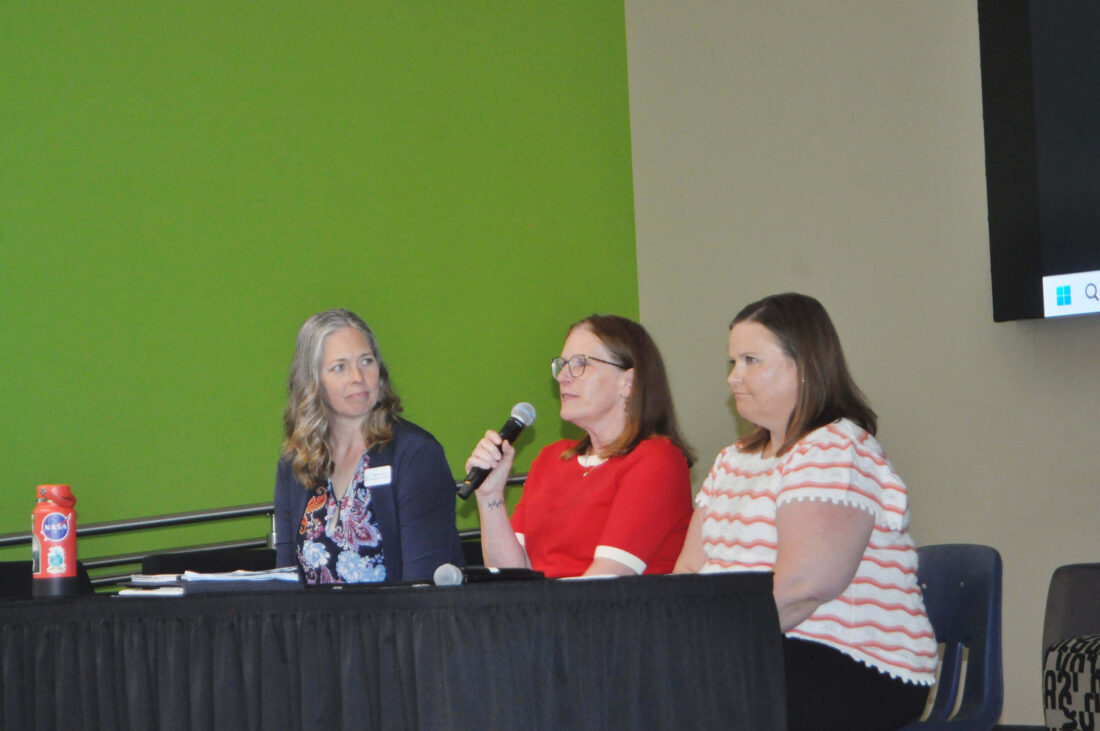
-Messenger photo by Bill Shea <br> Dr. Kelli Wallace, chief medical officer for UnityPoint Health — Fort Dodge, speaks Wednesday during Cancer in Iowa: 99 Counties Project meeting in Fort Dodge. Colleen Fowle, left, water program director for the Iowa Environmental Council, and Sarah Kingland, a breast cancer survivor, listen.
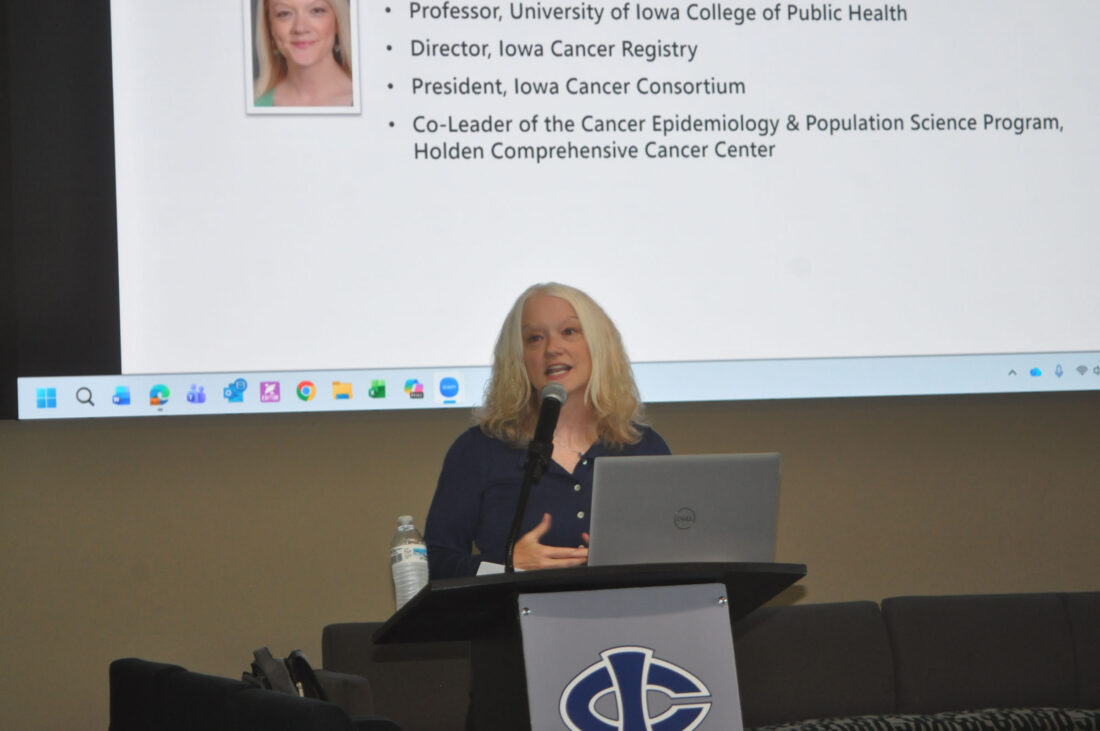
-Messenger photo by Bill Shea <br>Dr. Mary Charlton, professor of epidemiology at the University of Iowa and director of the Iowa Cancer Registry, presents statistics about cancer in Webster County.
-Messenger photo by Bill Shea <br> Dr. Kelli Wallace, chief medical officer for UnityPoint Health — Fort Dodge, speaks Wednesday during Cancer in Iowa: 99 Counties Project meeting in Fort Dodge. Colleen Fowle, left, water program director for the Iowa Environmental Council, and Sarah Kingland, a breast cancer survivor, listen.
-Messenger photo by Bill Shea <br>Dr. Mary Charlton, professor of epidemiology at the University of Iowa and director of the Iowa Cancer Registry, presents statistics about cancer in Webster County.
Trending
In Iowa, it is something that happens entirely too often -- someone is told by their doctor that they have cancer.
The state has the second highest rate of new cancers in the United States, according to Dr. Mary Charlton, professor of epidemiology at the University of Iowa and director of the Iowa Cancer Registry.
"Our rate is still going up," she told a Fort Dodge audience Wednesday.
The complex causes of cancer, prevention of the disease and the resources available to treat it were all discussed during a Cancer in Iowa: 99 Counties Project meeting held Wednesday in the Student Resource Center at Iowa Central Community College. It featured a presentation by Charlton and a brief panel discussion.
About 175 people attended. That figure includes those who watched the session online.
"I feel like we learned so much," Leah Glasgo, president of UnityPoint Health -- Fort Dodge, said after the session.
The next step, she said, will be to "bring together people from this event to continue the conversation about how we make our community a healthier place."
Charlton provided some grim facts about Iowa and cancer.
She said Iowa's cancer rate is about 14 percent higher than the national rate.
She added that Iowa ranks No. 23 among the 50 states in terms of cancer deaths.
"There is not one thing that is causing all the cancers in Iowa," Charlton said.
Lifestyle (smoking, alcohol use and poor diet), genetics and environmental factors all come together to cause cancers, she said.
According to statistics she presented, Webster County has about 245 new cancer cases every year.
And every year about 84 Webster County residents die of cancer, she added.
The leading types of cancer in the county are prostate, breast, lung, colorectal and bladder, she reported.
Charlton singled out the HPV vaccine as a key cancer prevention tool. She said giving the vaccine to girls has the potential to completely eliminate cervical cancer. She added that the vaccine can protect boys from head and neck cancers.
During a panel discussion, Dr. Kelli Wallace, chief medical officer for UnityPoint Health -- Fort Dodge, offered some advice for those who receive a cancer diagnosis.
"Pause, take a breath, say it out loud if you have to, and then start seeking knowledge," she said.
According to Colleen Fowle, water program director for the Iowa Environmental Council, the environmental risks for cancer in the state are radon, so-called forever chemicals in plastics, pesticides and nitrates.
She urged people to get their homes tested for radon, an invisible, odor-less gas that can cause lung cancer. She also encouraged owners of private wells to get them tested.
"We need to think about larger scale changes in our state," she said. "We need long term systemic progress to improve water quality and to reduce our exposure to pollutants."