Fort Dodge men set out to help after Spirit Lake Massacre
-
-
-Messenger photo by Bill Shea
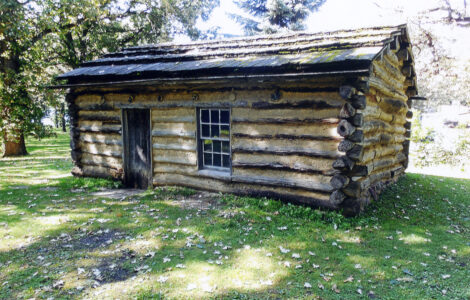
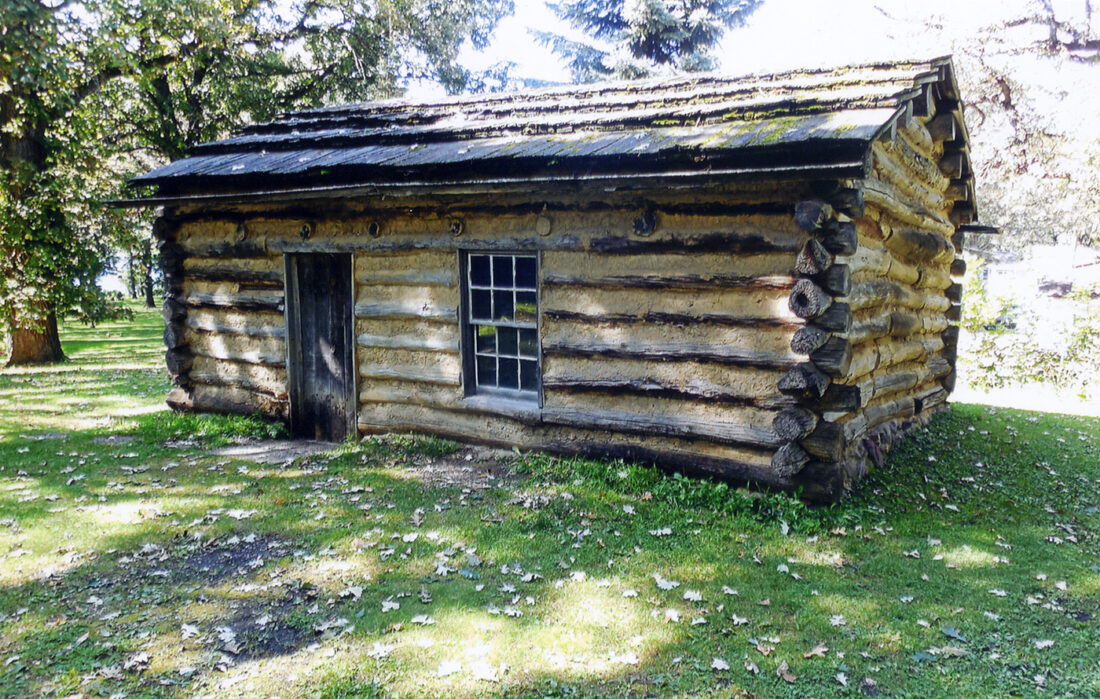
This cabin located at Arnolds Park was the home of the Gardner family during the 1857 Spirit Lake Massacre. One member of the family, 13-year -old Abbie, survived the attack and was a captive of the Native Americans. She survived, wrote a book about the experience and returned to live here. The restored cabin is on the National Register of Historic Places. It is owned by the state historical society and managed by Dickinson County Conservation.
-
-
-Messenger photo by Bill Shea
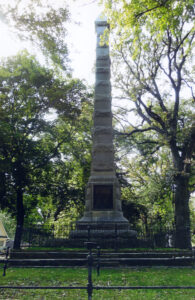
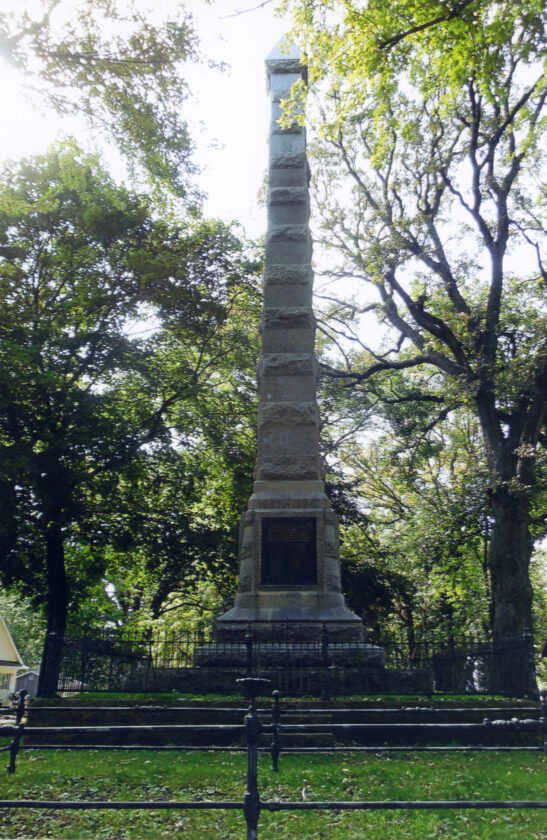
This monument was erected in Arnolds Park in 1894 to commemorate the Spirit Lake Massacre.
-Messenger photo by Bill Shea
This cabin located at Arnolds Park was the home of the Gardner family during the 1857 Spirit Lake Massacre. One member of the family, 13-year -old Abbie, survived the attack and was a captive of the Native Americans. She survived, wrote a book about the experience and returned to live here. The restored cabin is on the National Register of Historic Places. It is owned by the state historical society and managed by Dickinson County Conservation.
bshea@messengernews.net
Fort Dodge, originally called Fort Clark, had been in existence since 1850. But the northern area of Iowa it was intended to secure was peaceful, and soldiers were needed elsewhere.
So in 1853, the Army closed the fort, and its troops, members of Co. E, 6th U.S. Infantry, were moved to Minnesota.
William Williams, who had been at the fort as its sutler, or civilian merchant, bought the property and began platting the city of Fort Dodge in 1854.
But there would be trouble in the usually peaceful area that culminated in a bloody event known as the Spirit Lake Massacre. It did not happen in Fort Dodge, but a force of local men led by Williams set out to help in one of the defining events of early Fort Dodge. Their mission of mercy became a grueling ordeal of marching through deep snow.
-Messenger photo by Bill Shea
This monument was erected in Arnolds Park in 1894 to commemorate the Spirit Lake Massacre.
The expedition from Fort Dodge was unable to save many settlers from the initial attack, but Williams would write later that it prevented the Native Americans from moving down the Des Moines River corridor and wiping out all the settlements there.
Williams wrote a history of the early days of Fort Dodge and detailed the effort to help the settlers in the Spirit Lake area.
In his history, Williams asserted that the chain of events that led to the massacre was started by a man named Henry Lott.
“Lott was a bad man, a refugee from justice and kept on the outskirts of all settlements,” he wrote.
He described Lott as a horse thief who lived near the mouth of the Boone River.
According to Williams, Lott and his son murdered a Sioux Indian chief named Sidom-i-na-do-tah and his family in January 1854 in what is now Humboldt County.
The Spirit Lake Massacre happened in March 1857.
“There can be but little doubt that these attacks and acts of barbarism were committed by Ink-pa-du-tah and his band in retaliation for the murder of his brother, mother and others by Lott in January 1854, together with the fact that the white settlers were rapidly encroaching upon them by settling on Little Sioux River, Coon River, the Okoboji lakes, Spirit Lake and the upper Des Moines, their old and favorite haunts and hunting grounds,” Williams wrote.
He found out about the attack when some men straggled into Fort Dodge, which at the time was nearing the end of a land boom that had swelled the population to 1,000 people.
He recruited local men to form a rescue mission, and asked for volunteers from Webster City and Homer.
On March 25, 1857, a force of 120 men set out from Fort Dodge, moving north along the Des Moines River.
“By forced marches through snow banks 15 to 20 feet deep and swollen streams, we forced our way up to the state line, where we learned the Indians were two or three hundred strong at Spirit Lake and Big Island Grove,” Williams wrote.
The force had been reduced to 110 men by illness and because a few had been dismissed for insubordination.
“Never were harder services rendered by any body of men than by the 110 men under my command who were able to reach the state line,” Williams wrote.
“We had to ford streams breast deep every few miles and at all snow banks or drifts had to shovel out roads and draw our wagons through by hand with big ropes, ” he added. “All the men were wet all day up the middle and lay out on the open prairies at night without tents or other coverings other than a blanket or buffalo robe.”
As the group moved north, it met settlers fleeing south, many of whom claimed Native Americans were right behind them.
The expedition never encountered any Native Americans, but found evidence that they had been in the area very recently.
In Minnesota, the group linked up with Army soldiers. Williams decided to let the Army handle the situation, and turned the Fort Dodge expedition south toward home. Along the way a group was sent to Spirit Lake to bury the dead. Williams wrote that the men found evidence of a ferocious fight there. He reported that they buried 29 people.
The return home was no easier, thanks to deep snow and creeks swollen with cold water.
According to Williams, in the weeks after the Spirit Lake Massacre, many settlers left areas north of Fort Dodge and moved into the new city for safety.
He also reported great fear of Native Americans among the area residents that seemed to bordered on hysteria.
“Every sand hill crane seen was reported to be an Indian,” he wrote.