
The hunt is on
Elusive mushroom season ready to dawn again
-
-
-Photo courtesy of Nolan Swanson
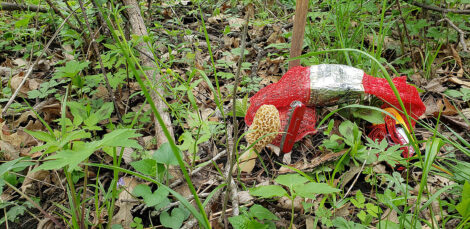
A mesh potato bag is ideal for transporting mushrooms as it allows spores to fall to the ground, thus sowing the potential for future mushroom harvests. The mushroom shown here added to a fine mess of fungi for supper.
-
-
-Photo courtesy of Nolan Swanson
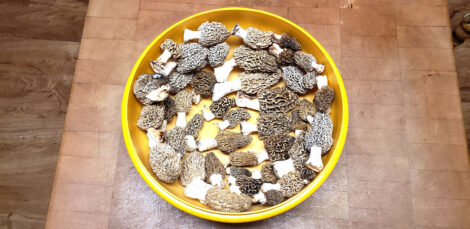
A good day’s harvest for any mushroom hunter shows the variety of sizes and colors, each with their own dimension of flavor once properly cooked.
-
-
-Photo courtesy of Nolan Swanson
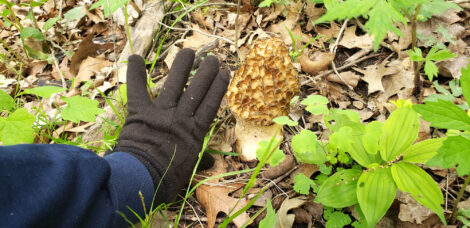
A good glove is good protection in the woods and helps demonstrate the size of this prized mushroom. This mushroom is perfect for pan frying with a little flour, salt and pepper.
-Photo courtesy of Nolan Swanson
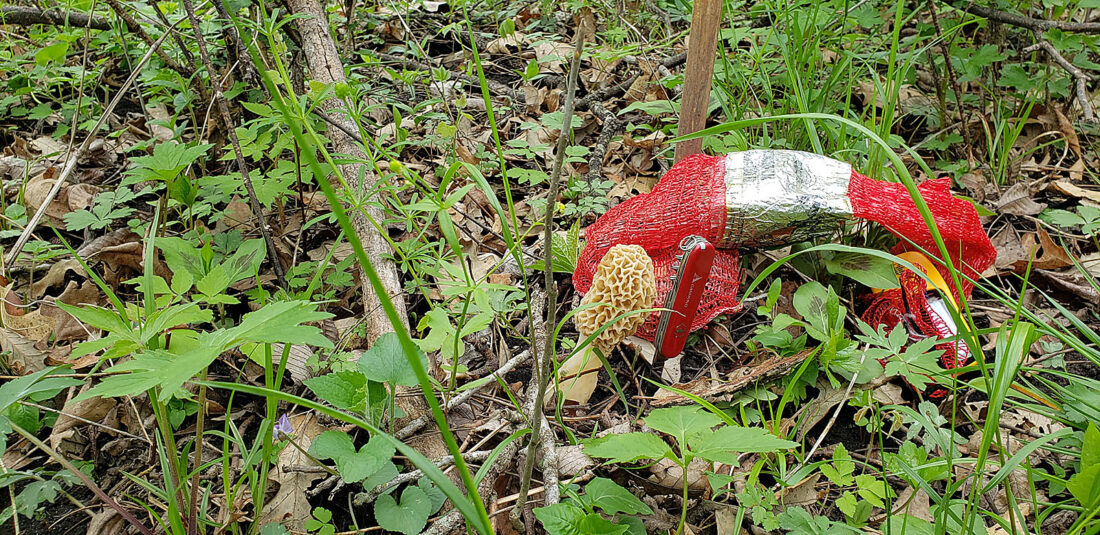
A mesh potato bag is ideal for transporting mushrooms as it allows spores to fall to the ground, thus sowing the potential for future mushroom harvests. The mushroom shown here added to a fine mess of fungi for supper.
With mesh bags in hand, their heads mostly looking down, and a keen desire to find the motherload of morels, a secretive band of hunters is about to hit the woods in central Iowa.
Will this be the year when the sometimes elusive morel mushrooms are abundant for those willing to trek into often rough terrain? Or will it be just another long walk in the woods, littered with dead branches ready to trip even the most veteran explorers, replete with ticks lurking in the tall grass, ready to attach to skin at a moment’s notice?
Hunting morels is not for the faint of heart.
Count on one thing: any hunter who finds a good stand of morels is not about to share the secret location.
“Absolutely not,” agreed Chelsea Harbach, Ph.D., director of diagnostics at Iowa State University’s Plant and Insect Diagnostic Clinic. “Mushroom hunters are a secretive bunch. With other kinds of mushrooms that you just kind of come across, they are not such a hot commodity, morels are the secret keepers.”
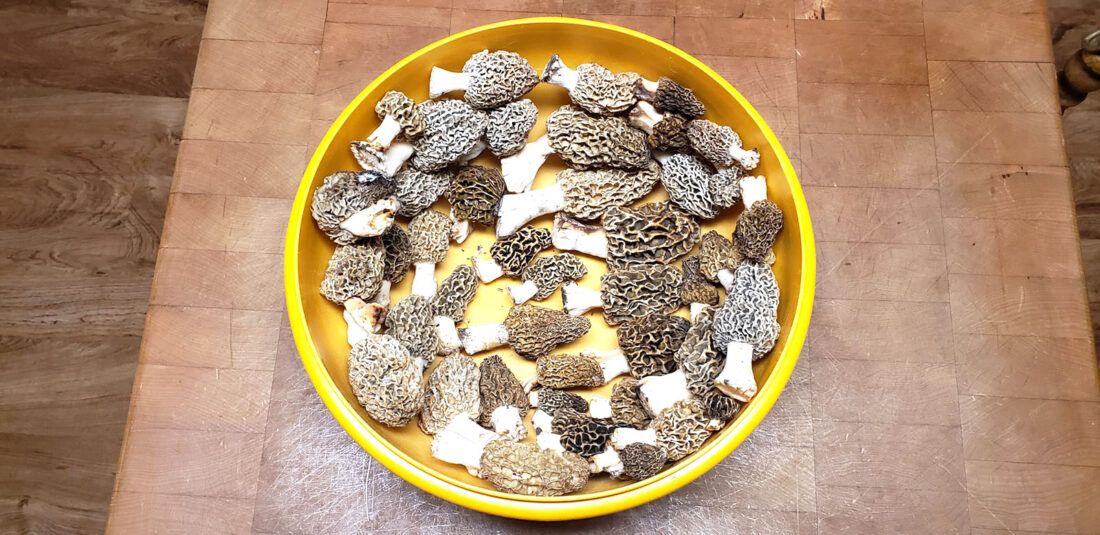
-Photo courtesy of Nolan Swanson
A good day’s harvest for any mushroom hunter shows the variety of sizes and colors, each with their own dimension of flavor once properly cooked.
Nolan Swanson, a Stratford native who now lives in Omaha, could not agree more. He agreed to be interviewed only with the promise not to reveal his favorite morel hunting grounds.
“I make a point to hunt in Iowa,” Swanson said. “I come back every year for mushroom hunting, and I make it a point to hunt in Iowa.”
Suffice to say he hunts on public land that originated from his former family farm, so he knows the territory well.
But knowing where to hunt is never enough, agreed both Swanson and Harbach. Weather conditions, soil moisture, soil temperature, and the temperamental nature of the morels themselves may all factor into the mushroom harvest from year to year.
“It can really be a crap shoot,” said the scientist, Harbach. “We like to think that we have things figured out, but nature always finds a way of laughing in our face. Like, ‘Wow, you didn’t expect to find me here!’ You can look at the places that are classically considered to be good places to look, but I would also say, just keep your eyes open. They will pop up together.”
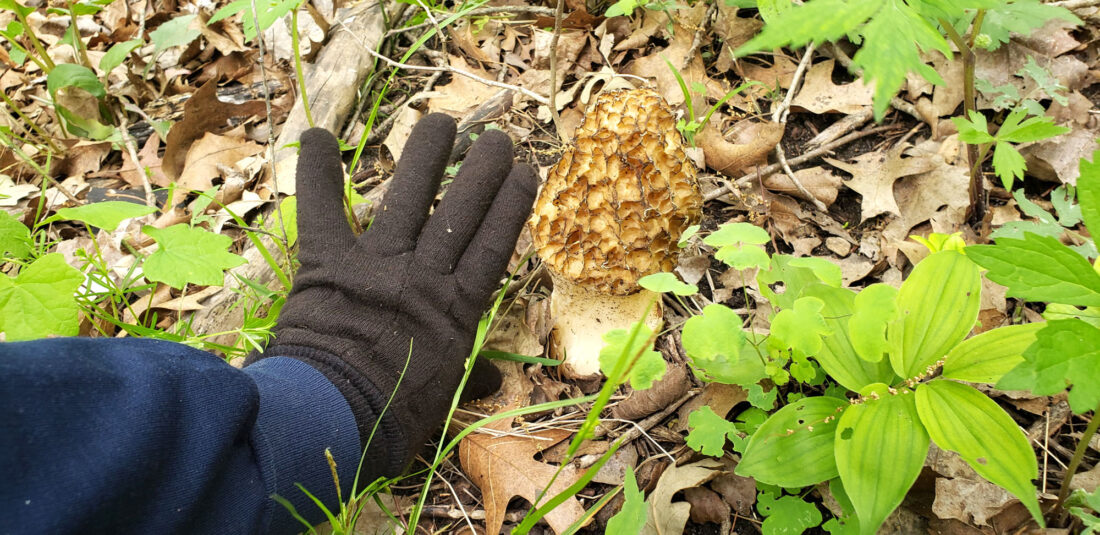
-Photo courtesy of Nolan Swanson
A good glove is good protection in the woods and helps demonstrate the size of this prized mushroom. This mushroom is perfect for pan frying with a little flour, salt and pepper.
Both Harbach and Swanson favor wooded areas of dead and decaying trees, particularly elm trees. The process of a decaying tree is thought to have a type of symbiotic relationship with the morels — or maybe not.
“I’ve also found them in knee-high grassy areas a couple of years ago,” Harbach said. “That was weird.”
Again, it’s just nature laughing in the faces of the intrepid mushroom hunters. Morels seem blessed with camouflage that can stump even experienced hunters.
“You have to walk, stop, and look,” Swanson explained. “You look up at the trees for ones that are decaying, and then you look down.”
Despite their secretive nature, mushroom hunters do share when the morels start to pop. The Iowa Morel Report can be found online and reports morel sightings by county.
Many morel hunters often look to soil temperatures of at least 45 degrees for several days, and then climbing into the 50s. It can be a short season, diminishing as soil temperatures climb into the 60s and above.
ISU Extension provides a statewide soil temperature map that can be found online. As of late March, soil temps were still reported in the low 40s, but were forecasted to rise into the low 50s by early April, so the season may start soon — or maybe not.
Swanson still takes heed from his maternal grandmother when considering if it’s time to head out and search yet in the early spring.
“My grandmother used to say, ‘When the leaves on the trees are as big as squirrel’s ears,’ you want to start looking,” he recalled fondly.
Once he finds a good mess of mushrooms, he knows just how he wants them prepared in order to bring out their full taste. Once cleaned and cut in half, he lightly flours them, and adds a little salt and pepper to each side as they are cooking.
“I always do Canola oil in the pan, just enough to cover the bottom, and then add a pat of butter so that it helps them brown,” he explained. “With just flour, salt and pepper, you can taste the flavor of the mushrooms and the difference between those that are smaller, larger, or different shades of color.”
His paternal grandmother used the traditional egg and cracker crumb breading to prepare a large mess of mushrooms for a big gathering, he recalled.
“It’s a good way to stretch mushrooms if you’ve got a family to feed,” he said.
Like Swanson, Harbach also employs a “less is more” strategy when preparing her mushrooms.
“I like to keep it simple,” Harbach said. “I know a lot of people like to batter and bread them, and then fry them in butter. I think the batter kind of obscures the flavor of the morels. I prefer to just soak them, rinse them off, pat them dry, and then I just cook them in salted butter.”
She also noted that mushrooms should be thoroughly cleaned and then cooked to a temperature of 145 degrees to ensure food safety.
Aside from the finding and fixing aspects of mushroom hunting, Swanson and Harbach agree again that, even if one fails to find a single mushroom, a day in the woods is still a good thing.
“Getting outside in spring is one of my favorite things,” Harbach said. “I love being out in the trees even before the leaves come out. There are almost magical sounds to be heard in the spring. If there’s any wind, you’ll hear the upper canopy of trees rattling around and hitting each other. And, of course, all the birds singing.”
For Swanson, mushroom hunting is a rite of spring that seems to refresh his soul.
“I just like being out in nature,” Swanson said. “It’s just a good form of meditation and clears my mind.”
While he always hopes to fetch a good harvest of morels, there is a certain contentment that comes regardless.
“It’s one of those things where you may hunt a very long time and find nothing,” he said. “You can’t always expect to find something. There has to be more to it when you go out there. I see deer, and little fawns that are bedded down, with mama probably close by. I’ll see turkeys and all kinds of wildlife. … I feel calm out there; it’s peaceful.”
And, nope, he’s still not sharing his favorite morel hunting grounds.
Local News
The hunt is on
Fort Dodge officials look to future of sewer projects
Heavy rains regularly meant trouble in Fort Dodge a decade or so ago. Many residents would have sewage backing up ...

Excellence honored
Property tax rate hearing draws little attention
A potential 14-cent increase in the property tax rate for the Fort Dodge city government received scant interest ...

Cigarette causes Fort Dodge house fire on Saturday
FD council to hold property tax hearing
The Fort Dodge City Council will have a public hearing on the proposed property tax levy this evening followed by a ...