Duty to respond
EMS claims signed, communities to receive funding
-
-
-Messenger file photo by Kelli Bloomquist
Tia Woeste, an emergency medical technician with the Fort Dodge Fire Department, poses in one of the department’s ambulances in this file photo.
-Messenger file photo by Kelli Bloomquist
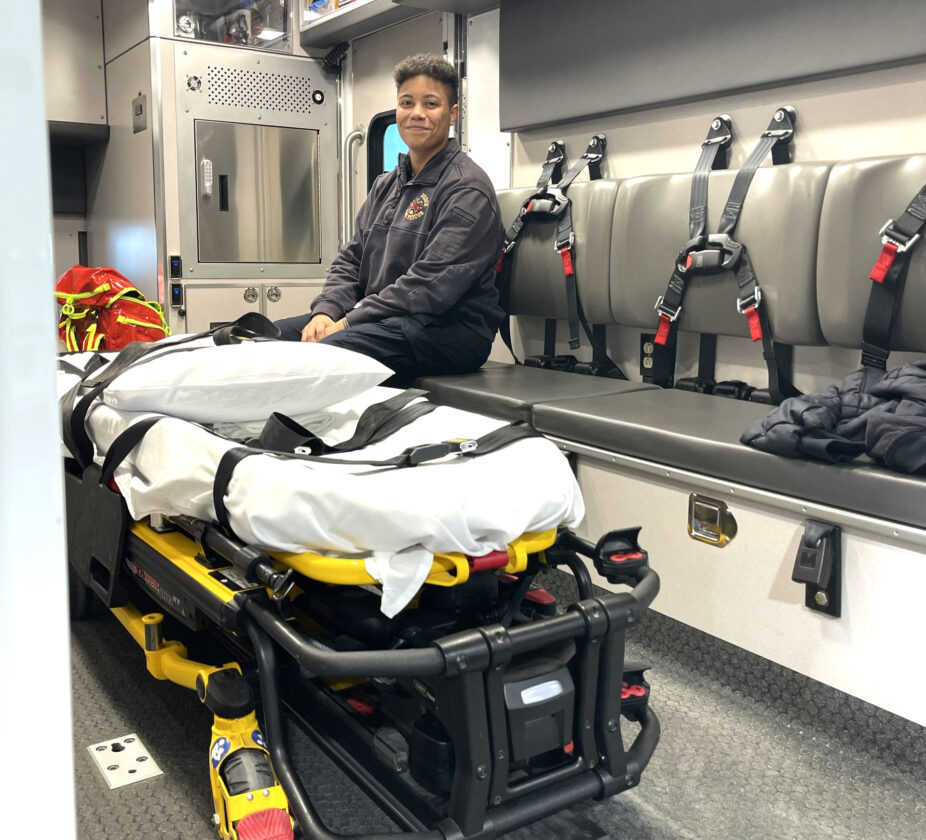
Tia Woeste, an emergency medical technician with the Fort Dodge Fire Department, poses in one of the department’s ambulances in this file photo.
Funding emergency medical service as an essential service in Webster County has moved from a long-considered idea to now, a reality.
According to Webster County Budget and Finance Director Krystal Lloyd, EMS claims were signed on Friday and will be in the hands of communities this week.
“This is a huge milestone for EMS in Webster County,” said Fort Dodge Fire Chief Matt Price. “For the first time, funding is being placed directly in the hands of the agencies that are actually providing care in the field. That means decisions can be made closer to the patient, closer to the problem and closer to the real operational needs. It’s exciting because this isn’t just about dollars. It’s about giving departments the ability to plan, invest in equipment and staffing, improve response capabilities and build a more sustainable system for the future.”
According to Lloyd, now that agreements have been approved by the Webster County Board of Supervisors, the individual entities must approve the agreements and have them notarized at the Webster County Auditor’s Office. Once those agreements are back in the hands of Auditor Shaunna Abrams and Board of Supervisors Chairman Austin Hayek, they will be signed again and taken to the Webster County Recorder’s Office for recording. Once all paperwork has been signed and filed, the entities can then begin submitting claims to the county.
“This is so important,” said Danny Hansen, director of Dayton Rescue Squad. “This is the difference between keeping Dayton Rescue open or closing. This is going to keep it open for many years. The future is bright. This is a big weight lifted off of many people. Many volunteers and all of the communities have been a part of making this happen. It has to be a good feeling for everyone.”
According to Hansen, the funding will allow him to replace Dayton Rescue’s 26-year-old ambulance as well as a 12-year-old ambulance, and to put volunteers and EMTs through training.
“This is going to allow us to continue to serve our communities and provide the best possible care,” said Hansen. “We’re here to take care of people. In the month of January, we did 19 calls in the community. Last year we had 113 calls, and we’re on pace for 180 calls this year.”
In March 2025, Webster County voters overwhelmingly voted to approve EMS as an essential service by channeling revenue from a tax of 75 cents per $1,000 of taxable value to the county’s ambulance services and volunteer fire departments, generating approximately $1.6 million per year.
The plan called for dividing the bulk of the money, about $1.4 million, between the three ambulance providers in service in Webster County at the beginning of 2025 — the Fort Dodge Fire Department, Dayton Rescue Squad and Southwest Webster Emergency Medical Service in Gowrie.
The Fort Dodge Fire Department, which provides ambulance service to the city and all of northern Webster County, would receive 76 percent of the money. Fort Dodge has the only paramedic level ambulance service, so it also assists the Gowrie and Dayton units with the most critically ill or injured patients.
Gowrie would receive about 14 percent and Dayton would receive about 10 percent.
The fire departments in Badger, Barnum, Callender, Clare, Harcourt, Otho and Vincent would each receive $10,000 for their work as emergency medical first responders.
“It’s going to be huge and so impactful,” said Dan Hanson, president of the Southwest Webster Emergency Medical Service Board of Directors. “Moving forward knowing that we’ll be able to provide the highest level of care and the quickest response time to help our communities is so important.”
According to Hanson, a majority of the funding available to Southwest Webster will be used for wages for trained EMTs who will staff the service from 8 a.m. to 5 p.m. five days a week to relieve the volunteer side.
“We’ll still need volunteers to cover evenings and weekends for now until the building is paid for, and there will be future needs for a newer ambulance for the old one that we have but that’s down the road,” said Hanson. “To be able to move forward and take some of the load off the volunteers to keep the ambulance service going, it’s just so huge.”
Funding EMS as an essential service is an undertaking that has been more than a decade in discussion in Webster County.
“It’s incredibly validating,” said Price. “A lot of time, energy, and collaboration went into getting to this point, and seeing it finally move from discussion and planning into real action is both rewarding and motivating. It shows that the system is listening to the people doing the work on the ground. This feels like a turning point where years of planning and advocacy are now translating into tangible improvements for responders, and ultimately better care for our community.”
According to Price, while the first agreements have been completed, there is still much more work to be done in getting secondary agreements for large projects completed and continuing to serve Webster County communities.
“This is our next big step to getting our buildings, staffing and apparatus locked in,” said Price.
Local News

Not too cold to play outside
Police pay, EMS agreement on council agenda
Additional pay for members of the short-handed Fort Dodge Police Department and an emergency medical service ...
Duty to respond
Funding emergency medical service as an essential service in Webster County has moved from a long-considered ...
The Messenger wins statewide honors
The newsroom and advertising staff of The Messenger received multiple awards from the Iowa Newspaper ...
Deck scorched at Dayton house
DAYTON — The back deck on a Dayton home caught fire Friday afternoon, but quick work by volunteer firefighters ...