
Built for dairy
Davis Dairy parlor continues to change with the times
-
-
-Messenger photo by Elizabeth Adams
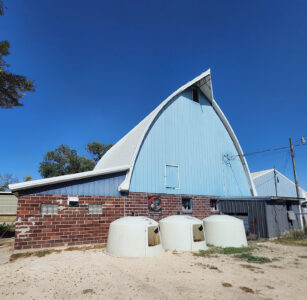
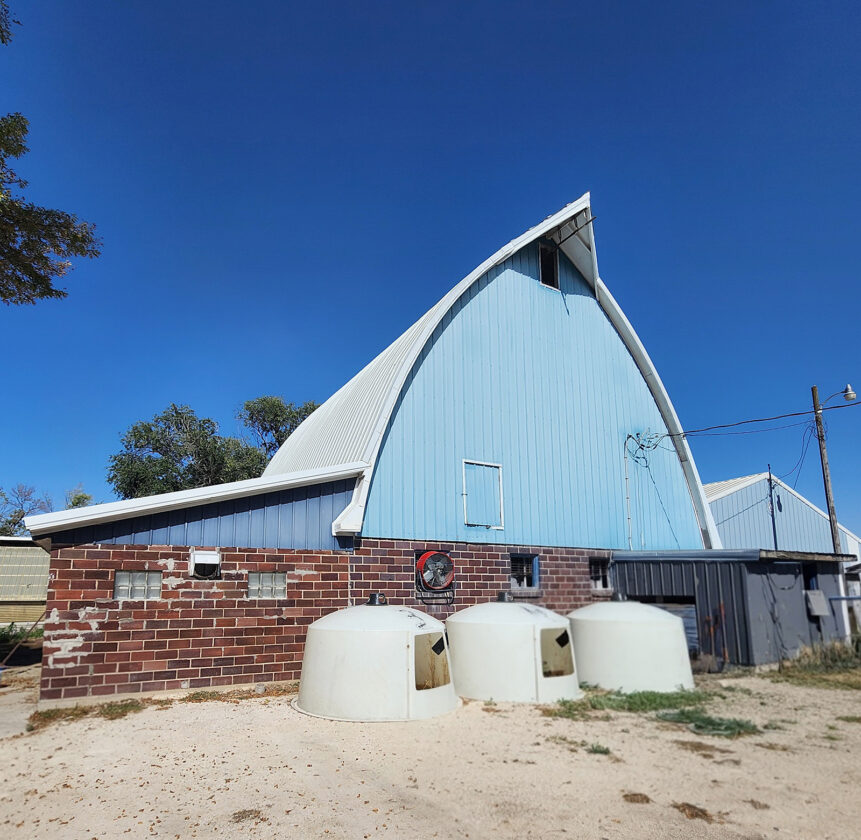
Built in 1937, the Davis Dairy Barn operates seven days a week and is the only dairy farm in Humboldt County.
-
-
-Messenger photo by Elizabeth Adams
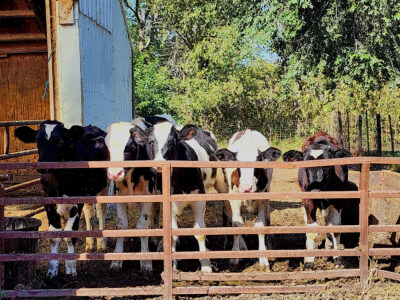
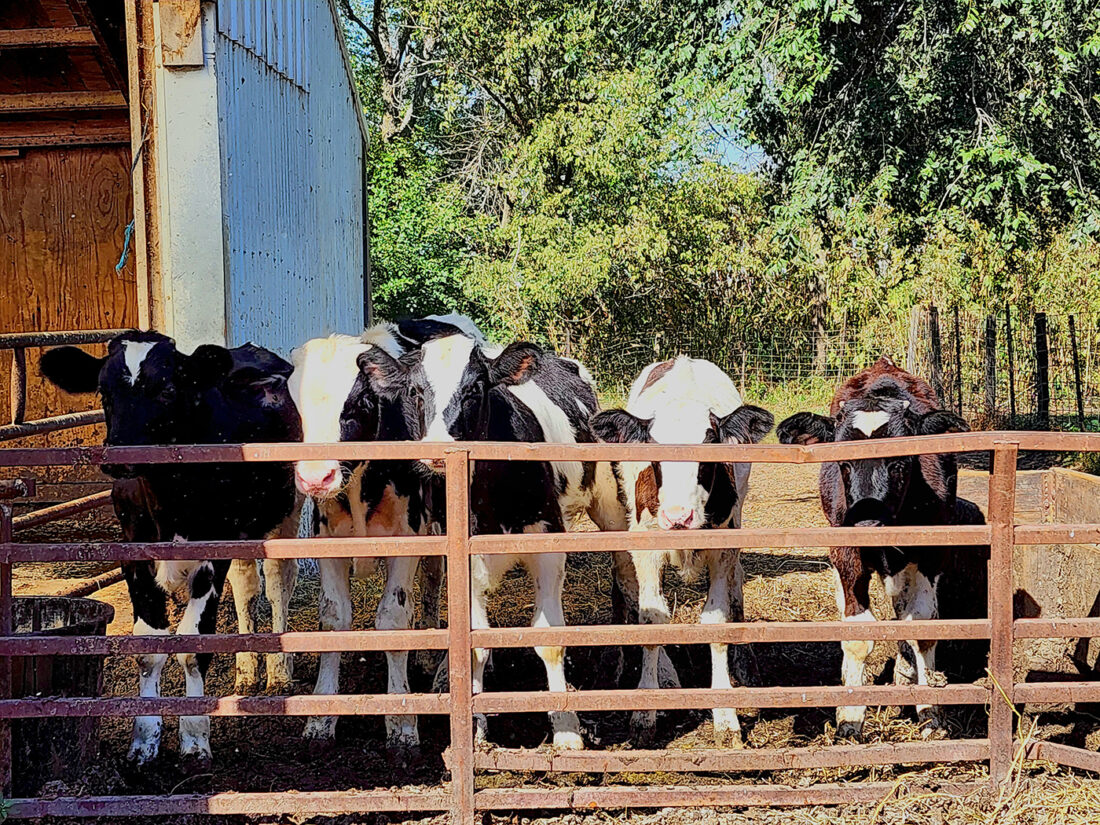
Some calves peer out from behind a fence on the Davis Dairy Farm.
-
-
-Messenger photo by Elizabeth Adams
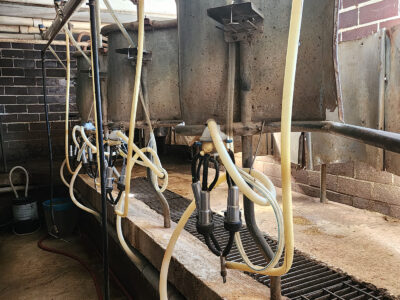
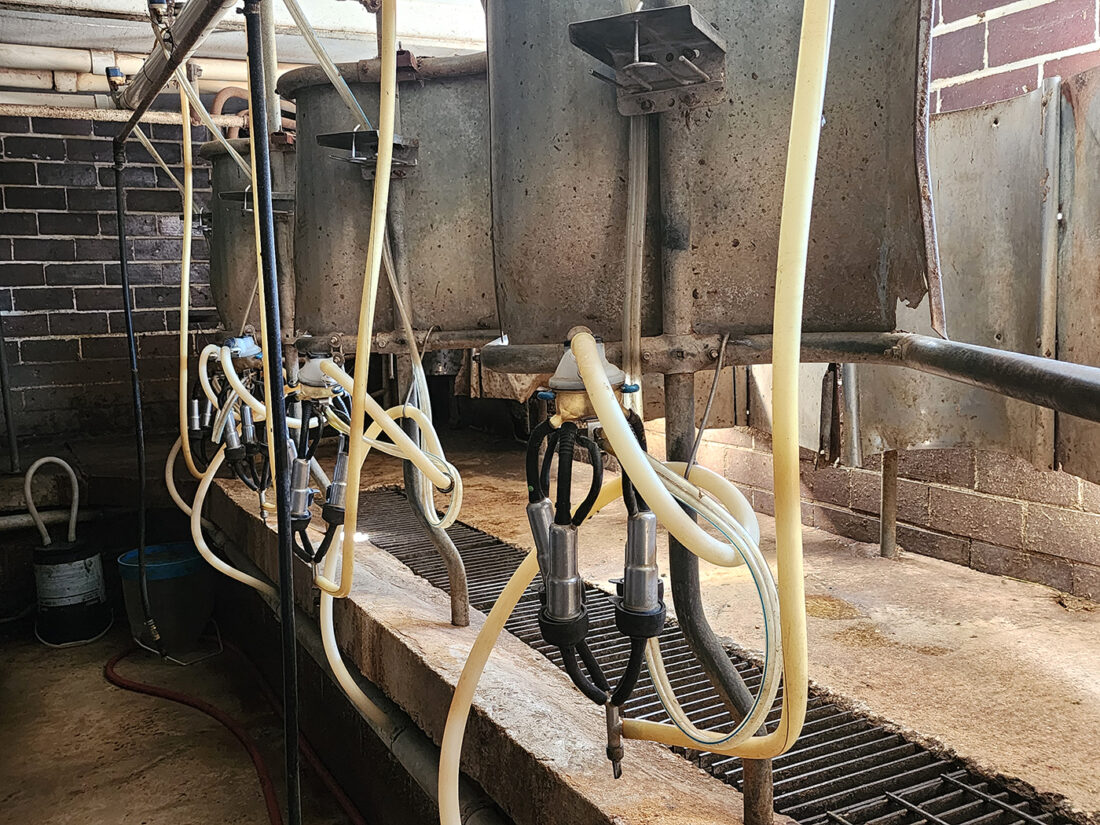
The Davis Dairy barn features this double-5 herringbone milking parlor, a milking setup with two rows of five stalls each.
-
-
-Messenger photo by Elizabeth Adams
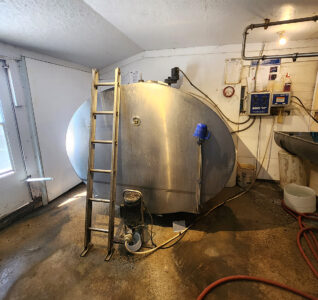
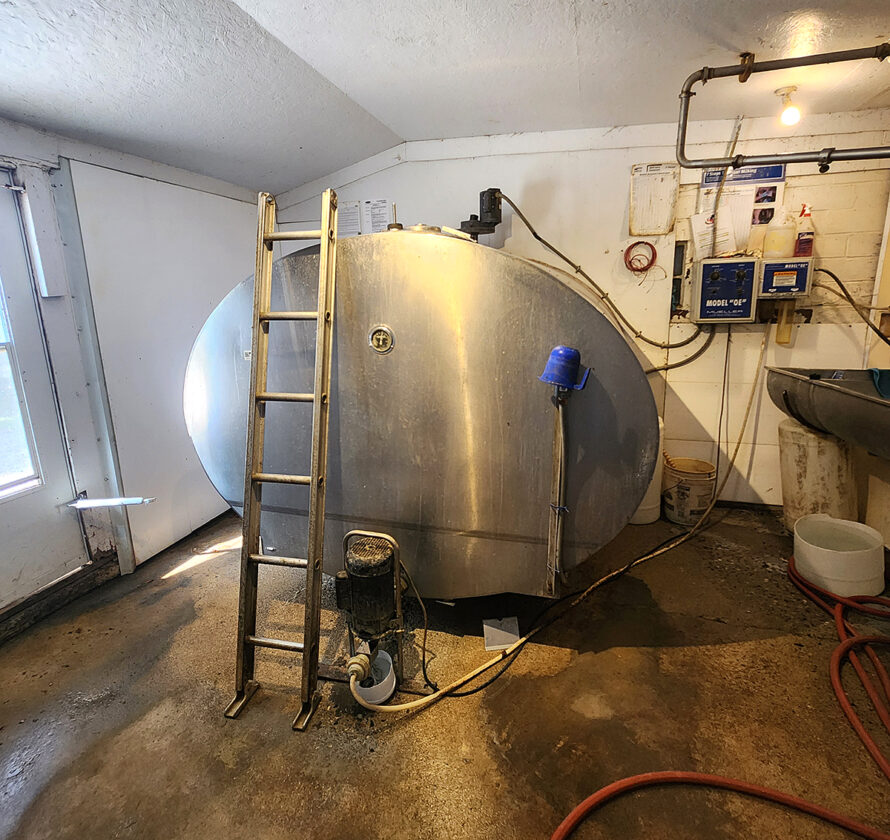
This bulk tank on the Davis Dairy Farm is where the milk is kept cool until it can be transported to a processing facility.
-Messenger photo by Elizabeth Adams
Built in 1937, the Davis Dairy Barn operates seven days a week and is the only dairy farm in Humboldt County.
GILMORE CITY — Nestled between outbuildings on the Davis Dairy Farm, the sturdy 88-year-old block and wood barn is the center of business.
Built in 1937, the Davis’ barn was constructed by Niels Nielsen and his two sons from Rutland. The supplies came from the lumberyard in Rutland, which used to sit where the Pro Cooperative office is located now.
These days, many barns don’t serve the purpose they once did. This is not true for the Davis’ farm — or their barn.
“I remember seeing the barn being built!” said Lawrence Davis. “My brother lived here and my dad would bring me by. I was riding a little horse around while the trusses were going up.”
Lawrence and Lois Davis married and moved to the farm in 1951. The couple purchased 35 Holstein cows on a handshake and began their dairy operation. These days, Lawrence and Lois’ sons, Glenn and Bruce, operate the family farm. They are currently the only dairy farm in operation in Humboldt County.
-Messenger photo by Elizabeth Adams
Some calves peer out from behind a fence on the Davis Dairy Farm.
The Davis barn was built in the “Dutch-Gothic” style with smooth curves coming away from a small peak on the roof, down to a narrow overhang. The barn has operated as a dairy barn since its construction.
Entering the barn takes you through a small room that houses a massive holding tank where the milk is cooled. The double-5 herringbone parlor, a milking setup with two rows of five stalls each (where all the milking occurs), began with only stanchions for hand milking, but has been retrofitted a total of three times to accommodate modernization.
“The last time we updated the parlor, we had to dig a tunnel underneath the concrete all the way to the pit on the north end,” said Glenn Davis. “We did it that way so we could keep milking during the update.”
The result is a parlor with a doorway to enter through, past a bridge on hinges for the cows to cross and finally into the middle section with a drain that empties into the pit.
Most notably, the middle section is dug down so Glenn Davis can access the milking machines with better ease when the cows are lined up.
-Messenger photo by Elizabeth Adams
The Davis Dairy barn features this double-5 herringbone milking parlor, a milking setup with two rows of five stalls each.
On the east end of the parlor is a small set of steps that go up over the elevated walkway and into a lean-to.
Glenn Davis explained that the lean-to shelters the cows as they move to and from the parlor comfortably. The lean-to is further attached to a hip, built onto the side of the barn that houses free stalls where cows can bed down.
Like most old barns, the hay loft isn’t actively used, but the Davises keep it bedded with hay to insulate the barn during the colder months.
The Davis family works seven days a week milking cows. The barn is a practical space for the work they do, but it is also a place where their lives have grown. Children have grown up, stories have been shared and the day-to-day musings maintained through three generations. in a working barn.
-Messenger photo by Elizabeth Adams
This bulk tank on the Davis Dairy Farm is where the milk is kept cool until it can be transported to a processing facility.
Local News
Built for dairy
FD council to address budget, construction contracts
A series of major construction contracts and more budget work are on the agenda for the Fort Dodge City Council ...
FDSH alum tabbed to lead new high school
Hamilton Co. turkey barn considered total loss
Iowa Central Community College provides customized training for local industries