Building future leaders
-
-
-Messenger photo by Deanna Meyer
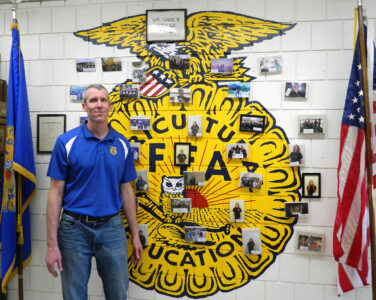
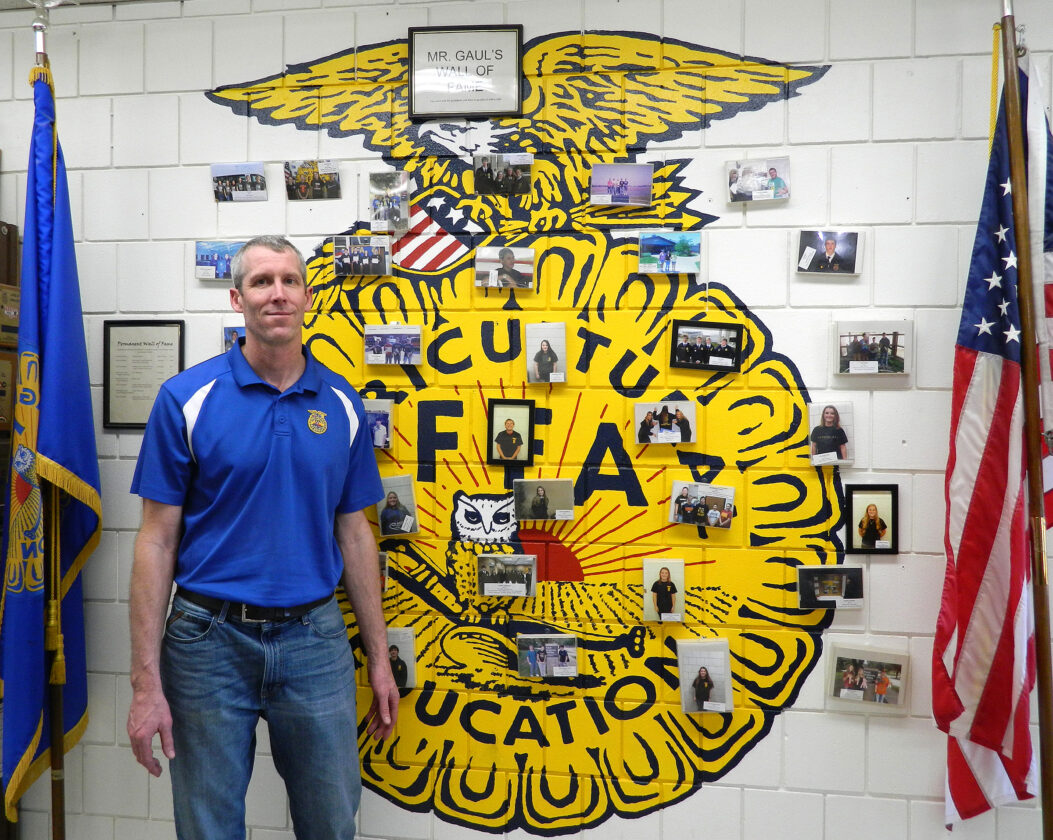
Doug Gaul, FFA advisor and ag teacher at Manson Northwest Webster High School, stands next to his FFA Wall of Fame. On the wall is a photo for every FFA contest members have entered. Members get their picture on the wall by doing the best an MNW student has ever performed in that particular contest.
-
-
-Submitted photo
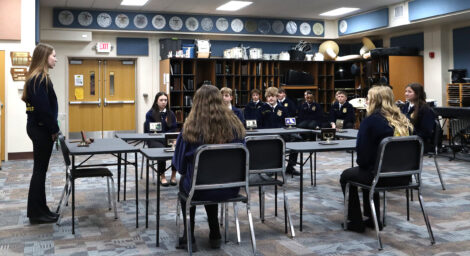
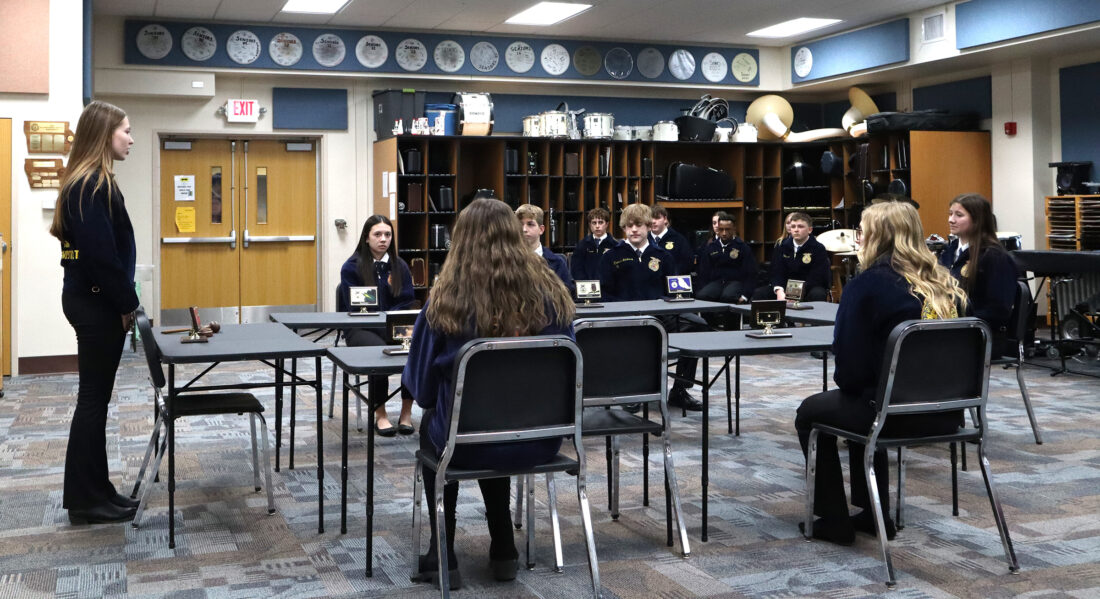
Emery Pelz, standing, along with other MNW FFA members, seated from left, Bellah Aquino, Hannah Rosenboom, Parker Ollinger, Thomas Lundberg, Abby Langenwalter and Alison Nimke participate in the Conduct of Meetings Leadership Development Event.
-
-
-Submitted photo
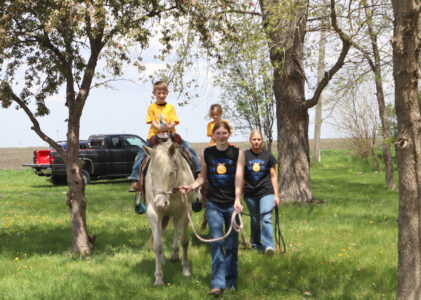
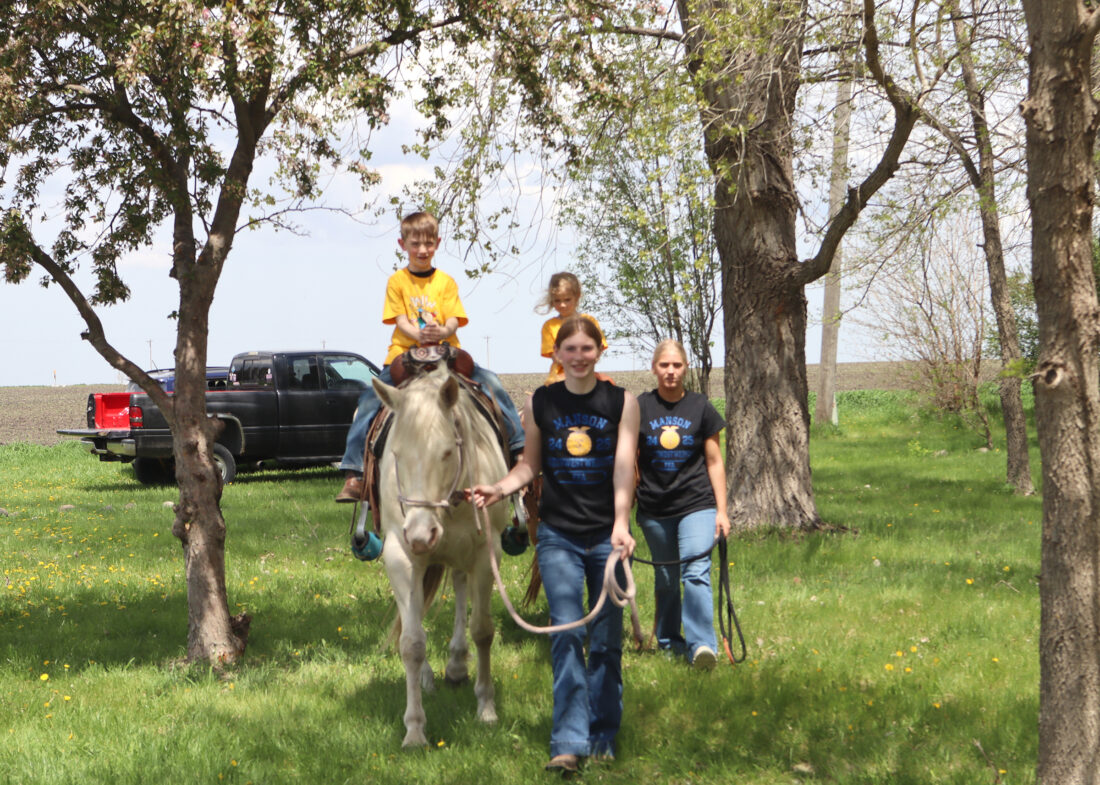
Manson Northwest Webster FFA members Ava Messerly, front, and Alexis Essing give horse rides to kindergartners during the annual Kindergarten Forest Event in Manson.
-
-
-Submitted photo
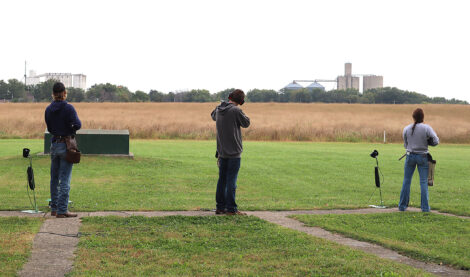
FFA members Garrett Swartzendruber, Cody Jondle and Madison Becker participate in the annual FFA Trapshoot.
-Messenger photo by Deanna Meyer
Doug Gaul, FFA advisor and ag teacher at Manson Northwest Webster High School, stands next to his FFA Wall of Fame. On the wall is a photo for every FFA contest members have entered. Members get their picture on the wall by doing the best an MNW student has ever performed in that particular contest.
MANSON — For Doug Gaul, becoming an ag teacher and FFA advisor just made sense.
“My dad was a farmer; my mom was a teacher,” said Gaul.
He grew up attending school in Harlan, where he was involved in the school’s FFA program, then went on to get his bachelor’s degree in ag education from Iowa State University.
A December graduate, he first began by substitute teaching since there weren’t any teaching positions open mid-school year. But by the end of January 2003, a position opened up at Manson Northwest Webster — and the rest, as they say, is history.
Gaul has led MNW’s FFA program for the past 23 years. As a former FFA member, he said what stuck with him as a student was all “the stuff beyond the school day, where you had the opportunity to go and do things.”
-Submitted photo
Emery Pelz, standing, along with other MNW FFA members, seated from left, Bellah Aquino, Hannah Rosenboom, Parker Ollinger, Thomas Lundberg, Abby Langenwalter and Alison Nimke participate in the Conduct of Meetings Leadership Development Event.
“At the time, it was just fun,” he said. “Also, as you look back on it later, there was a lot of learning that took place.”
Today, that “learning by doing” is what Gaul still hopes happens for his students.
“You want to fool the kids into learning stuff,” he said. “They think they’re just having fun.”
As a young teacher, Gaul said he was fortunate to inherit a solid FFA program.
“It was neat,” he said, “I had a really strong group of officers that first year that took the lead and made me do things that otherwise I might not have.”
-Submitted photo
Manson Northwest Webster FFA members Ava Messerly, front, and Alexis Essing give horse rides to kindergartners during the annual Kindergarten Forest Event in Manson.
An FFA Foundation
Formerly known as Future Farmers of America, FFA became known as the National FFA Organization in 1988. This name change reflected that agriculture had expanded beyond farming and could meet the needs of students with more diverse interests.
According to Gaul, the National FFA Organization has three foundational tenets: community betterment, strengthening agriculture and building leadership.
Gaul considers community involvement one of the MNW program’s strengths.
“It’s something I’m really passionate about is doing those community service activities,” he said.
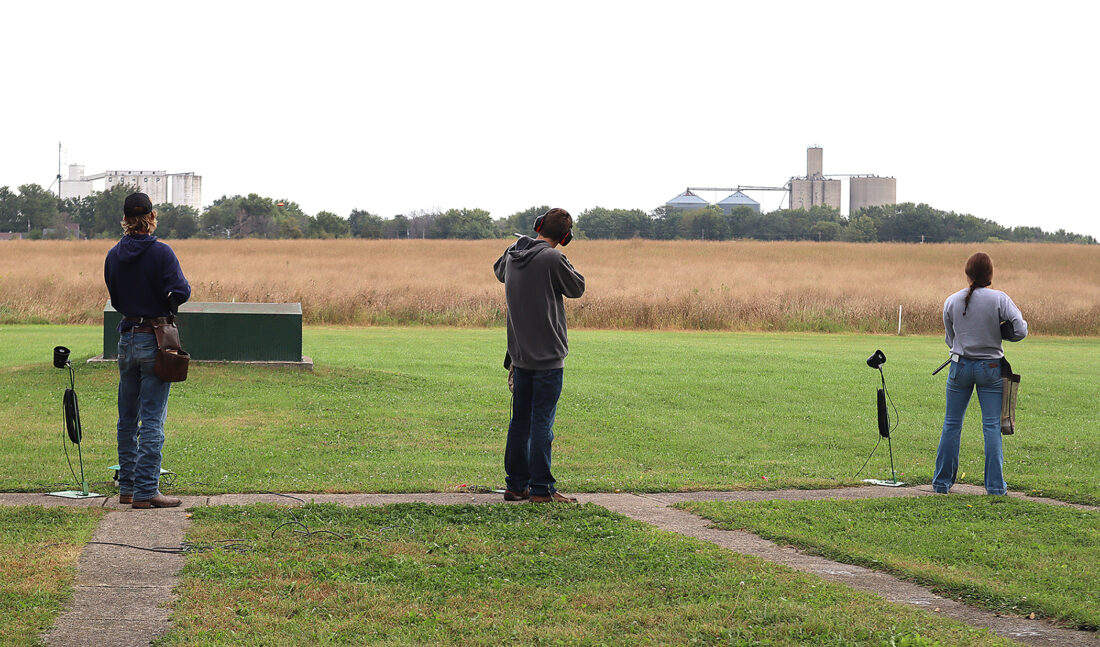
-Submitted photo
FFA members Garrett Swartzendruber, Cody Jondle and Madison Becker participate in the annual FFA Trapshoot.
This year, the Manson Northwest Webster FFA chapter has about 80 members.
Every spring, they participate in what has become known as “The Big Event,” where FFA members spend a morning doing service projects around the school and community.
“We’ve built things; we’ve painted; we’ve cleaned up things,” Gaul said. “We do whatever needs to be done.”
Other service projects have included cleaning up a stretch of highway, helping put up flags for Memorial Day, and volunteering during Manson Greater Crater Days — the town’s annual summer festival.
“We’re trying to build kids who have that sense of, ‘You’ve got to do something for your community,'” he said. “Communities fall apart if you don’t, if everybody doesn’t do their part.”
FFA has also been involved in several landscaping projects on school grounds.
“We do a lot of work at the baseball/softball fields,” which Gaul admitted is a bit “self-serving” as the school’s high school baseball coach.
“But what a great way to get the field edged the first time,” he said. “That’s a neat project because you can see what it looked like before and what it looks like when you’re done. Whether kids will tell you or not, they take a lot of pride in stuff like that.”
Gaul said there’s an added benefit in any project that benefits the school.
“You help the school, it helps your program because people see it,” he said.
Strengthening ag
FFA agriculture activities have included a trap shoot, “Drive Your Tractor to School Day,” raising plants in the school’s greenhouse, planting and caring for a test plot, raising chickens, and the school’s aquaculture facility, where fish are raised for their meat.
Gaul said the aquaculture program had died before he was hired, but FFA members pushed to bring it back.
“We didn’t know what we were doing, but it was fun,” he said. “There was probably more learning that first year when we were trying to figure it out than there is now.”
Through the aquaculture program, students also learn about the environment — how to test and maintain water quality.
“There’s some serious science involved in what we do there,” Gaul said.
He said FFA and his ag classes are co-curricular. Much of what is learned in ag classes is expanded upon in FFA and vice versa.
“We’ve been really good over the years on soils judging,” he said, “and I mostly just teach that in a class.”
A student favorite has been organizing the annual “Kindergarten Forest,” where FFA members plan an event to teach the school’s kindergartners about nature and the outdoors. Many former MNW kindergarten students still remember getting a wooden nametag and the special T-shirts they received.
Future leaders
As far as leadership, Gaul said much of that develops from serving as officers.
“I watch our officers from the first day they become officers, and they’re stumbling through talking in front of a group — to when they are done being an officer and they’re more fluent,” he said.
Even if a student never goes into an ag-related field, Gaul said the ability to speak to people has lifelong value.
“Those are skills that are hard to teach unless you just expose a kid to it, push them into it,” he said.
Students also gain leadership skills through getting involved in FFA contests at the local, state and national level.
Event planning puts FFA members in positions where they must step up and take a leadership role to see a project through to completion.
At the end of January, FFA members were involved in a community meal-packing event called “Then Feed Just One” that resulted in packing more than 23,000 meals for those in need in Honduras. Gaul said that project was given to his leadership class to organize. They set a goal and a date, and planned the event.
Last year, FFA members brought “Donkey Basketball” to Manson and chose to donate the proceeds to a local student who had been injured in a farming accident. While other organizations got involved in the benefit, the FFA students organized the teams and sold tickets for the basketball games.
“It’s technically a student-run organization,” he said, so when members bring up ideas, they have to work together to make them happen.
Lasting benefits
Gaul said much of FFA’s value lies in the exposure element.
“The whole thing to me is like an exploratory where they just get exposed to so many new things that maybe they didn’t think about before,” he said.
Gaul recalled one girl who took an ag class only because her boyfriend was taking it. By the end of the class, she had decided she wanted to go to college for agronomy.
He advised another girl who had been involved in the Kindergarten Forest for four years to consider becoming a teacher because she was so good with the kids. At the time, she said no, but five years later, he learned she had, indeed, become a kindergarten teacher — a seed that was planted through her FFA experience.
Another former student, who now has a doctorate in chemistry, recently called to say he was hired for his current position in part because the company was impressed with his FFA/ag background.
Ultimately, it’s connections like these that have meant the most to Gaul over the years.
“It’s the trips with the kids. You get to know the kids so much better than you would as a regular teacher,” he said. “It’s seeing them outside of the building in their own environment. You see a different part of the kid.”
Local News
Larson, Meyer support school funding bill
The Iowa House of Representatives on Thursday approved an additional $105 million for the state’s school ...
Health care bills from Meyer clear funnel
Three health care measures introduced by state Rep. Ann Meyer, R-Fort Dodge, survived Thursday’s legislative ...
Building future leaders
Go and Do: Feb. 20, 2026
Around the area WEBSTER CITY — The Hamilton County Speedway Association will hold its 24th annual Chili Supper ...
Two hour delay at St. Edmond
There will be a two hour late start Friday at St. Edmond Catholic School in Fort Dodge due to winter weather ...