
Ryker loved flying — until one fateful day
Fort Dodge man ejected from burning fighter-bomber
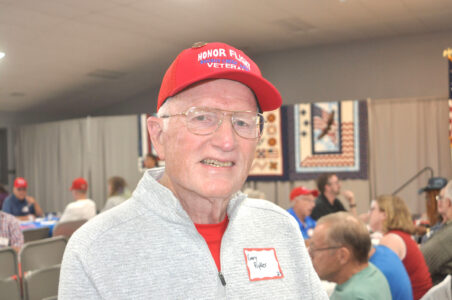
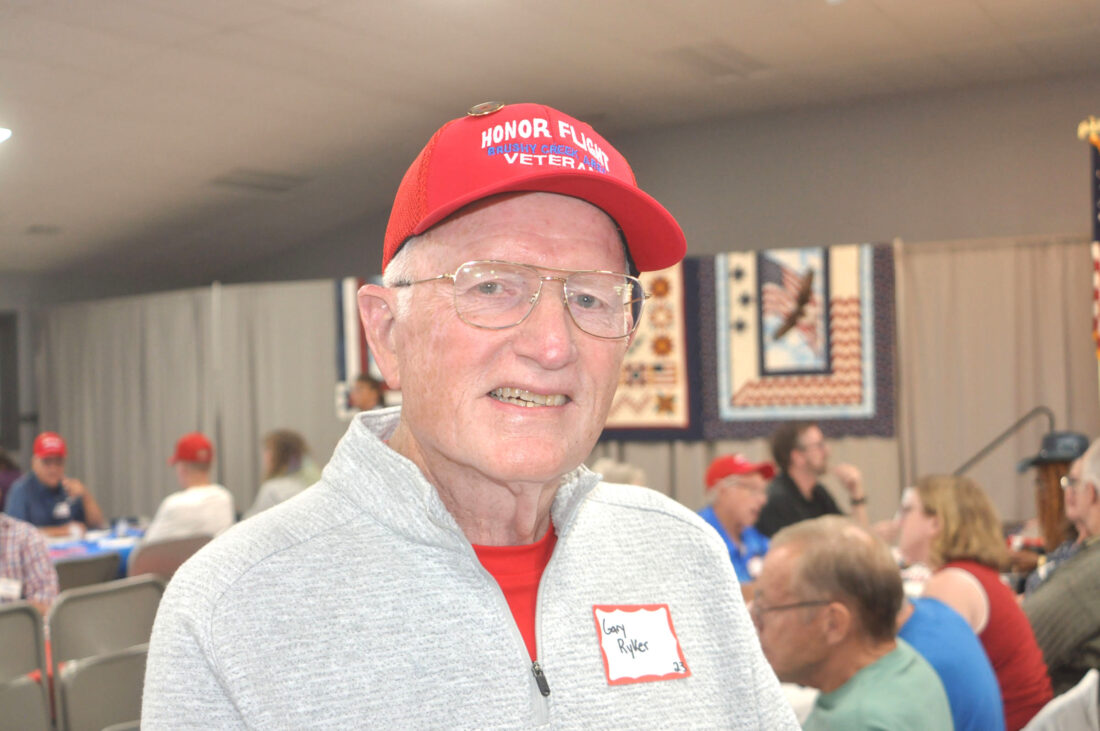
Fort Dodge resident Gary Ryker loved to fly, and throughout his Air Force career he had a kind of plane he really enjoyed flying.
He piloted an F-111 Aardvark fighter-bomber, which he said was the fastest aircraft at altitudes below 1,000 feet.
“It was just a fun airplane,” he said.
But his flying days came to an end when an F-111 he was piloting caught fire, forcing him to eject.
“It was a wonderful plane to fly, except when it was on fire,” he said.
Ryker described his Air Force career on April 23 as he and fellow veterans gathered at the Webster County Fairgrounds for the banquet held in advance of the May edition of the Brushy Creek Area Honor Flight.
He is a native of Arkansas who was a member of the Air Force Reserve Officer Training Corps at the University of Arkansas.
He entered the Air Force in 1969. After completing all of his flight training, he became an F-111 pilot.
Ryker flew from an air base in Thailand for two years.
He was also assigned to Nellis Air Force Base in Nevada and Mountain Home Air Force Base in Idaho.
It was while he was assigned to the Idaho base that an in-flight fire ended his flying career.
That incident happened on Jan. 4, 1979, while he was flying about 43 miles west of the base.
He recalled that the plane wasn’t functioning properly. On the radio, he asked his wingman if he could see anything wrong with the plane. The other pilot replied that it was on fire.
“Everything from the cockpit back was on fire,” Ryker said.
He had no choice but to bail out of the plane.
On an F-111, when a pilot ejected, the entire cockpit was launched out of the plane.
“It was an instantaneous 15 Gs,” Ryker said, describing the forces that buffeted him during the ejection.
The cockpit module landed on the side of a mountain and rolled down it. It eventually came to rest upside down.
Ryker said he is two inches shorter than he used to be due to injuries he suffered in that incident.
Despite his injuries, he said the fire affected his wife, Marsha, more than him.
“That whole process was tougher on her than it was on me,” he said.
He said throughout his Air Force career his wife “had to live all through the dangers just like I did.”
He said an extensive investigation traced the cause of the fire to the airplane’s engine oil. An additive had been removed from the oil, causing it to congeal. That congealed oil heated up and burst into flame.
Ryker was discharged from the Air Force later in 1979, with just under 10 years of service.
While he did not work as a pilot in civilian life, he stayed in the aerospace and aviation industry. He retired from Rockwell Collins in Cedar Rapids.
Local News

Greeting Duncombe students
Donors asked to roll up their sleeves
USG Fort Dodge plant awards $5,000 to Almost Home Humane Society of North Central Iowa

Reward increased again in shooting case

Sick days continue
FD man arrested after chase ends in crash
A driver who led police on a pursuit through Fort Dodge at speeds of up to 80 miles per hour early Friday morning ...