
How do we end the violence: Dalton Summers
Trending
To help facilitate answers and solutions to the problem of violence permeating through Fort Dodge, The Messenger is keeping the conversations going with those in the community who want to be part of the solution.
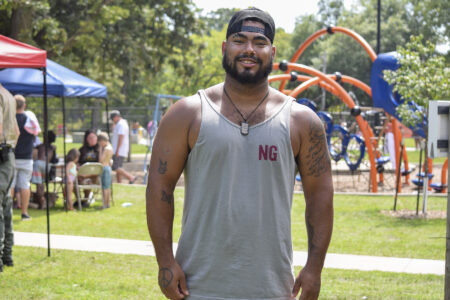
This week, Messenger news reporter Kelby Wingert sat down to talk with Dalton Summers, one of the founding members of NextGen Fort Dodge, a grassroots community group aimed at preventing violence and creating a brighter future for the youth of our community.
Summers is a 2020 graduate of Fort Dodge Senior High and recently graduated from Iowa Central Community College with degrees in early childhood education and secondary education. Earlier this summer, after two nearly back-to-back homicides of young men in Fort Dodge, he was part of the group that created NextGen Fort Dodge.
You're a paraeducator at Fort Dodge Middle School this year. What makes you want to work with this age group?
I'm from Fort Dodge and I think a lot of kids need a positive male role model, or even a Black role model. Be who you needed when you were younger. I think a lot of kids don't have that good, positive role model, and if I could connect with them and help them rise up, show them they have a purpose in this world, then that's what matters the most to me. Maybe I can help them change their ways if they're on the wrong track, so that they can succeed in the end.
How can the general public be convinced that the violence we've been experiencing recently is a problem that can actually be solved?
I feel like if kids have that really good positive role model, we have people in the community who are willing to take that time with that person and to grow them. So I think that's really special, just for the general public just to know that. Like, if a kid like likes to go work out , like Miguel Secor at Secor Strength, he's been one of the best mentors I've ever had in my life. It's just like little things like that.
At our last event, I haven't met half these people before here in town and they're coming up to me saying you guys are doing such a great thing for this town. That can make you teary eyed, because if we put a step in direction to make something happen, then the whole this whole town's gonna follow, I believe. And I think that's really cool and really special about Fort Dodge.
You were one of the founders of NextGen Fort Dodge. What was your inspiration to help start that group?
When Patrick Walker died, he was one of my mom's former students and she gave me a call and was like, 'Hey, we need to do something. We need to make a group for mentors and community events.' Instantly, when your mom calls you crying, it's like boom, we've got to do something. It's been really successful. I think we had like 250 people at the last event. I was blown away and it's crazy how much it's grown in the last two months. And we're not going to stop here -- we're going to keep it going.
What would you recommend as a first course of action?
As a whole community, I think, we need to check on kids' mental health. We need to tell them that they are important, that they deserve to be in this world and they matter. It's basic, but I feel like a lot of kids don't get that sometimes. Maybe something at home isn't going well, or they just drop down and don't know who to talk to. I think it's really hard for them to understand that it's OK to not be OK.
At 22, you're relatively close in age with many of the youth who have been getting into trouble or getting involved in violent activities. You've gone to school with some of these kids, you know some of these kids. What do you think they need to get back on the right path?
As I was saying before, I think a lot of kids today don't feel like they're good enough and they feel like they're not heard. The kids who are getting into trouble or who might be going through some tough times maybe didn't get that attention as a kid. Maybe they just need that one person to say 'You may be falling down, but I'm going to pick you up.' I feel like a lot of people will give up on each other and instead they need to say 'I got you."
Even a little bit of tough love can help. What people need to know is that you care about them and you love them.