
Talking trash
Southeast Valley students seek action on litter
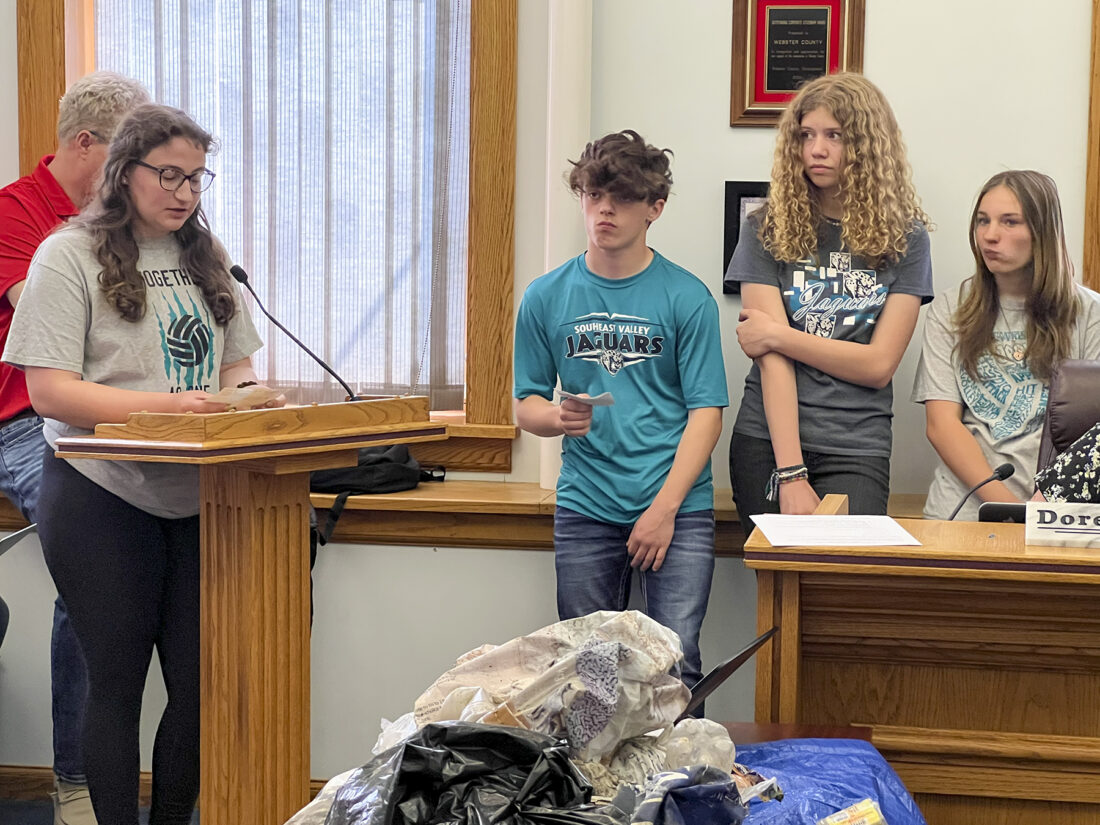
-Messenger photo by Kelby Wingert <br> Students from Southeast Valley Middle School gave a presentation on littering to the Webster County Board of Supervisors.
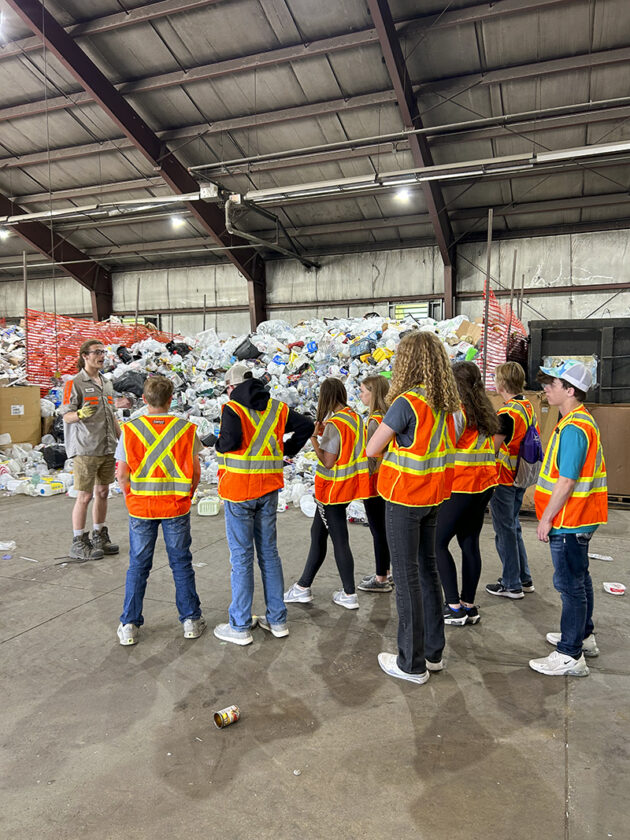
-Photo courtesy of Mark Campbell <br> Students from Southeast Valley Middle School received a tour of the North Central Iowa Regional Solid Waste Agency Recycling Center after giving the Webster County Board of Supervisors a presentation on littering on Tuesday.
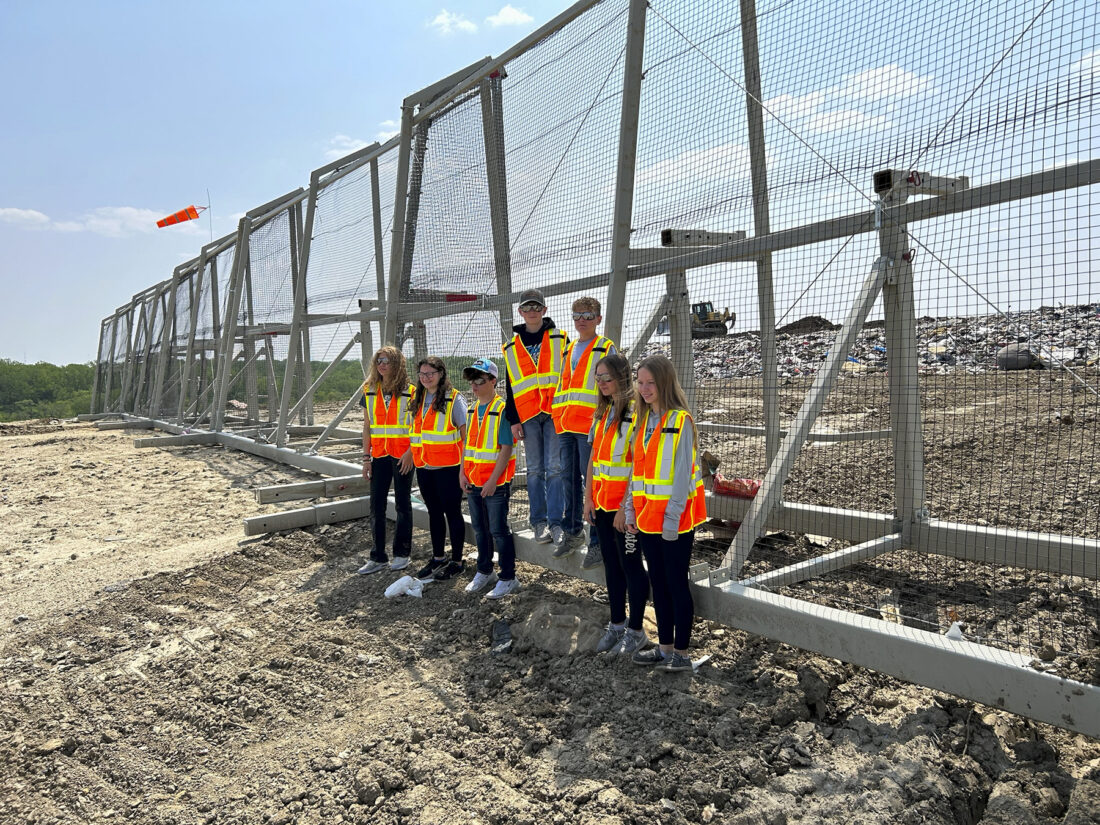
-Photo courtesy of Mark Campbell <br> Students from Southeast Valley Middle School received a tour of the North Central Iowa Regional Solid Waste Agency landfill after giving the Webster County Board of Supervisors a presentation on littering on Tuesday.
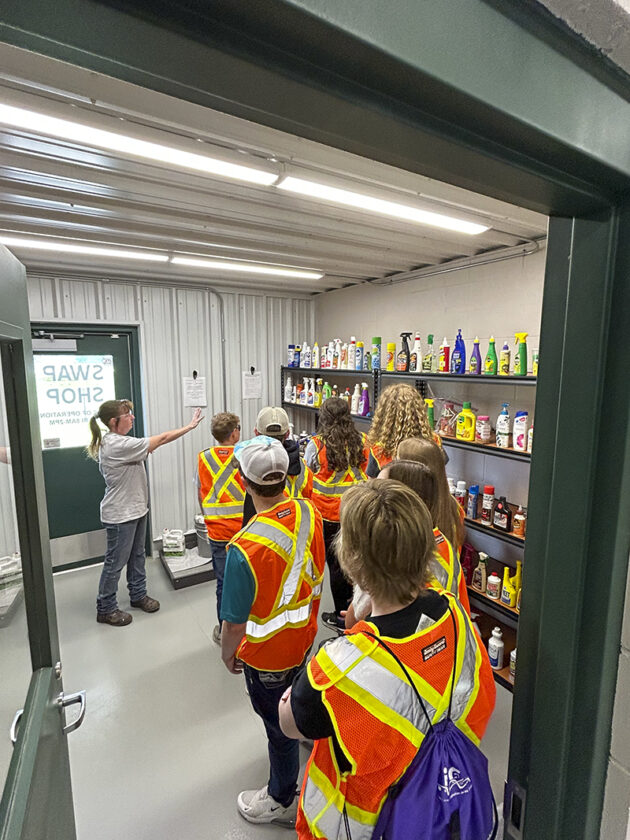
-Photo courtesy of Mark Campbell <br> Jill George gives a group of Southeast Valley Middle School students a tour of the Household Hazardous Material Swap Shop at the North Central Iowa Regional Solid Waste Agency's recycling center on Tuesday.
-Messenger photo by Kelby Wingert <br> Students from Southeast Valley Middle School gave a presentation on littering to the Webster County Board of Supervisors.
-Photo courtesy of Mark Campbell <br> Students from Southeast Valley Middle School received a tour of the North Central Iowa Regional Solid Waste Agency Recycling Center after giving the Webster County Board of Supervisors a presentation on littering on Tuesday.
-Photo courtesy of Mark Campbell <br> Students from Southeast Valley Middle School received a tour of the North Central Iowa Regional Solid Waste Agency landfill after giving the Webster County Board of Supervisors a presentation on littering on Tuesday.
-Photo courtesy of Mark Campbell <br> Jill George gives a group of Southeast Valley Middle School students a tour of the Household Hazardous Material Swap Shop at the North Central Iowa Regional Solid Waste Agency's recycling center on Tuesday.
Trending
A group of eighth graders from Southeast Valley Middle School is sick of seeing trash litter the sides of the roads in rural Webster County.
Instead of just complaining, they took their concerns to the people they felt might be able to take action -- the Webster County Board of Supervisors.
The students gave a presentation to the Board of Supervisors during its Tuesday morning meeting at the Webster County Courthouse to highlight their anti-littering proposal. The group included Aleah Anderson, Hailie Castle, Hallie Crampton, Anna Fritts, Rafe Kilstrom, Nevein Larson and Jake Reck, as well as social studies teacher Janet Wills.
The students shared data they collected from surveying classmates, who said that on average they see three to 10 pieces of litter on the ground each day. They said that littering is a problem in Webster County because it can cause potential health problems and decrease investment in businesses.
To really drive home the message, the group brought in a black trash bag filled with litter one of their classmates had picked up near her home.
"There's a program from the Center for Civic Education and it's called Project Citizen," Wills said. "In the project, students pick an issue in their local area that they think is a problem and they research it."
The students have to look at different solutions that could solve the problem and create a proposal to present their solutions, Wills said. The students also use resources from iCivics, a non-partisan civic education program founded by Supreme Court Justice Sandra Day O'Connor that offers curriculum and resources for teachers and students.
"It's really important for all citizens of the United States to learn about all levels of government so that they can be good citizens," Wills said.
The potential solutions to problem littering the Southeast Valley students proposed included increasing fines for littering citations and requiring violators of littering ordinances to participate in community cleanup efforts.
This civics project is something Wills enjoys assigning toward the end of the school year to keep students engaged and learning about local and state government. At the end of the project, the student groups give their presentations to elected officials and others who can possibly act on the students' call to action.
The civics project is an interdisciplinary assignment for the whole eighth grade team, Wills said. Students incorporate several subjects -- like math, science and social studies -- to create their project.
This year, there were nine groups working on projects, she said. Another group focused on substance abuse and gave a presentation to some school board members to propose the purchase of vape detectors for the school bathrooms.
"We want them to pick something that really is important to them, so they have a reason to keep motivated to do it," Wills said.
After about a week of collaborating and planning their solutions, the students shared their presentations with a variety of local and county government officials last Friday. Webster County Supervisor Mark Campbell was impressed with the group focused on littering and invited them to give their presentation to the full Board of Supervisors on Tuesday.
Webster County Attorney Darren Driscoll also invited the students to visit the county attorney's office this summer to discuss ideas and research into creating a county littering ordinance.
In addition to teaching the students the workings of local government, the project aims to show them the direct impact they can have on their own communities, Wills said.
"I think overall, in terms of our national media, we hear a lot about the president who's the one person with power and we don't hear a lot about the state and local government," she said. "We try to teach our students that your local government really impacts your day-to day life."
Following the presentation to the Board of Supervisors, the group visited the North Central Iowa Regional Solid Waste Agency landfill and recycling center for a tour.