
Safety boost
Reduced-conflict intersection increases safety on U.S. 20
-
-
-Photo courtesy of the Iowa DOT
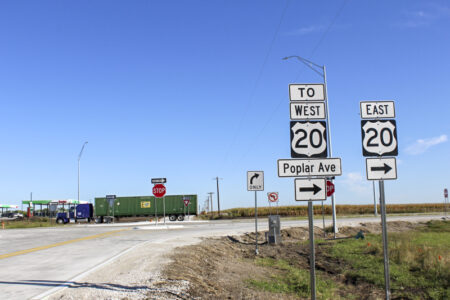
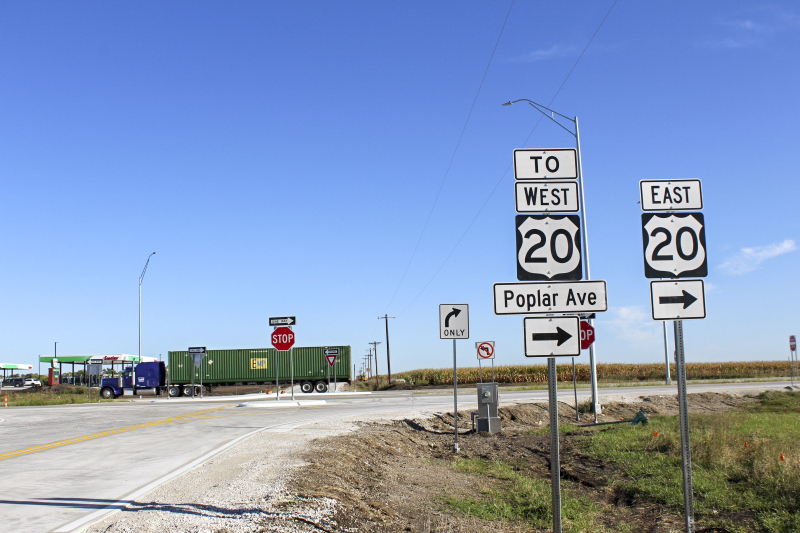
A new reduced-conflict intersection at U.S. Highway 20 and Poplar Avenue aims to reduce the number of “conflict points” where car crashes can happen. This photo shows a view looking north on Poplar Avenue. To continue north, the driver would turn right onto U.S. Higway 20 and follow the traffic signs for a U-turn to head back west toward Poplar Avenue.
-

-
-Messenger file photo
Volunteer Jim Strachan, of rural Humboldt, works to install window trim Friday morning at the Habitat for Humanity home being constructed at 1001 South Taft Street in Humboldt. The retired farmer got involved after seeing television programming about the organization.
-
- -Graphic courtesy of the Iowa DOT
-
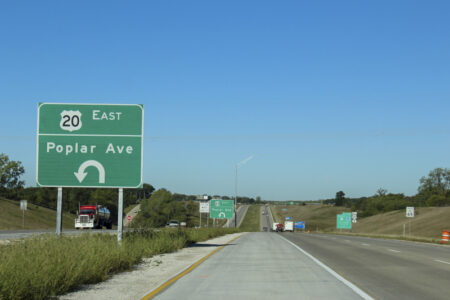
- -Photo courtesy of the Iowa DOT This photo shows a vehicle driving westbound and the signs of the new reduced-conflict intersection at U.S. Highway 20 and Poplar Avenue that instructs the driver to make a U-turn to head east and be able to turn south on Poplar Avenue.
-Photo courtesy of the Iowa DOT
A new reduced-conflict intersection at U.S. Highway 20 and Poplar Avenue aims to reduce the number of "conflict points" where car crashes can happen. This photo shows a view looking north on Poplar Avenue. To continue north, the driver would turn right onto U.S. Higway 20 and follow the traffic signs for a U-turn to head back west toward Poplar Avenue.
Drivers looking to cross U.S. Highway 20 at Poplar Avenue will have to navigate a newer, safer crossing recently constructed by the Iowa Department of Transportation.
The planned construction for the now-open Marker 126 travel center required a traffic study to be conducted because the development was expected to generate significant traffic, according to Benjamin Hucker, an engineer with the Iowa DOT District 1.
“When the traffic impact study was completed for the travel center, it was identified that the amount of traffic going in and out of the travel center just was going to be too much for that traditional grade intersection there,” he said.
Over the summer, the U.S. Highway 20 and Poplar Avenue intersection was reconstructed to become a “reduced-conflict intersection.” Reduced-conflict intersections are designed to reduce the number of conflict points where vehicles can crash into each other.
“There’s 42 possible places where cars could collide in a traditional intersection on a four-lane divided highway like we have there on U.S. 20,” Hucker said. “With a reduced-conflict intersection, by restricting certain movements and not allowing the most dangerous movements, we reduce those conflict points down to 24.”
-Messenger file photo
Volunteer Jim Strachan, of rural Humboldt, works to install window trim Friday morning at the Habitat for Humanity home being constructed at 1001 South Taft Street in Humboldt. The retired farmer got involved after seeing television programming about the organization.
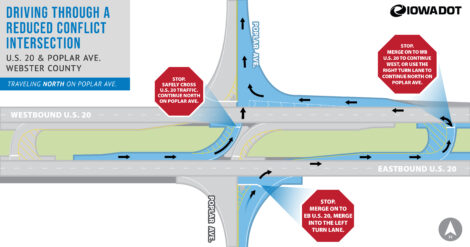
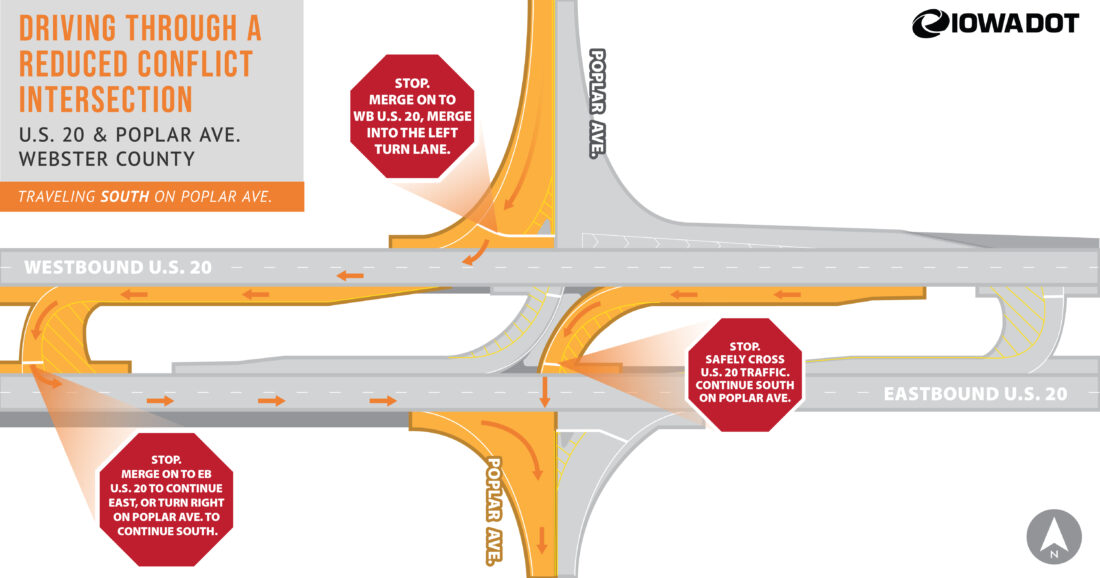
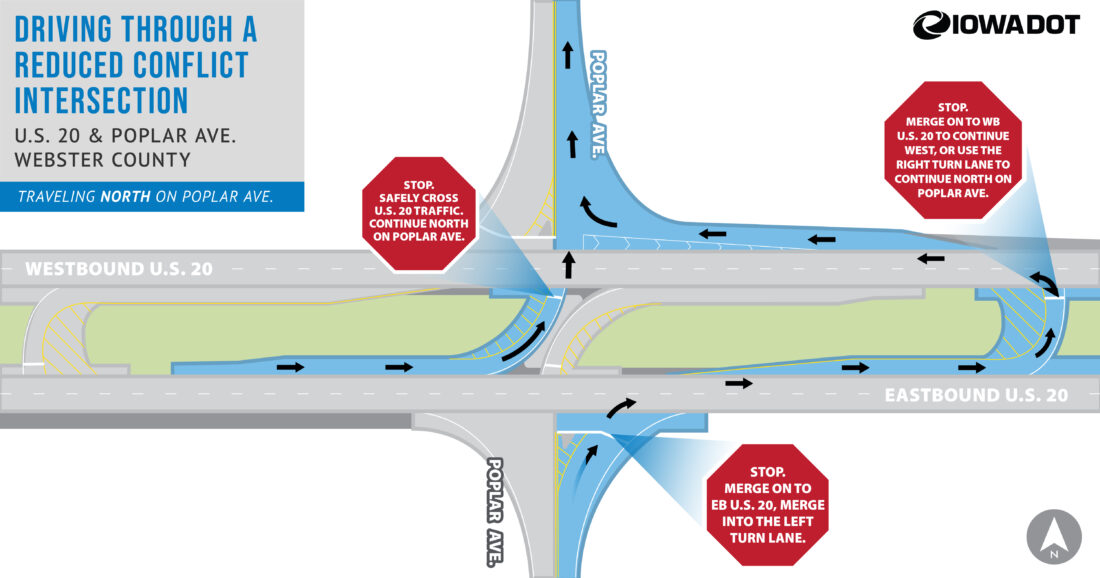
In a reduced-conflict intersection, drivers on the side road (Poplar Avenue) wanting to turn left or cross the four-lane highway will turn right onto the highway, merge into the left lane and then make a U-turn at a designated median opening. The way the pavement is set up, a driver cannot make a left turn onto the four-lane highway or cross both directions of traffic.
“By breaking it up into a multi-step maneuver, making the driver turn right, then merge and then make a U-turn to go the other way, we’re making it easier and safer for drivers to comprehend and make safe decisions,” Hucker said.
Drivers traveling east and wanting to turn left to go north on Poplar Avenue, or those driving west and wanting to turn left to go south, will also follow the directions of the reduced-conflict intersection.
For drivers who might need a visual demonstration of how to use the reduced-conflict interaction, the Iowa DOT has videos on its website at https://iowadot.gov/traffic/reducedconflictintersection.
This is the first reduced-conflict intersection in Iowa, but this type of highway intersection is popular in other areas of the country, like Minnesota, Wisconsin and Missouri. North Carolina is a “national leader” in installing these reduced-conflict intersections, Hucker said.
-Graphic courtesy of the Iowa DOT
“Studies have shown a 70 percent reduction in fatalities and a 42 percent reduction in injury crashes at these intersections,” he said.
Increased safety of drivers wasn’t the only benefit of this type of intersection.
According to Hucker, to meet the expected needs of the intersection, either a reduced-conflict intersection or a complete highway interchange needed to be constructed. The reduced-conflict intersection takes much less time to design and build, where interchanges typically take three to five years. Interchanges also cost around $15 million to build, Hucker said, and the reduced-conflict intersection costs about one-tenth of that.
The approximately $1.5 million intersection construction was funded by the developer for Marker 126, Hucker said.
“There was no DOT money in this project at all,” he said.
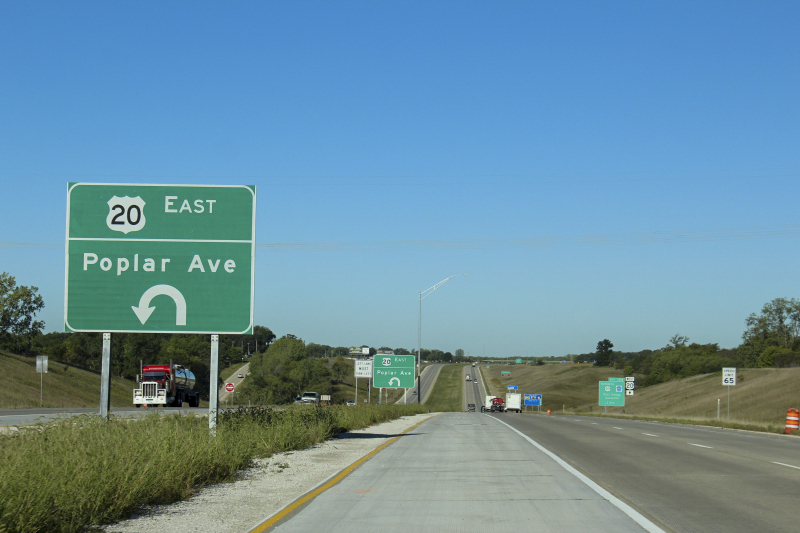
-Photo courtesy of the Iowa DOT This photo shows a vehicle driving westbound and the signs of the new reduced-conflict intersection at U.S. Highway 20 and Poplar Avenue that instructs the driver to make a U-turn to head east and be able to turn south on Poplar Avenue.
Construction of an interchange would have also required the state to take several acres of farmland out of production, Hucker said.
“I don’t believe this required any additional right of way,” he said. “We were able to construct all of it within the existing footprint of the right of way that the state already owned.”
The U.S. Highway 20/Poplar Avenue reduced-conflict intersection may be the first in the state of Iowa, but it likely won’t be the last.
“We are hopeful that now we’ve had an opportunity to have one of these, now we can help people understand the benefits and be able to introduce more of these where they make sense throughout the state to improve safety.” Hucker said.
Local News
‘A nice tradition to keep going’
It’s Boots & Bling time in Stratford
STRATFORD — It’s time to pull out the fancy duds, a little bling, and your dancing shoes and join the Stratford ...
Go and Do: May 1, 2026
Around the area LEHIGH — Lehigh Methodist Church will hold its Spring Supper and Bake Sale from 5 to 7 p.m. on ...
Trinity recognizes volunteers at annual appreciation dinner
US House passes ‘skinny’ farm bill
Feenstra salutes House passage of measure
U.S. Rep. Randy Feenstra saluted the passage of a new Farm Bill by the full House of Representatives on ...