
Beacon of Hope marks 12 years
-
-
-Messenger photo by Kelby Wingert
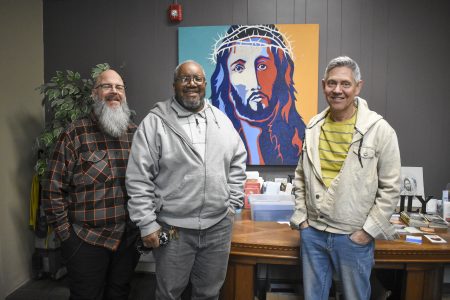
The Beacon of Hope marked 12 years at the end of March. From left are chaplains Brian Bidleman, the Rev. Eric Howard and Executive Director Steve Roe.
-
-
-Messenger file photo
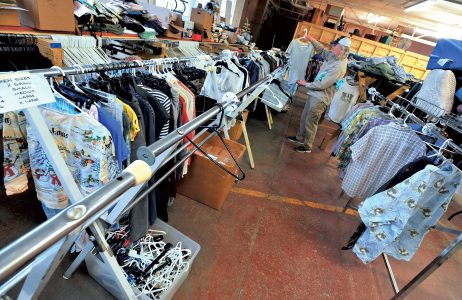
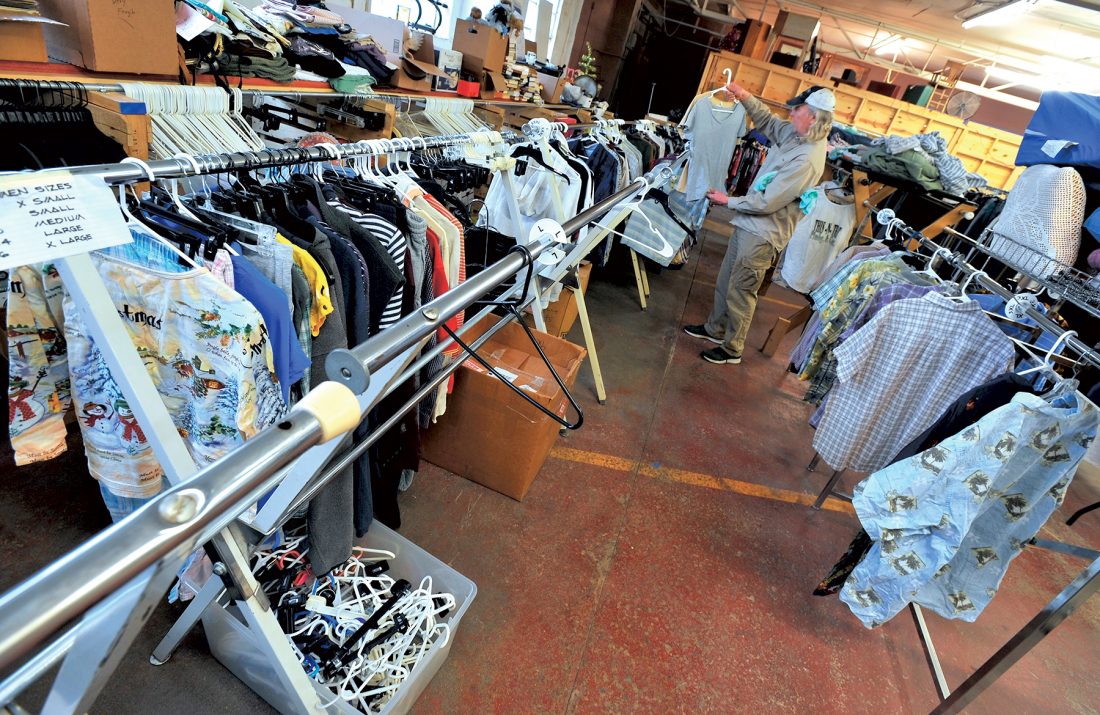
Beacon of Hope resident Dale Gustafson helps sort clothing in the intake area of the Second Chance thrift store.

-Messenger photo by Kelby Wingert
The Beacon of Hope marked 12 years at the end of March. From left are chaplains Brian Bidleman, the Rev. Eric Howard and Executive Director Steve Roe.
Steve Roe was willing to risk it all 12 years ago.
After spending time doing ministry in Des Moines, providing food and spiritual guidance to those living on the streets, he felt a calling from God to do something.
So, taking a leap of faith, Roe quit his job and mortgaged his home to buy the former Masonic Temple at 1021 First Ave. N., and turn it into a men’s homeless shelter — the Beacon of Hope.
Friends had told him it wasn’t going to work, but he knew he was going to follow God’s calling.
“It was so strong in my heart and in my mind, that no matter what anybody told me, it was worth the risk of losing everything I had to do this,” he said.
-Messenger file photo
Beacon of Hope resident Dale Gustafson helps sort clothing in the intake area of the Second Chance thrift store.
It hasn’t always been easy establishing and running a shelter, Roe said.
“Back in the beginning, I really had no idea what we were getting into, because I didn’t know what homlessness looks like here,” Roe, who is now the shelter’s executive director, said.
In the 12 years since the shelter opened, the Beacon has served around 2,000 men. Prior to COVID-19, the shelter had anywhere from 45 to 55 men staying. Currently, the population is around 40.
Residents are allowed to stay indefinitely on a case-by-case basis. Everyone who is capable of working is required to work a job.
“As long as a person’s working toward bettering themselves, we allow them to stay here,” Roe said. “As long as we’re watching and seeing them progressing, it’s indefinite.”
Christian ministry is part of everything Roe does at the Beacon.
“We share the love of Jesus Christ with every person that walks in,” he said. “Because we have found that sharing the gospel and teaching the men how to live spiritual lives, it brings stability into the mentally ill mind … helping them grow spiritually so that they can learn to have the coping skills to be able to move forward.”
The Beacon doesn’t receive any government assistance and survives by community donations. It relies on community support for everything, including feeding the men at the shelter. Over the last 12 years, different churches, clubs, organizations and other groups have volunteered to make and serve meals at the Beacon. Having volunteers spend time with the men at the shelter, getting to know them, is part of the Beacon’s mission, Roe said.
“I want people to know who we are,” he said. “I want them to understand what homelessness is and where mental illness fits in, because there’s a whole population that thinks homeless people are lazy and they’re just drunks and drug addicts, and that is so far from the truth.”
Residents of the shelter are required to stay sober and shelter staff administer random drug tests and breathalyzers each day. Individuals on the sex offender registry are not allowed to stay at the shelter, Roe said.
The needs of the men at the shelter have evolved over the years, Roe said. Mental illness is something the staff at the shelter weren’t equipped to handle, but that hasn’t stopped individuals in mental health crises from being dropped off at the Beacon.
“This is not the appropriate place for a mentally ill person to be at, especially elderly or very young people,” he said. “But I think now moving forward, I believe we’re going to have to embrace that part of who we are and that we have to change the way we’re dealing with mental illness.”
Though Beacon residents are not required to be Christian, Roe and his chaplains, Rev. Eric Howard and Brian Bidleman, share the gospel with everyone who walks through the shelter’s doors.
“Everything in the Bible clearly tells us we’re called to serve,” Roe said. “We are called Beacon of Hope because we are called to be the light to the broken in our community.”
In addition to investing nearly $1 million into improvements to the building over the last decade, Beacon of Hope has also opened the Second Chance Thrift Store to help support the shelter. The shelter has six staff members other than Roe and the chaplains, and the store has another six staff members.
“My hope is that over the next 12 years, that the world will see the poor in different eyes, and that there is enough wealth in the world to take care of every single poor person and that loving the broken will be stronger than greed,” Roe said.
Local News

Slow miles, strong roots
Webster County supervisors receive bids for animal control
The Webster County Supervisors received and placed on file two bids for animal control services in the county. ...
Go and Do: June 18
In Fort Dodge FORT DODGE — The Fort Museum, 1 Museum Road, will be open from 10 a.m. to 5 p.m. FRIDAY, and noon ...
Lehigh man sentenced for 2025 shooting
DAYTON — A Lehigh man has pleaded guilty to intimidation with a dangerous weapon with intent, a class C felony, ...

A day to remember
99 Counties Project comes to Fort Dodge
A free public presentation and panel discussion, Cancer in Iowa: 99 Counties Project, focusing on Webster County, ...