
Lieutenant governor visits Fort Dodge
-
-
-Messenger photo by Kelby Wingert
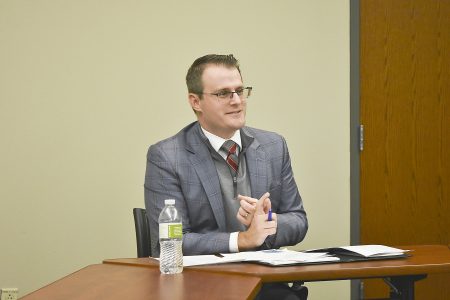
Lt. Gov. Adam Gregg shared Gov. Kim Reynolds’ legislative priorities to a roundtable at the Greater Fort Dodge Growth Alliance on Thursday afternoon.
-Messenger photo by Kelby Wingert
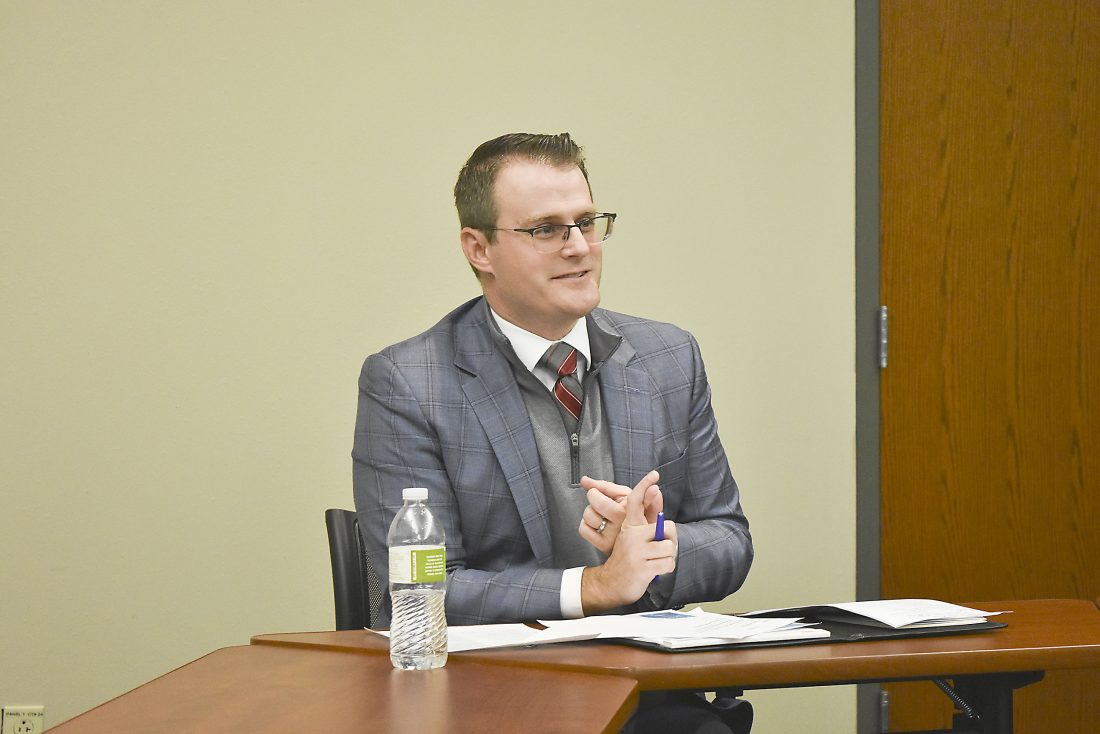
Lt. Gov. Adam Gregg shared Gov. Kim Reynolds' legislative priorities to a roundtable at the Greater Fort Dodge Growth Alliance on Thursday afternoon.
Tax reform, education reform and workforce challenges are the top priorities for Iowa Gov. Kim Reynolds in 2022.
On Thursday, Lt. Gov. Adam Gregg spoke with members of the Greater Fort Dodge Growth Alliance on behalf of the governor and her goals.
“I would say our priorities for this year really fall into three buckets,” Gregg said. “Tax reform, addressing the workforce challenges that we’re all facing and education reform.”
Gregg started by explaining the governor’s “very bold and ambitious tax proposal” she revealed during her 2022 Condition of the State address earlier this month.
The proposal is to reduce personal income tax to a flat rate of 4 percent for all Iowans.
“I think that would make us much more competitive and would make us much more attractive for investment here in our state,” Gregg said to the Growth Alliance.
Currently, 42 states levy a personal income tax and Iowa ranks seventh “worst” on that list, Gregg said. Under the proposal, when the plan is fully implemented in four years, the income tax rate will be the fifth best in the country.
“I think that makes us a better target for investment and opportunity,” he said. “And it allows Iowans to keep more of their hard-earned money, spend it at the small businesses that they like, rather than funding the bureaucracy at the state level.”
Reynolds’ plan also includes reducing the tax rate on retirement income to zero and lowering the corporate tax rate.
Another issue the governor is focused on is the shortage in the workforce.
“It’s a multifaceted problem — it’s a population issue, it’s a workforce training issue and it’s a policy issue on some fronts as well,” Gregg said. “So it requires a multifaceted approach.”
One of those facets includes creating more skills training opportunities to get Iowans employed in high-demand jobs. The Future Ready Iowa program is one of the initiatives implemented in recent years.
“There’s been 17,000 Iowans who have received or are receiving essentially a free community college education, as long as they’re seeking a degree that leads to a high-demand job,” Gregg said.
Another approach to the workforce problems is a first-of-its-kind apprenticeship program the governor has proposed that will allow high school students to start training as paraeducators while still in high school.
“It will allow them to get the experience and credit that they need so that with one more year of community college, they’re able to be fully-licensed as a paraeducator,” Gregg said.
The state is also looking at providing paraeducators the opportunity to get their full teaching degree by using the time they spend in the classroom as part of their student teaching experience, make it easier to obtain course credits and help pay for the education.
Reynolds is also proposing reducing the maximum benefits an individual can receive in unemployment benefits from six months to four months.
“We need to reward and incentivize work here in the state of Iowa,” Gregg said.
With education reform, the governor wants to give more transparency to parents on what their child is learning in Iowa public schools, and give them the opportunity to send their child to a private school using public school funds.
“The governor is proposing to require curriculum and the books that are in the library (in schools) to be posted online so that parents have the opportunity to view that,” Gregg said.
If a parent has an issue with the curriculum or books their child has access to, they can escalate the concern to their local school board, and if they aren’t satisfied with the school board’s resolution, they’ll have the ability to choose what school environment they’d like their kids to be educated in, he said.
“I think parents ought to have the opportunity to educate their kids in the setting that fits best for them because every student is different, every student’s needs are different,” Gregg said.
The proposal would create a “Students First Scholarship” fund, which would allow a portion of state funds that would normally follow the pupil to their school be diverted to private education tuition or tuition for online schooling.
The current proposal caps the number of students who can use the scholarship to 10,000, half of which are set aside for students with an individualized education plan or special needs.
“This goes back to just empowering parents to be able to choose the right setting,” Gregg said.
Gregg credits the work the governor and legislature have done in “prudently” managing state resources to keep Iowa’s budget balanced and cash reserves full as making tax cuts like those proposed by Reynolds possible.
Local News
Keeping a legacy of philanthropy alive in Fort Dodge
Iowa Central music students present Spring Showcase

America at 250: A journey through time, told through our communities
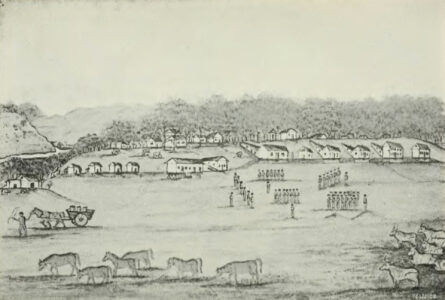
Fort Dodge began as frontier military post
Go and Do: April 3, 2026
Around the area CLARION — The Spring Coin Show will be held from 9 a.m. to 4 p.m. SATURDAY at the Heartland ...