
Dangerously cold
FD braces for frigid temps
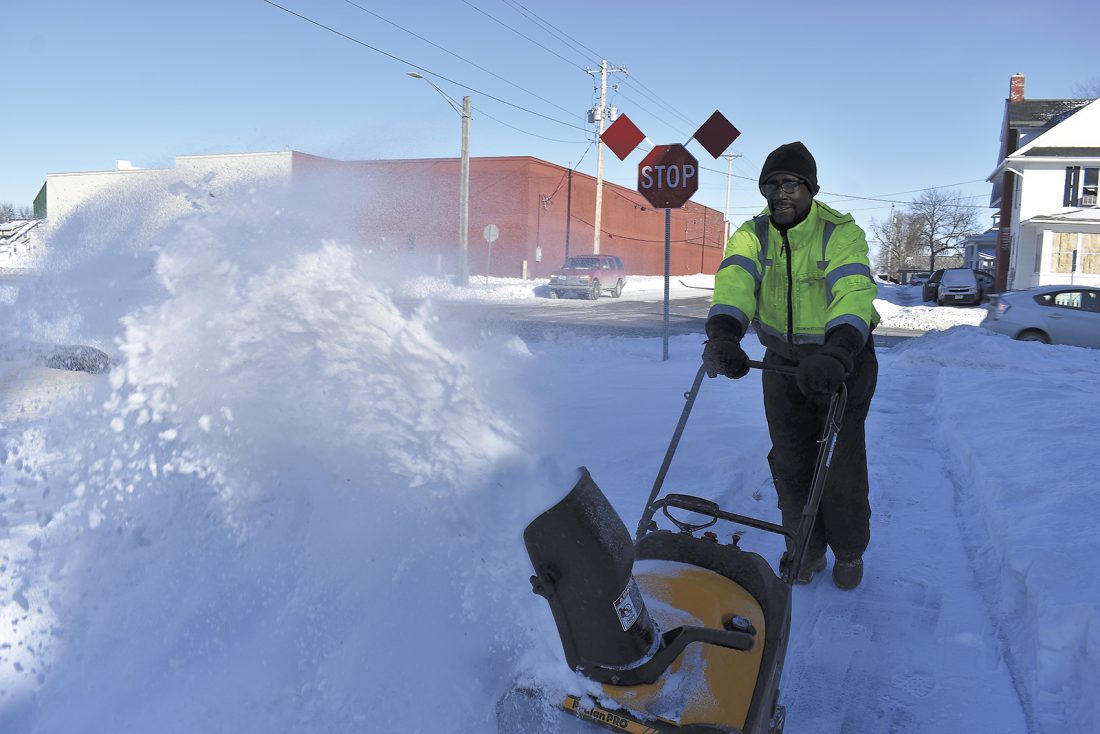
-Messenger photo by Chad Thompson <br> John Mosley, of Fort Dodge, gets a little snow blowing done on Friday afternoon along First Avenue North. With temperatures and wind chills about to take a plunge starting today into next week, working outside for too long will be a health hazard.
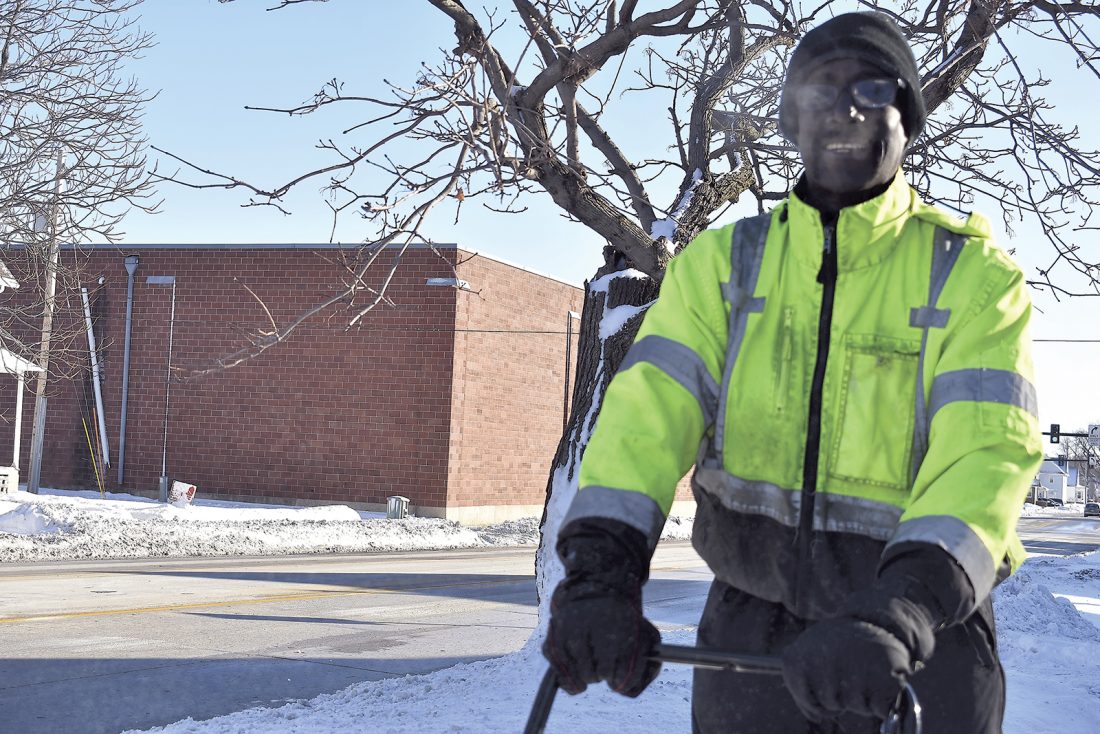
-Messenger photo by Chad Thompson John Mosley’s breath begins to fog his glasses Friday afternoon as he works to remove snow along a sidewalk on 15th Street. Colder air is anticipated for Fort Dodge and the state starting today and lasting all week, according to Jim Lee, a meteorologist with the National Weather Service in Des Moines.
-Messenger photo by Chad Thompson <br> John Mosley, of Fort Dodge, gets a little snow blowing done on Friday afternoon along First Avenue North. With temperatures and wind chills about to take a plunge starting today into next week, working outside for too long will be a health hazard.
-Messenger photo by Chad Thompson John Mosley’s breath begins to fog his glasses Friday afternoon as he works to remove snow along a sidewalk on 15th Street. Colder air is anticipated for Fort Dodge and the state starting today and lasting all week, according to Jim Lee, a meteorologist with the National Weather Service in Des Moines.
Trending
After today, wind chills will reach about -20 degrees every day over the course of the next week.
Bitter cold temperatures continuing for that length of time are rare, according to Jim Lee, a meteorologist with the National Weather Service in Des Moines.
"It won't be pleasant," Lee said. "In fact, it will be dangerously cold."
According to Lee, the length of time that these bitter cold temperatures are supposed to last is something that typically only happens once every several decades.
Through Feb. 14, the low temperature every day is forecasted to be below zero.
Those temperatures can become dangerous very quickly for anyone outside.
According to Dr. Dan Cole, Webster County medical examiner, the skin can be affected in five minutes when it's as cold as it's supposed to get this coming week.
Frostbite, hypothermia and falls are three primary concerns during cold weather, Cole said.
"Normal temp is 98.6 and that goes down pretty fast if you are out there long," Cole said. "It can affect cardiovascular functions. You can get confused and make bad decisions if you get cold."
Cole said he encourages everyone to stay home if they can and avoid bad roads if they need to leave the house.
"I worry about people in car accidents because I can't think of anything worse than sitting in a ditch with no heat," he said. "If it takes five minutes to get frostbite you will end up with frostbite from just sitting in a car."
As the temperatures dip to dangerously low levels, those with experience being outdoors in frigid conditions concentrate on one thing as they prepare: layers.
Layers as in wearing layers of clothing to keep warm and dry.
Aaron McKinney, manager of the Iowa Outdoors Store, reminds people to keep their heads, faces and all extremities covered.
He also recommends wearing mittens instead of gloves if a person doesn't have to do any precise work with their hands while outdoors.
"A mitten is always better than a glove because your fingers stay closer together and they stay warmer that way,'' he said.
Fort Dodge firefighters who have to be out during emergencies take extra precautions to stay warm.
"We dress in layers when it gets really cold," said Fort Dodge Fire Chief Steve Hergenreter. "Medical calls you can control that a little more, wearing gloves and things. On the fire calls where you get wet, having extra gloves and a hood is something we always encourage everybody to have. It slows operations down so much when it's that cold. You know the pace is going to be slower and equipment freezes up. We rotate people, too. Get them to places they can warm up and rotate them."
Hergenreter said firefighters are taught to keep moving.
"Try to keep moving," he said. "You have to keep moving or you will get really cold."
Firefighters will also have a spare set of turnout gear if that gets soaking wet during a fire.
In terms of the general public, Hergenreter urged caution when using space heaters indoors to try to stay warm.
"Make sure if you have a space heater on, that there is an adult in attendance," Hergenreter said. "That would be one big rule."
He also said space heaters should be kept a safe distance away from anything combustible.
"Keep it away from anything that can burn -- clothing, furniture, anything combustible," Hergenreter said. "Keep it 3 feet away from those items."
Propane space heaters should not be used in the home as those heaters present a carbon monoxide risk.
"Don't use your ovens to heat the home," Hergenreter said. "That's a carbon monoxide hazard, too. People will sometimes turn their oven on and open the door."
Fort Dodge police officers have to be prepared for an unpredictable set of challenges, according to Capt. Ryan Gruenberg.
On some shifts, officers may be able to spend most of their time in their patrol cars. Other times, there may be an incident that requires them to be outside for a lengthy period of time.
"Some of that is dependent on the calls for service," Gruenberg said. "You may go an entire shift where you aren't out of your car much. But there may be an incident where you are out of your car for a long time."
Equipment such as computers can be impacted by the cold also, so Gruenberg said more of an effort is made to keep those items inside.
Police will be keeping an eye on the streets monitoring people outside.
"We do see a lot of people wandering out in this kind of weather," he said. "We want to make sure they get from point A to point B safely. When you're not used to it, you think you might be able to stay out longer than you should."
The freezing of materials on the road impacts vehicle travel.
"As far as winter driving, pack a kit with some necessities in the event you need to travel," Gruenberg said. "If you get in an accident, have something that would provide you some warmth and some time before help can get to you."
Fort Dodge Public Works Department crews are among the people who will be out and about in the bitter cold. Public Works Director Brett Daniel said the employees don't have any "good secrets" for keeping warm.
"It's all about good layers of clothes,"' he said.
Keeping warm while keeping the streets clear of snow and ice is actually fairly easy because the drivers stay in the heated cabs of the trucks. If they have to work outdoors on a broken water main or other problem, they take breaks in a vehicle parked nearby. Daniel said if possible they will work when the sun is out and the temperature may be just a bit warmer.