
In the budget
City budget for roads stays steady despite COVID-19
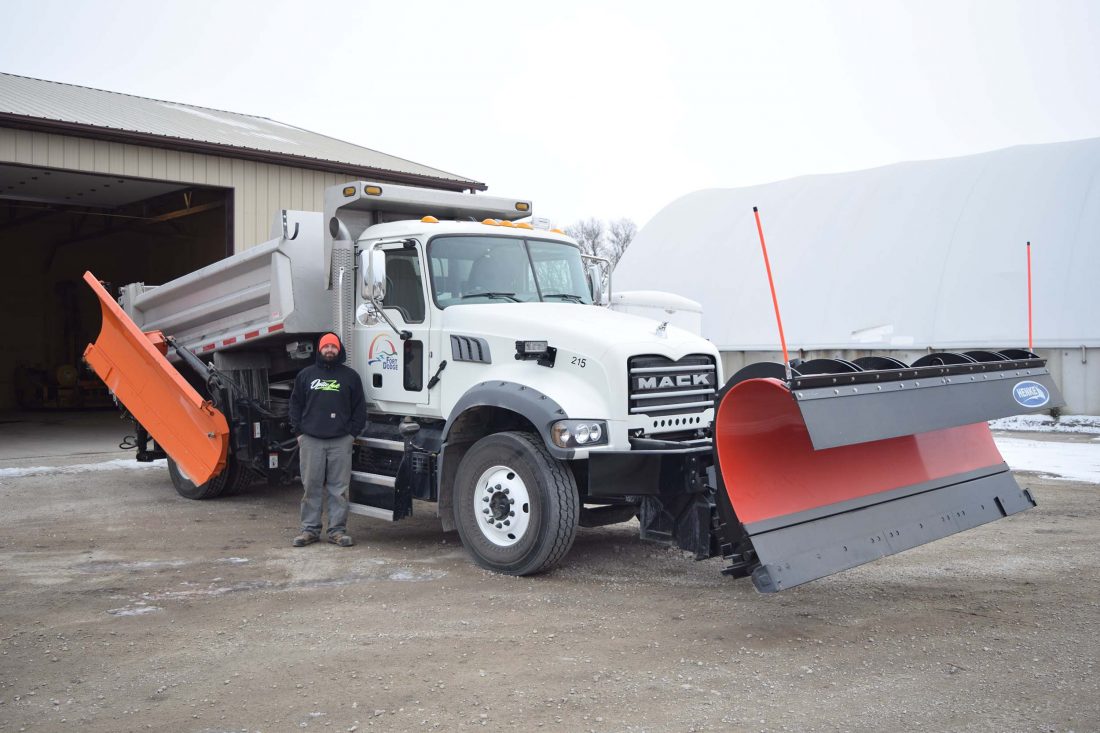
-Messenger photo by Kelby Wingert <BR> Fort Dodge Public Works employee Zach Lind stands with a newer snow plow owned by the city.
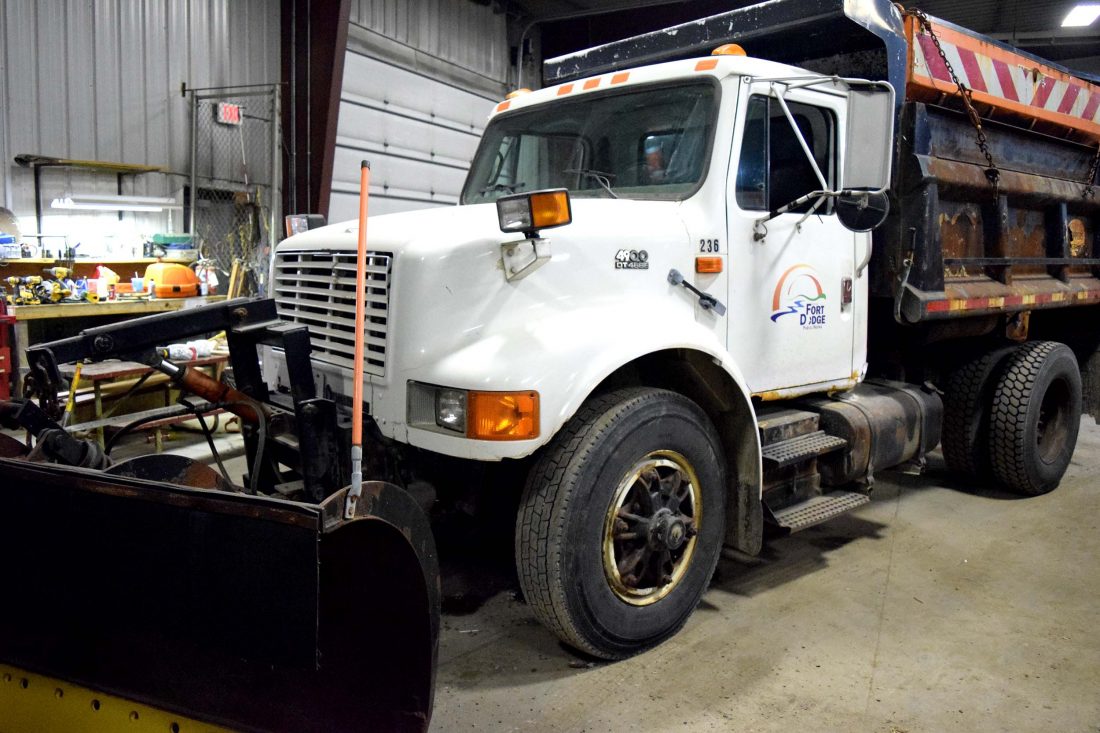
-Messenger photo by Kelby Wingert <BR> This is the oldest snow plow Fort Dodge Public Works has, and it is about 25 years old.
-Messenger photo by Kelby Wingert <BR> Fort Dodge Public Works employee Zach Lind stands with a newer snow plow owned by the city.
-Messenger photo by Kelby Wingert <BR> This is the oldest snow plow Fort Dodge Public Works has, and it is about 25 years old.
Trending
With the COVID-19 pandemic keeping lots of people at home and off the roads, Jeff Nemmers, the Fort Dodge city clerk and finance director, was a little concerned about what would happen to the account that pays for street work.
Money for that account comes from the Road Use Tax, which is the city's share of gasoline taxes and vehicle registration fees. With fewer people on the road, it seemed likely that there would be less gasoline tax revenue.
Nemmers told the City Council Monday that earlier this year he was projecting revenue dropping by as much as 8.5 percent.
He later revised that projection to a drop of 3.5 percent.
But he told the council Monday that the actual numbers are better than that.
"What we're finding is actual revenue is keeping up with what we had last year," he said.
Therefore, the projected Road Use Tax fund budget for 2021-2022 introduced to the council Monday totals about $3.3 million, which is roughly the same as the current year's budget.
"We're optimistic that we're going to get to those numbers," he said.
"We can weather a lot of things in this fund," he added.
Nemmers and other city staffers introduced proposed budgets for the Road Use Tax, water system and sanitary sewer system during a budget workshop Monday.
The next fiscal year doesn't begin until July 1, 2021, but state law requires cities to have their budgets done by mid-March. That's why local leaders are already working on the spending plan.
The council did not recommend any changes to the budgets introduced Monday.
However, Councilman Terry Moehnke expressed concern about the amount of cash on hand in the three accounts.
Summaries presented to the council Monday showed cash on hand of $7.3 million in the water fund, $8 million in the sewer fund and $2.8 million in the Road Use Tax fund.
"How do you determine how much is enough?" Moehnke asked.
Nemmers replied that there are "coverage ratios" the city must maintain in its water and sanitary sewer accounts in order to qualify for the state low-interest loans that pay for many improvement projects.
City Manager David Fierke said 110 percent of net revenue is needed to pay state revolving loan fund debt.
Nemmers noted that the Road Use Tax pays the wages of all the employees who work on city streets.
"I think what we want to do is have as much flexibility as we can because it is so personnel heavy," he said.
He added that the cash amounts will be drawn down to meet future needs.
Road Use Tax
The proposed Road Use Tax budget is $3,296,225.
That is down slightly from the current budget of $3,296,615.
That budget pays for fixing potholes, sweeping streets, maintaining traffic signals, plowing snow and doing all the other chores needed to keep the streets usable.
The biggest single capital outlay in the proposed budget is $175,000 to replace a dump truck bought in 1995.
It also calls for spending $80,000 to buy battery backup systems to keep traffic lights functioning during power outages.
Other big outlays include:
• $58,000 to pay for painting lines on city streets.
• $55,000 to buy a pickup to replace a 2001 model.
• $12,000 for bridge inspections.
Water
The proposed water system budget is $10,338,701.
That's up from the current $10,207,702.
That money comes from monthly water bills, not taxes.
Operating the John W. Pray Water Facility on Phinney Park Drive is the biggest single expense at $2,721,615. Payments to U.S. Water Utility Group, the company that runs the plant, total about $2.6 million.
The budget also calls for spending $70,000 on insert valves to be placed in water mains.
"This allows greater control to shut off sections of our mains when we're working on projects without going for blocks on end," Public Works Director Brett Daniel said.
Sewer
The proposed budget for the sanitary sewer system is $11,688,440.
That's up from the current $11,498,593.
The money comes from monthly bills for service.
The $4,062,305 cost of operating the wastewater treatment plant at Avenue O and Avenue B is the biggest single outlay. Most of that money is paid to U.S. Water Utility Group.
The budget includes $225,000 to pay for cameras, software and a truck used to conduct visual inspections of the sewer mains. The current system was bought in 1997.