Contact tracing
County officials show the public a key part of mitigation
-
-
-Messenger photos by Elijah Decious
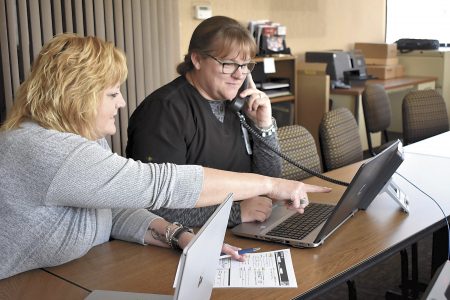
Kari Prescott, director of Webster County Public Health, assists nurse Tricia Nichols, right, with contact tracing evaluations. Contact tracing investigation done by public health staff finds those who have been in contact with people who test positive for COVID-19 and advises them on an appropriate course of action to isolate themselves and keep an eye on symptoms. Staff also ensure those affected have adequate access to resources for medical care and everyday living.
-
-
-Messenger photos by Elijah Decious
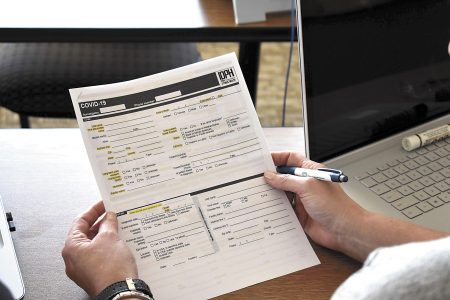
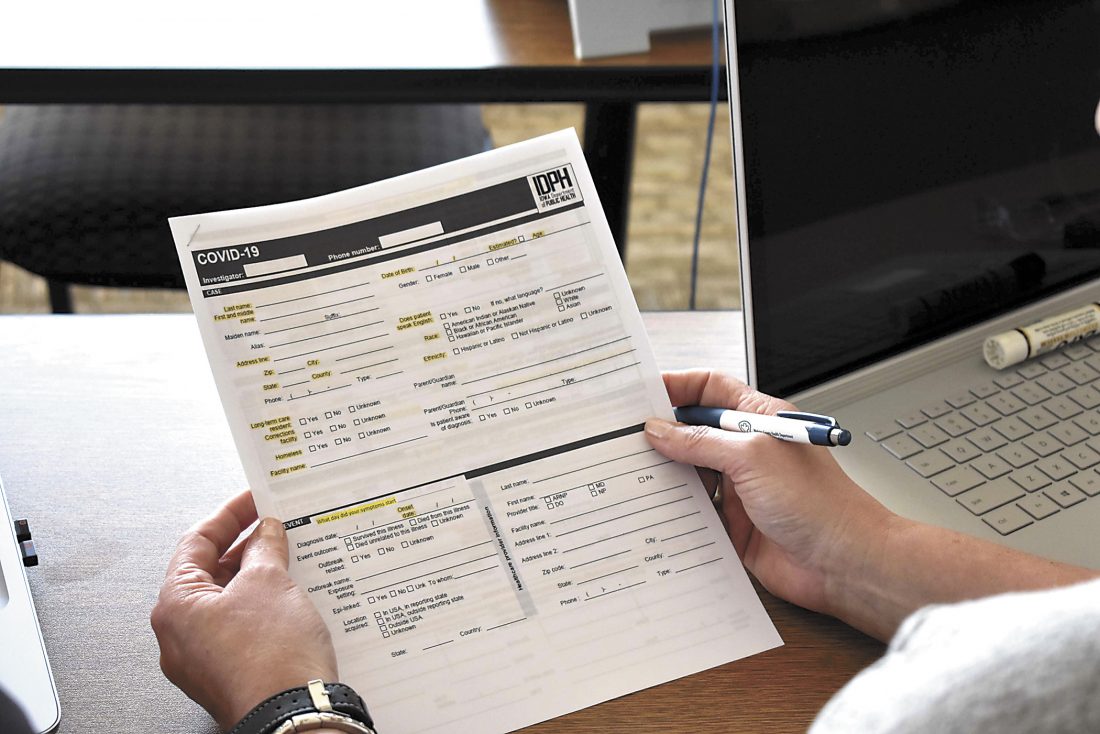
A COVID-19 investigation report, filled out by public health staff as they call patients and their recent physical contacts, helps public health advise those potentially infected to mitigate the spread of the infection in the county.
-Messenger photos by Elijah Decious
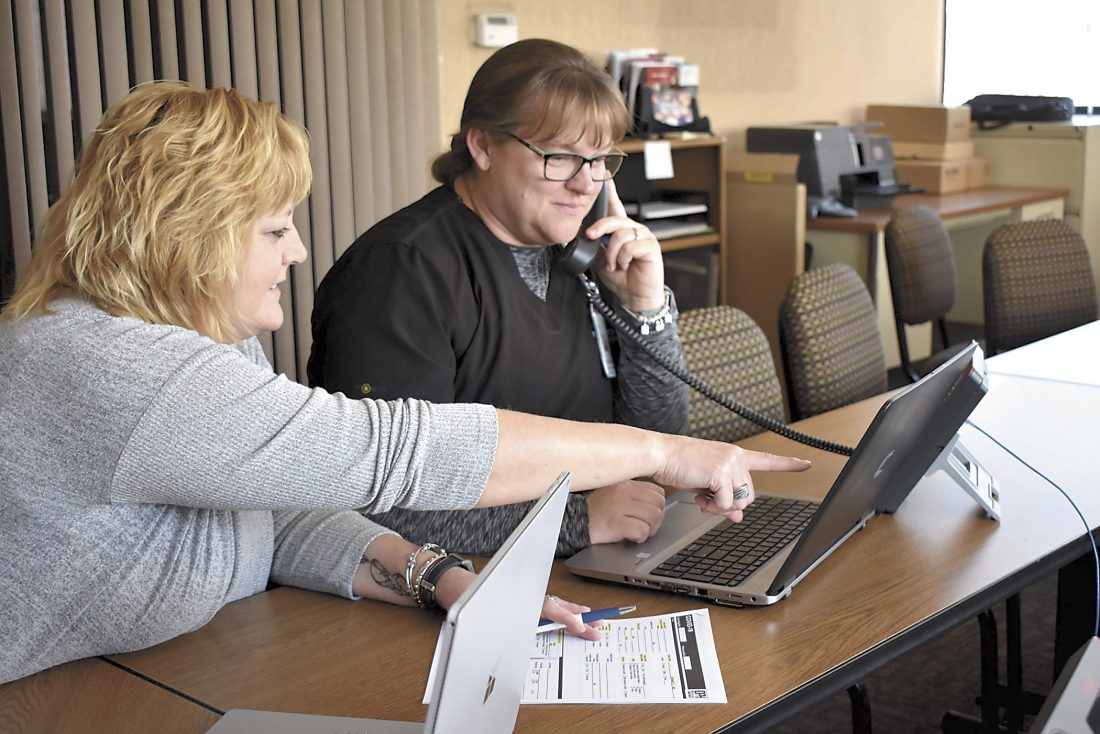
Kari Prescott, director of Webster County Public Health, assists nurse Tricia Nichols, right, with contact tracing evaluations. Contact tracing investigation done by public health staff finds those who have been in contact with people who test positive for COVID-19 and advises them on an appropriate course of action to isolate themselves and keep an eye on symptoms. Staff also ensure those affected have adequate access to resources for medical care and everyday living.
So you’ve been diagnosed with COVID-19, the respiratory illness caused by the coronavirus pandemic sweeping the nation. Now what?
For nurses and personnel at Webster County Public Health, it starts with an assessment of the patient in an investigative process of finding every contact a positive patient has had.
After being notified of new positive cases in the county through a statewide system, investigative nurses start with an old-fashioned method: a phone call to the patient.
After patients have discussed their results with their doctor, registered nurses like Tricia Nichols pick up the phone to talk patients through their history of symptoms over the last few weeks, learn where they’ve traveled to and who they’ve come into contact with.
“Those living in the same house are our first concern,” Nichols said. “We branch out from there.”
-Messenger photos by Elijah Decious
A COVID-19 investigation report, filled out by public health staff as they call patients and their recent physical contacts, helps public health advise those potentially infected to mitigate the spread of the infection in the county.
Symptoms are parsed to determine the source, as some COVID-19 symptoms can be attributed to other health concerns. Sometimes, symptoms already present in a person simply get worse with COVID-19.
“If they say they have allergies and get a runny nose, I ask when it got worse,” she said.
While guidelines tend to be gray, Nichols said that a nurse’s education is often the best judgment in applying an adaptive survey to patients to determine which other contacts may need to be warned of their exposure.
“With community spread around for a long time, our education doesn’t change,” she said. “Ultimately, if you’re determined to not be considered a close contact, it’s for a reason.”
But saying that to some is easier said than done in an environment where hysteria is hard to tamp down in the face of the unknown with a novel disease.
After determining household contacts, the workplace contacts are ascertained. Then, nurses look at individuals who have had direct contact with the patient, particularly those who may be at higher risk such as the elderly or those with high-risk health conditions.
Family and work contacts are the two main branches explored by public health, Nichols said.
“Everyone else after that, their risk is low,” she said.
For those who work with a positive patient, “direct contact” is defined as about two hours of constant contact. But whether someone has been in close contact or casual contact with the patient, following basic precautionary guidance recited frequently by health officials is still paramount: wash your hands, cover your sneezes and coughs, remain six feet apart at all times, don’t leave the house except for necessities.
“You never know where you’ll come in contact with the virus,” Nichols said.
Health officials said that the biggest fear encountered in the experience is the fear of exposure. Public health hotlines manned by the health department have helped with that anxiety, they said.
“There’s also very human questions that are being asked,” said Kelli Bloomquist, public information officer for WCPH.
Making sure that patients have access to not only medical resources but groceries, prescriptions and moral support is a big part of the survey, too. Social workers and administrative staff are always around to lend a helping hand to community members in need.
“It’s a holistic assessment,” said Kari Prescott, director of Webster County Public Health. She said it’s the same kind of assessment that was already in use for illnesses like e-coli and pertussis.
The county has about four staff members regularly tasked with doing assessments now, with the capacity to expand to up to 20 if a surge of infections dictates.
Of the three positive cases in Webster County so far, health officials say that the average household size has been one to three people.
“They’ve had very few contacts,” Nichols said. “They usually live alone or with one other person.”
Though it’s often overlooked as calls are placed quietly in public health offices, the contact tracing may be a key part of mitigation strategies, as people tend to listen when public health talks to them directly.
“People we’ve interviewed are staying home until we tell them,” Prescott said.
Quarantines can typically be discontinued after being free of symptoms for a certain amount of time, and allowing a certain number of days to elapse after a positive test.