
Providers stand ready to help with mental health
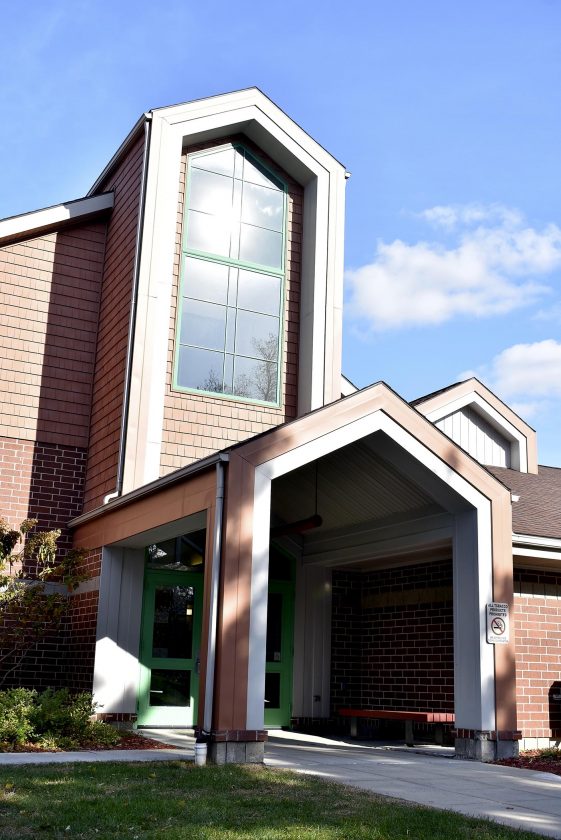
-Messenger photo by Elijah Decious <br> Berryhill Center has seen the number of patients served over the last five years nearly double.
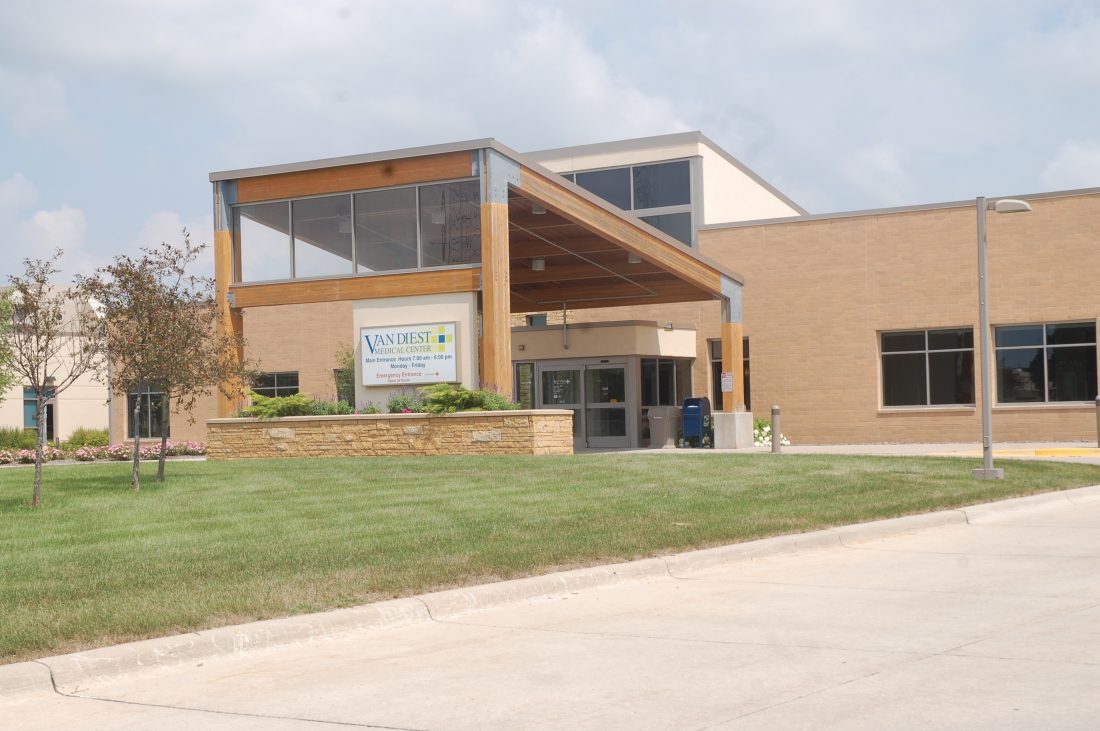
-Messenger file photo<br>Van Diest Medical Center in Webster City offers support and resources to residents with mental health needs.
-Messenger photo by Elijah Decious <br> Berryhill Center has seen the number of patients served over the last five years nearly double.
-Messenger file photo<br>Van Diest Medical Center in Webster City offers support and resources to residents with mental health needs.
Trending
Editor's note: This is the fourth in a series of stories that explore the impact of mental health on the community.
Van Diest Medical Center in Webster City offers support and resources to residents with mental health needs.
"We have Jane Hoffman, who's our licensed independent social worker, who does more psychotherapy with our patients," said VDMC social worker Anthony Wubben.
The hospital also has a mental health nurse practitioner, Amy Larson, who is able to see patients in an outpatient setting, as well as prescribe psychiatric medications.
"She's a huge asset not only to Van Diest, but also our larger community," Wubben said.
The hospital is also home to Senior Life Solutions, which is an independent organization that just uses VDMC as a facility.
"They gear more toward senior citizens," Wubben said. "They work on more group, as well as individual psychotherapy and on aging and the challenges and struggles people can have as they age."
Wubben said the mental health needs of the patients they see vary greatly.
"Everything changes, especially seasonally," he said. "We're prepping up for the holiday season and it's not uncommon for us to see more substance abuse, to see more depression, more on the clinical side of things."
He said the hospital has seen mental health patients as young as six or as old as 83, and they just try to be as prepared as they can to provide the best care they can to these patients.
"It completely varies, it's not just a particular age group or a particular diagnosis, there's so many other variables," he said. "And as a hospital we have made strides to be as patient-specific as we can possibly be because we understand one person's depression looks completely different than another's."
If a patient does come to the VDMC emergency room with a mental health crisis or need, the department has integrated telehealth partners, which is a tool to connect to a mental health specialist via video teleconferencing to help assess the patient's needs. From there, based on the mental health specialist's recommendations, they get the patient the help they need, whether that's outpatient treatment or an inpatient referral.
"Of course we try to link them up with someone within the community to get those outpatient services, but if they're looking at a more inpatient setting, we do transport those patients to wherever that location may be," Wubben said. "Unfortunately, sometimes there's not the opportunity to stay in the state of Iowa and we've transported as far as Wisconsin before. But we definitely try to keep them in Iowa, of course, because that's ultimately where the patient's home is."
VDMC is very involved with the Hamilton County Mental Health Coalition, which meets monthly and hosts an annual mental health conference in May, Wubben said.
"In the community, we try to be as involved as we can with mental health because we do understand that it's a larger issue than a lot of us think it is," he said.
The hospital aims to "peel off" those labels that society sometimes sticks to people with mental illness, he added.
In the same way that medical professionals promote taking steps to care for one's physical health, Wubben said, they also want people to know there are things they can do to keep mentally healthy.
"Just going to basics - eating healthy, making sure that we're sleeping," he said. "A huge one for me personally is self-care, which I think is often misunderstood when I mention that.
"It's being able to step away from our workplace environment or our stressors in life and truly taking a minute to do whatever brings us shalom or comfort and peace, because it is so important to re-balance ourselves."
UnityPoint Health -- Berryhill Center
As awareness of mental health increases and stigma becomes manageable, the numbers tell a mixed story on the state of mental health as providers on the ground see it.
At UnityPoint Health -- Berryhill Center, it's tough for people like Aaron McHone to tell whether higher numbers of patients being seen are the result of better outreach and recognition or pent up need.
"I think that relates to the initiatives to serve them, not necessarily higher instances of mental illness," the executive director of the center said, looking at the breakdown of patients by demographics.
In 2018, children under 18 represented nearly one-fifth of the patients served (19%), a dramatic increase from the percentage of patients that age group represented in 2014 (7%).
Those in the 65+ age category, at 10% of total patients, have also been better served by outreach initiatives with UnityPoint in long-term care facilities.
From 2014 to 2018, the number of unique patients served at Berryhill nearly doubled from about 2,500 to slightly over 5,000.
UnityPoint has focused on greater integration, greater access, and greater children's services. With a "no wrong door" policy, those navigating the complicated mental health care system won't be turned away if they're in the wrong place.
"If they come to us, we're making sure they can get the help they need," McHone said, whether that means connecting them to social services or providing what they can there and referring them to someone else for other needs.
It's a policy designed to buffer some of the shock to those who can't always get the help when they need or where they need it. As Iowa continues to rank near the bottom of states in terms of its mental health care offerings, ensuring care happens at the point of contact is crucial for the nine Berryhill locations in and around Fort Dodge.
America's Health Rankings places Iowa at 43rd in terms of the number of mental health and substance abuse care providers per capita.
With exam rooms upstairs that resemble those of an average doctor's office, Berryhill also takes the opportunity to check on patients vitals and rule out physiological causes of symptoms that could be mistaken for mental illness, such as high blood pressure or low blood sugar.
"We put a lot of concern on the integration with medical," McHone said. "They're closely related. This is why when you get stressed, most people tend to have headaches or lower back pain, or increased heart beat. It's because those two things are very well-connected."
Another offering adjacent to their exam rooms is a room with a couch, a chair, and a large flat screen TV against the wall. It's not an entertainment room. It's just another exam room.
Using telepsychiatrists, Berryhill has been able to use psychiatrists over virtual means to serve more patients in more places as rural Iowa struggles to retain health care providers. The patient and doctor see each other on the screen, similar to Skype.
"It's being used a great deal in all markets, including Fort Dodge," McHone said. He estimated that Berryhill has 400-500 encounters per month with the service.
Greater acceptance of the technology as families use FaceTime and Skype to keep in touch has gone hand-in-hand with the increased occurrence of the service, he said.
"There's a lot of questions on if telehealth's a good thing or a bad thing," McHone said, with concerns as to whether seeing someone in person would be better. "The bigger question is, would I rather see someone on telehealth or not at all?"
With long wait times for some services across the state, it's being embraced as at least a short-term solution. At the Emergency Room at UnityPoint -- Trinity Regional Medical Center, about three patients are seen every day in the emergency room for behavioral health conditions. Part of the overflow to the ER could be due to confusion about where to access the right care, or a lack of it.
But Fort Dodge fares better than other parts of the state, McHone said, telling The Messenger it's not uncommon to see patients travel from Des Moines or Okoboji to get in for quicker appointments here About 48 percent of patients at Berryhill don't live in Webster County, but that may not be surprising given that 10 surrounding counties are served by its network of clinics.
"While I still believe that we have work to do, I think we're a little bit ahead of the ball game compared to other areas of the state," he said.
A month-long wait to see a psychiatry provider is not uncommon.
Access to care locally has improved though, in terms of wait time. In January 2014, the average wait time for a non-crisis evaluation of a new patient was about two months. Now, it's just a few days.
Other challenges include Medicaid's transition with privatization, and Medicaid reimbursement for services.
"It's been a challenge," McHone said of the transition, as providers have come and gone, and patients have been shuffled around.
"One thing that's been challenging is a lack of stability," for patients, he said, whose anxieties have been stirred about whether their access to care will be there when they need it.
"A lot of patients have gotten anxious, because it takes time to work out contracts with managed care," McHone said.
The other problem is inconsistency with data. For patients on three different managed care providers in three different years, it's difficult to evaluate whether those MCOs are effective.
He acknowledges that managed care does not necessarily equate to a challenge in itself.
While Medicaid patients only represent 38% of those served by Berryhill, Medicaid revenue accounts for 61% of the fees Berryhill is paid for its services.
With Medicaid reimbursement rates for services remaining stagnant in some cases, the revenue generated can be problematic for providers that rely on the state program more.
"Some rates haven't increased since 2006," McHone said. "If the rates came out tomorrow and they were where they needed to be, we'd be really happy about it."
But as inflation continues to be a reality, he said rates need to be continually evaluated.