
Century Farm Pottery embraces the circle of life
Rural Boone artist incorporates Native American values into her pottery
-
-
-Messenger photo by Lori Berglund
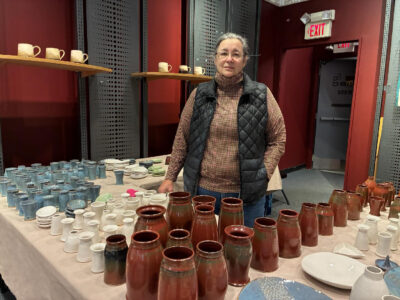
Yana Reid offers her work from Century Farm Pottery at the indoor Farmers Market at the North Grand Mall in Ames.
-
-
-Messenger photo by Lori Berglund
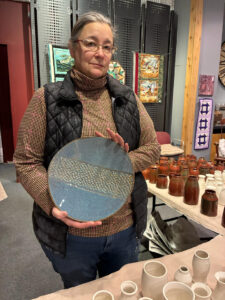
Yana Reid offers her work from Century Farm Pottery at the indoor Farmers Market at the North Grand Mall in Ames.
-Messenger photo by Lori Berglund
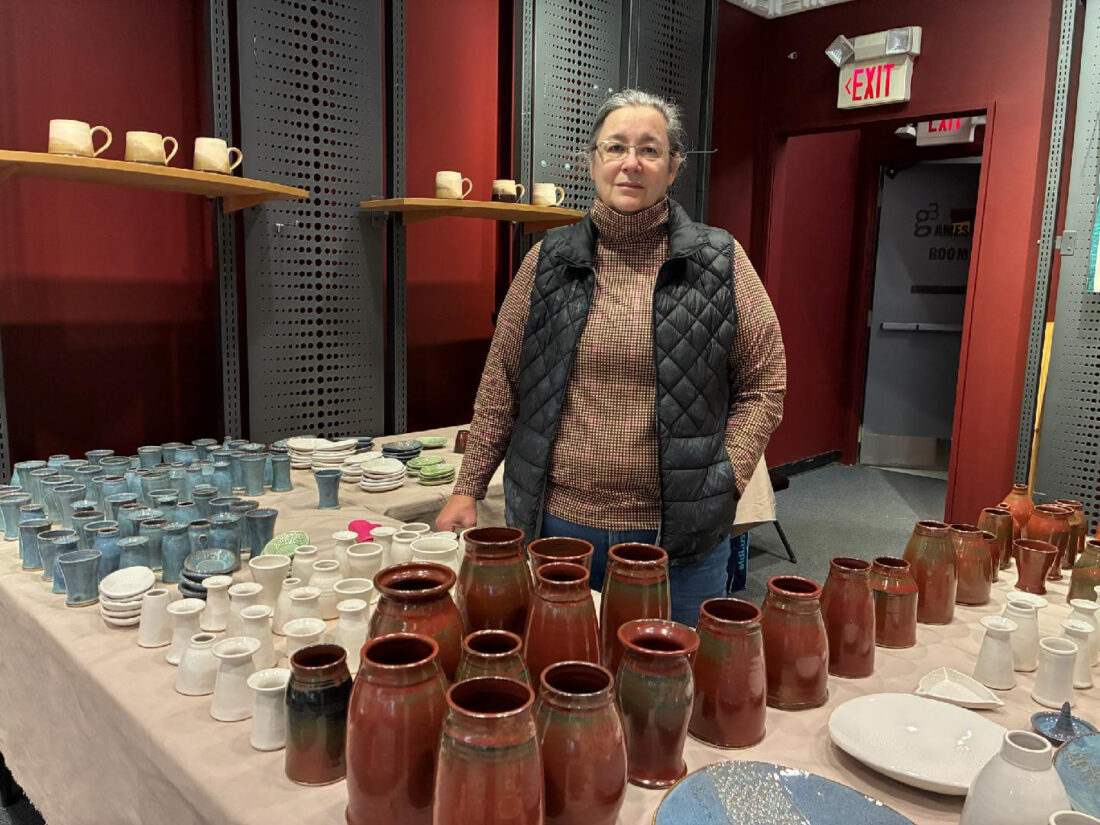
Yana Reid offers her work from Century Farm Pottery at the indoor Farmers Market at the North Grand Mall in Ames.
BOONE — There have been many seasons to Yana Reid’s life. The seasons blend together, one leading into the next, each giving her life a richness and connection to the heritage she treasures as a Native American.
The values Reid learned growing up on the Rosebud Reservation in south central South Dakota are a part of her life yet today. They inform her work as a potter, molding clay into works of art.
Reid is the artist behind Century Farm Pottery and offers her work at the indoor Farmers Market at North Grand Mall in Ames. She hopes to open up to more markets and online sales as the seasons change in the year ahead.
Reid and her husband, Jeff Bremer, live on a small farm just south of the Hamilton County line in rural Boone. It’s a long way from life at Rosebud, but those days flow through her work and contribute to the circle of life.
The Rosebud Reservation is home to the Sicangu Lakota Nation, of which Reid is an enrolled member.
-Messenger photo by Lori Berglund
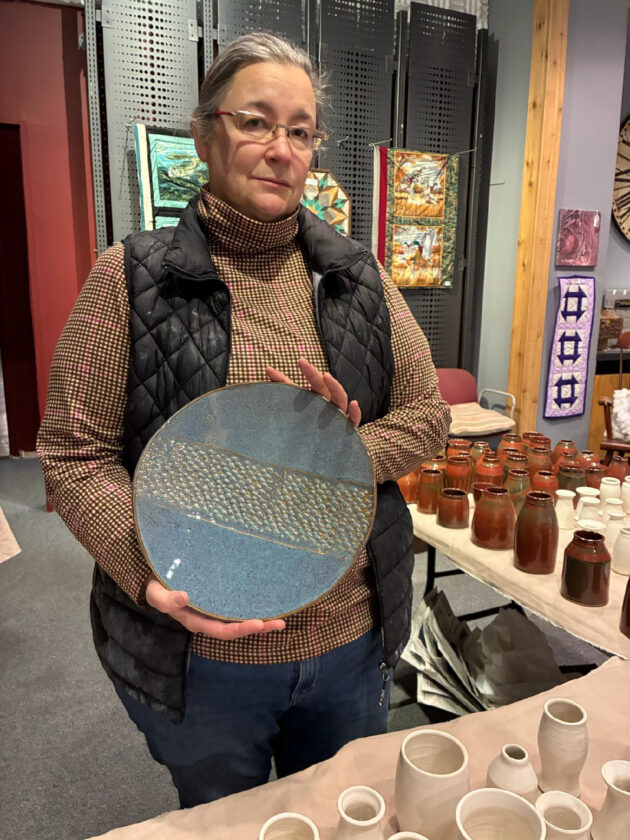
Yana Reid offers her work from Century Farm Pottery at the indoor Farmers Market at the North Grand Mall in Ames.
“To the average person, that means that I’m an enrolled member of the Rosebud Sioux Tribe,” she explained.
In their own culture, the Sioux are known as Lakota. As a people, they are guided by a code of behavior known as Wolakota. They seek to be a quiet people who act with integrity and give respect to all people.
As Reid describes her work as a potter, it’s easy to imagine that her Lakota upbringing still informs her life today.
“Growing up, I learned resilience,” she said. “I think that’s why I’m good at my work. I have this understanding of the materials in an innate way and the cyclical aspect between nature and natural elements resonates with me.”
If growing up at Rosebud was the first season of her life, the next season was when she left to earn her undergraduate degree in biology at Haskell Indian Nations University in Lawrence, Kansas. She would meet her husband in graduate school. It was a spur-of-the-moment idea to make her own pottery for their wedding that led to her career as an artist.
“After we got engaged, I wanted the centerpieces at our wedding to be something that our guests could take home, so I decided I could just learn to throw pottery,” she said.
Looking back, it was a courageous idea, but she accomplished her goal and found a passion for working with clay. She eventually bought a wheel and kiln and started working more heavily in pottery when the couple was living in Texas. They have lived in central Iowa for 14 years, and she has now been throwing pottery for almost 20 years.
The hands-on work of forming clay into art gives her great pleasure.
“The vast majority of my production is done on a wheel,” she explained. “When you have been a potter for a long time, and you’re in a rhythm when you’re throwing there is a hum that you sometimes get. It’s kind of nice, and you know that you have an understanding of the material and you are working in unison with it in a natural way.
Reid uses a mid-fire stoneware clay with a high porcelain content to give her objects a great beauty and integrity.
“I truly enjoy the interface with the material when I am working,” she said. “In an interesting way, it is an expression of myself when I execute something well.”
While pottery is a great focus, Reid also stays busy with a large garden on their farm and enjoys raising food that they can enjoy throughout the different seasons. She is also in the process of developing a large field of peonies.
“We put in a big field of peonies and we are hoping in another three years they will be able to provide us with some additional farm income,” she explained.
The peonies are a long-term project, as it takes several years before they can be harvested.
“There are different stages,” she said. “The first year you want to cut all the buds back, and the second year also. In the third year, you can maybe harvest a couple. It’s about a five-year plan. In five years, you can harvest half the buds.”
Fortunately for this Iowa
Zpeony farmer, patience is also part of her Lakota heritage. For Reid, the seasons of her life keep evolving, but each new chapter builds on her heritage and keeps the circle of life moving in harmony.
Local Business

Allers retires after long architecture career
Wright County development leader receives scholarship
CLARION — Aaron J. Budweg, director of Wright County Economic Development, was awarded a professional development ...

City, Mary Ann’s Specialty Foods receive awards

Webster City barber Russ Chelesvig to surrender his shears
Treasury, IRS issue guidance on additional first year depreciation deduction
The Department of the Treasury and the Internal Revenue Service are providing taxpayers with guidance on the ...
Spanish-English leadership series proves successful at Mary Ann’s Specialty Foods
WEBSTER CITY — Iowa Central Community College partnered with Mary Ann’s Specialty Foods utilizing 260F funding ...