
This fall, Iowa landowners are asked to help track monarch migration
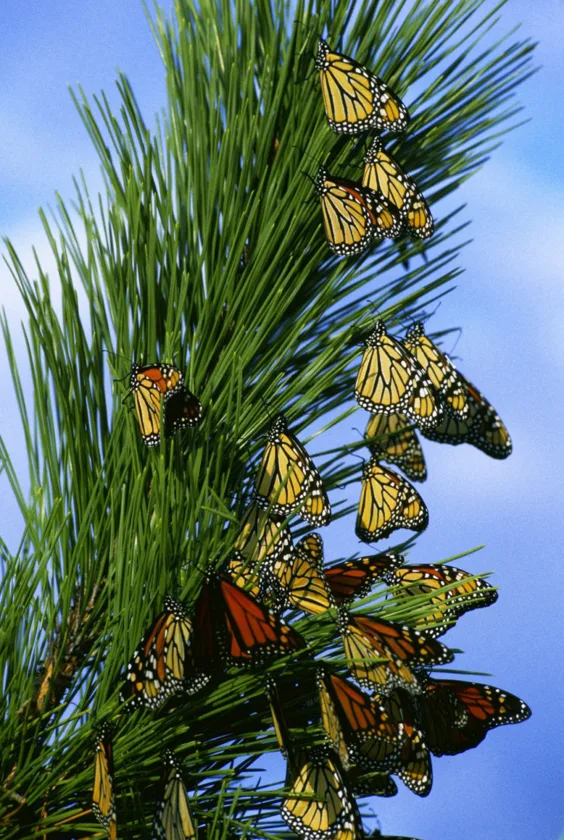
-Photo courtesy of Iowa Monarch Conservation Consortium <br> Monarchs roost on a branch. Iowa landowners are being asked to help document monarch migation.
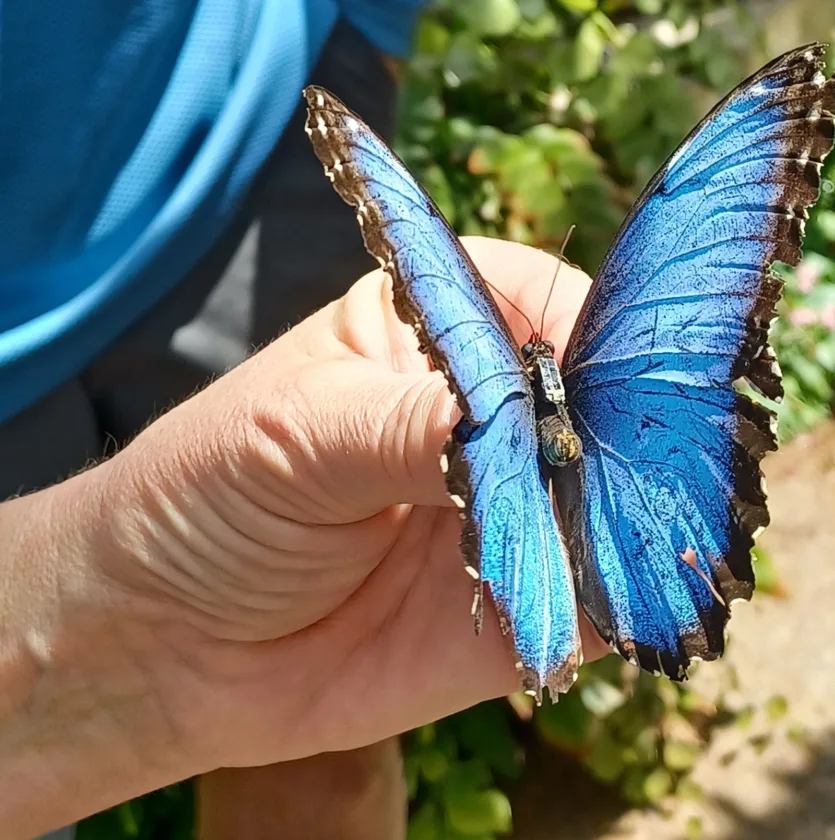
Photo by Mykayla Hagaman <br> A Blue Morpho butterfly is shown with a Bluetooth tag (between its wings), which is similar to the tags that will be used for a monarch migration research project in September. To participate in tracking tagged individuals, download the Project Monarch app in the Google Play or the Apple Store.
-Photo courtesy of Iowa Monarch Conservation Consortium <br> Monarchs roost on a branch. Iowa landowners are being asked to help document monarch migation.
Photo by Mykayla Hagaman <br> A Blue Morpho butterfly is shown with a Bluetooth tag (between its wings), which is similar to the tags that will be used for a monarch migration research project in September. To participate in tracking tagged individuals, download the Project Monarch app in the Google Play or the Apple Store.
Trending
AMES -- Iowa landowners are being asked to help document the remarkable monarch migration as thousands of butterflies make their journey south to Mexico this fall. Researchers with the Iowa Monarch Conservation Consortium (IMCC) ask for assistance to identify areas where monarchs rest in clusters, like trees and sheltered areas, when they funnel through Iowa during their trip.
"We are seeking reports from landowners if they have monarchs roosting on their property or from community members if they observe roosting monarchs on public lands," said Katherine Kral-O'Brien, with the IMCC. "Identifying these roosting locations provides critical data on migration pathways and helps scientists and conservationists protect and restore key habitats."
How to identify a monarch roost
• Dozens to hundreds of monarchs clustered on tree branches
• Most often found in sheltered areas, near the edge of woodlands, windbreaks or river corridors
• Roosting typically occurs in the evening and early morning
"If you observe a monarch roost, please contact the IMCC at monarchs@iastate.edu and provide a general location of the roost (e.g., address, name of public area)," Kral-O'Brien said. The type of tree, number of monarchs, dates and photos are also helpful.
All reported data will remain anonymous. Roost sites can also be reported to Journey North to assist monarch researchers and conservationists around the country.
Why it matters
Monarch populations have declined significantly in recent decades due to multiple factors including habitat loss and extreme weather. Iowa plays a crucial role in their migration corridor. By documenting roosting sites, landowners are directly contributing to the science that guides conservation strategies at home and across the continent.
Additional ways to get involved
Even if you don't encounter a roost, you can still help track the monarch migration through Bluetooth technology. New BluMorpho tags allow researchers to pinpoint a tagged monarch's location through Bluetooth. The lightweight tags run on solar energy, allowing scientists to track the butterfly's movement throughout its lifetime. By downloading the Project Monarch app in the Google Play or Apple Store, turning on your Bluetooth and searching for tagged monarchs in your area, you can help track tagged individuals during the fall migration.
This will especially be important in September when the IMCC will release BluMorpho-tagged monarchs as part of a migration research project. To learn more about this research, sign up for the IMCC Newsletter or follow @iowamonarchs on Facebook, X, Instagram and YouTube.
About the Iowa Monarch Conservation Consortium
The Iowa Monarch Conservation Consortium (IMCC) is comprised of members and partners from over 50 organizations, including agricultural and conservation associations, agribusiness and utility companies, universities and state and federal agencies. To learn more about the IMCC and the resources it provides, visit https://monarch.ent.iastate.edu/.