
For die-hard Monroe fans, maybe
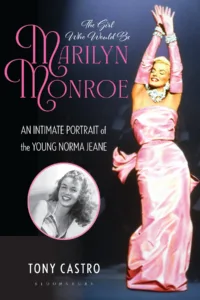
Castro\\\'s ‘The Girl Who Would Be Marilyn Monroe’ hard to follow
Trending
You can trace her career by the dresses.
There's the pink one that gentlemen preferred along with platinum tresses, and a millionaire's delight wrapped in fur. A not-so-itchy number danced around a subway grate, and a sparkling dress scandalized America on a presidential birthday. All these gowns were as spectacular as the woman who wore them but, as you'll see in "The Girl Who Would Be Marilyn Monroe" by Tony Castro, there was more to Marilyn than just her beauty.
So much has been written about Marilyn Monroe, that you might almost feel as though you knew her. But, says Castro, there was a younger, troubled, more vulnerable Marilyn that few understood.
She was born Norma Jeane Mortenson in 1926, the youngest daughter of a mother who suffered from mental illness. Gladys Baker was a serial romantic and though she had other children that were taken from her, she clearly wanted Norma Jeane. Still, she often left the girl in orphanages or with a series of foster families.
That was a chaos that Norma Jeane never got over, and she never forgot.
At 16, she was relieved to be rescued from the constant turmoil of her childhood through marriage to a boy she thought she loved; as a teenage wife, she seemed to feel as if she was playing at being a grown-up. Norma Jeane loved mirrors, was intrigued by photography, and she "understood the power of appearances." When her husband went away to fight in World War II, she began to work as a model to make some spending money …
Crack open "The Girl Who Would Be Marilyn Monroe," and here's what you get: a preface and acknowledgments and an author's note and notes on sources and method and a prologue. That's all before you even get to Chapter One, which is an aggravation that doesn't really make you want to get to Chapter One very much.
When you do, you'll be even more irritated.
Author Tony Castro says in one of those preludes that he used extensive interviews and documents to get this story, which is quite possibly the best news you'll get here -- then he admits that he doesn't tell the story in a formal timeline, which is a very severe understatement. To try to follow along with Monroe's childhood and early life as presented here is like trying to follow a single kernel of popcorn in a pan of hot oil. Names crop up out of the blue, never to be seen again. Stories start, then don't totally end. The prose is so floral and arty that you may find yourself laughing out loud. And the repetition? Without it -- and there's a lot of it -- this might've been a better book, albeit a mighty skinny one.
One could suppose that if you're a foam-at-the-mouth, die-hard fan of Marilyn Monroe, you might enjoy untangling the details inside "The Girl Who Would Be Marilyn Monroe." The truth is, though, that gentlemen might prefer blondes but few readers will prefer this book.
Terri Schlichenmeyer lives in Wisconsin with her two dogs and a collection of almost 20,000 books.