
How do we end the violence: Vanice Heath
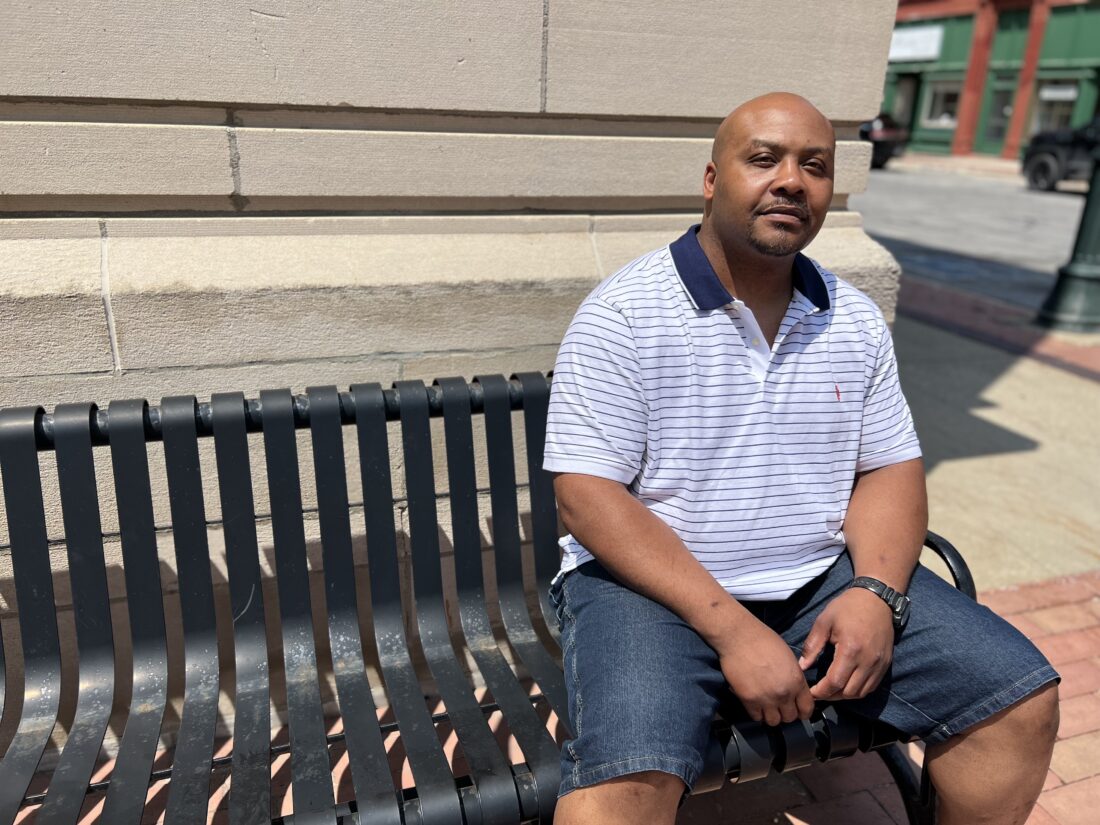
-Messenger photo by Kelby Wingert
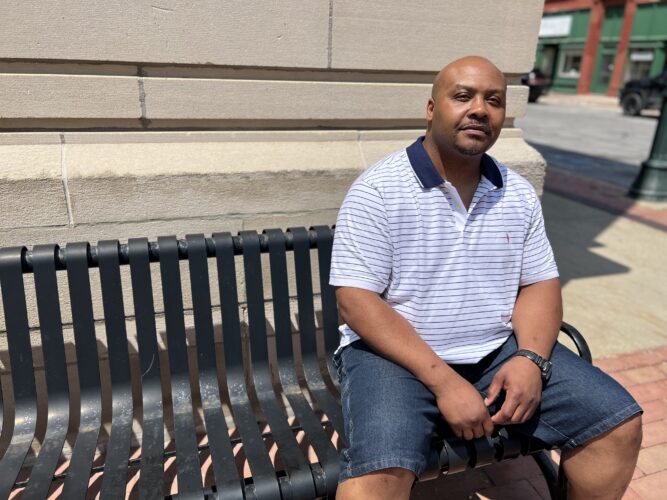
To help facilitate answers and solutions to the problem of violence permeating through Fort Dodge, The Messenger is kickstarting the conversations with those in the community who want to be part of the solution. This week, Messenger news reporter Kelby Wingert sat down to talk with Vanice Heath, of Fort Dodge.
Heath, a Chicago native, was 17 years old and living in eastern Iowa when he was convicted of first-degree murder and sentenced to life in prison without the possibility of parole. In 2016, the Iowa Supreme Court ruled that life without parole sentences are unconstitutional for youth offenders. Though the ruling doesn’t guarantee youth offenders a shot at parole, it does create the possibility.
For Heath, that possibility came six years later, when he was released from prison in December 2022 after 28 years behind bars. Since his release, Heath has chosen to stay in Fort Dodge and has begun to build a life here. Among other things, he’s active in the DRIVE Re-entry program at Athletics For Education and Success.
Q: How can the general public be convinced that the violence is a problem that can actually be solved?
A: The community has to see it, I believe, as a community but also individual problem. Whether it be the person that lives next door to him or right across the street, or the same person that works with them at work, they might be going through something which means there’s issues at home and they can help. By helping that, they help the community at the same time. Turning a blind eye to it is not helping it. Whether it happens on your block or 10 miles away from you, it’s still going to affect you.
Q: What is the first thing you’d recommend as a course of action?
A: The first thing I would do is shed light on the problem that’s causing violence, not necessarily violence itself, and I think the biggest problem for violence is a lack of purpose. When I was a kid, even just going to school — you just go to school to learn, they teach you why you’re gonna learn but it still doesn’t have a purpose. It didn’t have a meaning to it. And I think, from experience, I think majority of the youth in this community are lacking purpose or lacking something that gives them good meaning. They revert to either the gangs or just random drugs or whatever to make them feel like they have purpose.
Q: What can the average citizen do to help address this problem?
A: Just talk to their neighbor. Be involved. I know everybody likes to stay out everybody’s business, but yet your business affects me. So just get involved with your neighbor. Take the politics out of it. If you work with a person or live next to a person or you know someone that’s related to you, and you know they’re going through something — which affects family, which effects the kids — or their kid is going through something, try to reach out and try to help.
You have to support each other. And you can’t support each other from a distance.
We used to have little block parties, little get togethers, hop socks where you go and dance with the socks on, and you got to know the people in your neighborhood because that’s what you did. Nowadays is like, “Don’t be looking at my yard.” . We used to actually be like, “Hey, I’m barbecuing come on over.” We don’t do that anymore. We’ve become so politically divided.
Q: What do you think draws youth into violent lifestyles and choices?
A: I think it’s two factors. The first factor is, like I previously stated, they don’t have purpose, something that they enjoy doing, something they want to do. So they find it in whether it be the group of friends that they’re with, or gangs or what have you. They find purposes there.
The second part of it is I think you have to try and give them an idea of the life that they can live. I don’t think they see it.
I don’t think they understand. They can create their future. And I think that’s one of the biggest problems we have with violence is the person to understand what their world looks like.
They’re listening or looking at what’s happening and they’re saying, ‘”Okay, this is the way it is.” Well, that’s not that’s not the way it is. It’s how you see yourself and how you see yourself in the world. It is how you’re going to define your future and I think those are the two biggest problems once they see they self in a world a certain way.
Every step you take today leads you for tomorrow. So if you don’t see where tomorrow is, what steps are you taking?
Q: Looking back on your history, what do you think you needed or were lacking that would have prevented life-altering mistakes?
A: A positive mentor. If you look at most fortune 500 companies or people who are in business or wealthy, they all have mentors. Someone who can tell them, “That makes no sense. Did you really think about that?” Or “That’s a great idea. Let’s do this. Here’s a couple of steps you might want to take. What steps did you plan on taking?” A positive mentor is valuable. I remember back in the day, you had mentors — this back when the YMCA and the Boys and Girls Club was real good, now it’s a whole different ballpark — but back then you had the churches really involved in the community. I mean, really involved. You had mentors. Now, you don’t have it. I mean, you do, but not where it matters. So I think what I would have needed back then was a positive mentor.
I always wanted to go to the military. Always. My dad and my stepfather both were Marines. So I was like, Yeah, I’m gonna go to the military. But guess what? There was no motivation. Even for me, I wanted to, but there was nothing that led me to that role. I know what I wanted. But how did I get there? People get confused all the time. “I want to do all this. How do I do that? How do I start?” So because we don’t know how to start, wee fall flat. But with a good mentor, a good mentor takes all that information and then puts certain things in front of you to get you started towards what your challenge is.
Q: What resources do you think our community needs to help kids who have been in trouble get back on the right path and not re-offend?
A: Well, there’s several right now I think that’s on the right path. The one is the AFES reentry program. And the other one comes from the Church of the Damascus Road in Fort Dodge. They are trying a new program that deals also with reentry. And I think they might be coupling with AFES on certain issues. When a person comes out of prison — it all depends on how long you’ve been in prison — and they need several things. One, a mentor They need somebody that they can trust that can put them in a place. The second thing is, a job. If you don’t have employment — because you incur a bill while you’re in the work release center or while you’re in court. You’ve got to pay that fee.
And if you don’t have employment, what are you gonna do for fun? And that’s the one of the biggest problems — if you ain’t got the money, you’ve got to figure it out. So if they don’t have the money and going through these stressful points, they turn to drugs to try to cope with being stressful. Even if they don’t turn to actually doing drugs, they turn to selling them, or robbing. Anything to get enough money to take care of their bills.
Q: You were initially sentenced to prison for a crime you committed as a teenager. If you could go back and talk to yourself at that time, what would you say?
A: What I would tell myself before I went to prison is, “Is this the place you want to be?” What I mean by that? Is this the life you want to live? I ended up asking myself that question while I was in prison, and it made me change my behavior while I was in prison. I this the life you want to live? That’s what I’d say before the crime, but it’s also the same thing I’d say after. That’s what got me to say, Hey, this is not this is not where I wanted my life to be. So what do I do now? Since I’m here, since I have a life sentence and I can’t go home, how do I make my life better here? So that got me to start to challenge and rewrite my present way of thinking. I realized it’s not necessarily the actions I take, it’s about how I think, because if I think a certain way my actions are gonna follow no matter what.
So in my world, I realize you have to change the way you see yourself. You have to see the world differently. Because everybody that’s poor or they’re committing crimes, they see the world as something that is actually against them. Something that’s trying to hurt them. But if they start seeing the world as a part of them, and something they need to contribute as well as it contributes to them, then their thinking and their actions automatically change.
Local News
McGowan wants balanced budget amendment
Architect hired for fire station job
An architect was hired Monday to design the second firehouse in Fort Dodge. The City Council hired 10Fold ...
Council renews Fierke’s contract
The Fort Dodge City Council on Monday extended the contract of City Manager David Fierke for another four ...

Council supports downtown building plan
PICA receives statewide honor
Pride in Community Appearance, often better known as PICA, has received the Main Street Iowa Leadership ...